
Best Solar Battery Australia 2026: Comprehensive Buying Guide
Solar power is everywhere in Australia. Rooftops across the country generate huge amounts of energy during the day. But many homes still export most of that power to the grid. A solar battery changes that. It lets you store your solar energy and use it later at night. That simple shift can lower electricity bills, increase energy independence, and add backup power during outages. In 2026, batteries are becoming more attractive thanks to falling prices and new incentives. This guide explains how to choose the best solar battery Australia homeowners can install today.
Why add a solar battery in 2026?
More Australian homes are installing solar every year. But much of that solar power is still sent back to the grid. Adding storage lets you use that energy later when you actually need it. That's why many homeowners are now looking for the best solar batteries in Australia in 2026.
Maximize self-consumption
Without a battery, excess solar energy usually goes back to the grid. In most areas, feed-in tariffs are fairly low. A battery stores that energy so you can use it later in the evening. This improves solar self-consumption, which means more of your solar power stays in your home. Using your own stored energy means you avoid expensive peak-rate grid electricity (Time-of-Use). Potential annual savings often exceed $2,000.
Blackout protection
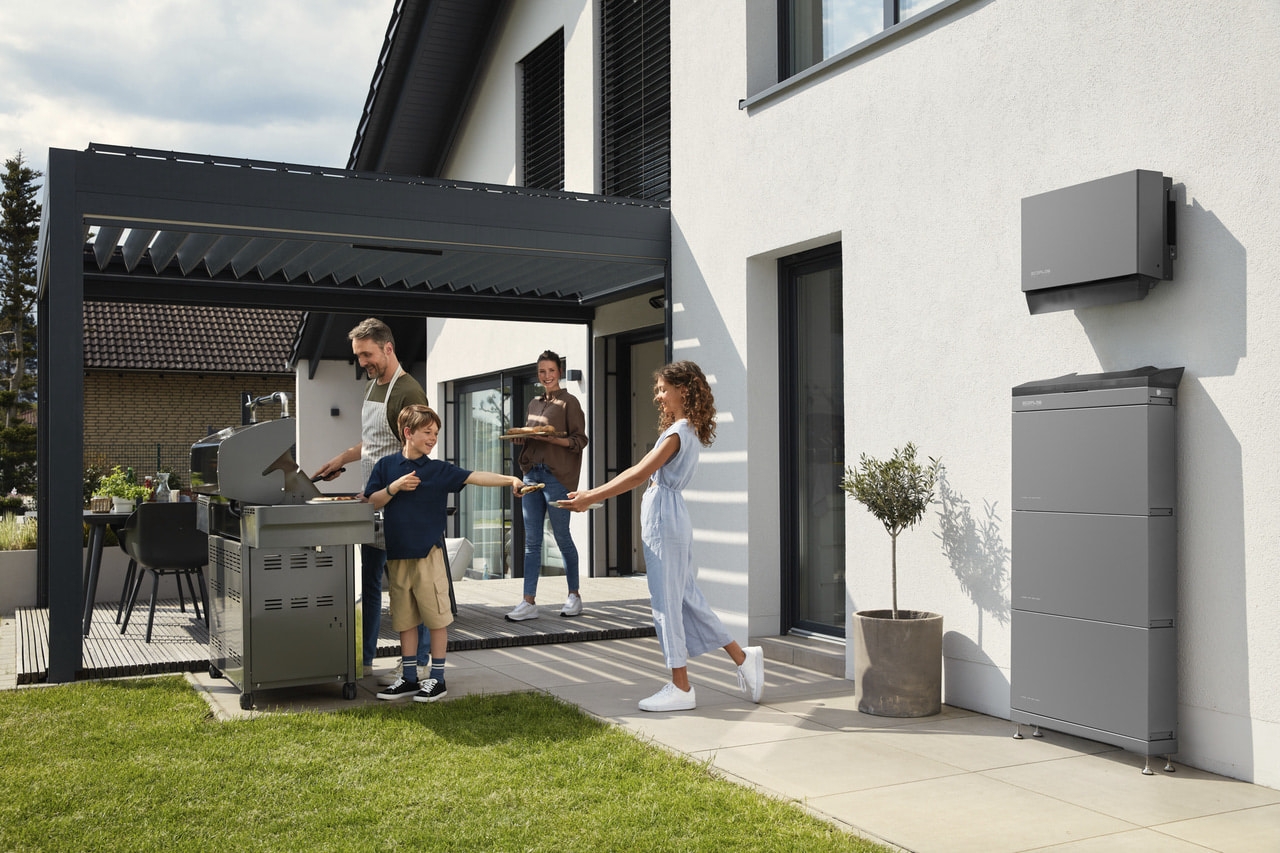
Power outages are becoming more common in some parts of Australia. Heat waves, storms, and bushfires can disrupt the grid. Many modern batteries include backup capability. This allows essential appliances like refrigerators, lights, and internet routers to keep running during outages. Homes in rural or regional areas often benefit the most from this feature. To maintain this level of continuity during an outage, choosing a high-performance system is key. Reliable options, such as the EcoFlow Home Battery, can switch to backup power in less than 20 ms, ensuring your home stays online without a glitch. EcoFlow PowerOcean Single-phase Battery delivers up to 6kW continuous power. EcoFlow PowerOcean Three-phase versions push 10kW-12kW. You can keep essentials like fridge, lights, Wi-Fi, microwave, or even AC running seamlessly. Plus, the 15-year warranty covers both battery and inverter for lasting peace of mind in tough Australian conditions.
Talk to an energy expert if you are thinking about building a system. Get a free solar battery quote that fits your home and energy needs.
What kind of product or solution are you interested in?


Greater energy independence
Solar panels already reduce dependence on the grid. Adding storage takes this one step further. A solar battery lets you use more of the electricity you generate yourself. For many households, this creates a sense of energy independence and more control over rising electricity prices.
VPP earnings
Some states offer Virtual Power Plant (VPP) programs. These programs connect home batteries into a shared network. The grid operator may draw stored energy during peak demand. In return, homeowners receive bill credits or payments.
2026 rebate snapshot
The Federal Cheaper Home Batteries Program currently covers around 30% of the upfront cost (roughly $3,000–$4,000 for a standard home). However, the rules are changing on May 1, 2026. After this "rebate cliff," the value of the incentives will drop every six months. More importantly, the government is introducing "size tapering." This means systems larger than 14kWh will receive a much smaller discount for that extra capacity. If you want a larger system to cover your whole house, installing it before May 1 is the best way to lock in the highest possible savings. Systems like the EcoFlow PowerOcean are fully eligible for this program. They are Clean Energy Council (CEC) approved and meet strict safety standards.
State incentives boost it further. NSW VPP programs pay up to $1,500+ for sign-up and grid support. WA offers buyback schemes and rebates for smaller systems. VIC focuses on low-interest loans.
Key features of the best solar battery
When hunting for the best solar battery storage in Australia, focus on what really delivers value in our hot climate and variable grid. Skip the hype—here are the must-check specs that separate solid options from the rest.
Battery chemistry
Go for Lithium Iron Phosphate (LFP) every time. It is the gold standard for the best solar battery in Aussie homes in 2026. LFP stays safe even in scorching summers—no thermal runaway worries like older types. It handles thousands of cycles without degrading fast. Most top systems now use LFP for that long, reliable life.
Capacity &power rating
Capacity (kWh) is how much energy the battery holds—like the size of a water tank. Most families need at least 10kWh of usable storage to cover evenings. Power rating (kW) tells you how much energy can flow out at once. If you want to run air conditioning, EV chargers, or multiple appliances during an outage, aim for a high continuous output (e.g., 5kW–10kW+).
Efficiency
Round-trip efficiency shows how much energy you actually get back after charging and discharging. When searching for the best solar battery, look for 90–96% or higher. Higher numbers mean less waste—so more of your solar power ends up powering your home instead of turning into heat.
Depth of Discharge (DoD)
DoD is how deeply you can drain the battery without damaging it. In 2026, 100% DoD is the standard for high-end LFP batteries. This means a 10kWh battery actually gives you the full 10kWh to use. Avoid anything with a low DoD, as it effectively shrinks your usable storage.
Warranty &throughput
A strong warranty is about more than just years. While 10–15 years is the benchmark, you must also check the throughput. This is the total amount of energy (MWh) the battery is promised to deliver over its life. A good 10kWh battery should offer at least 30MWh of throughput and a guarantee that it will still hold 70% of its capacity at the end of the term.

Choosing the right solar battery for your home
The best solar-powered battery is the one that fits your home's unique energy habits. Here is how to match the right storage system to your specific lifestyle.
Small/medium single-phase homes
Prioritize compact, modular systems that install easily without big changes. Strong smart management helps optimize daily savings automatically. PowerOcean Single-phase option fits perfectly here with stackable 5kWh battery packs that allow you to customize your energy storage as needed.
Large/three-phase or high-demand homes
Look for scalable batteries with serious output power, like 10–30kW+ continuous backup. They handle multiple air conditioners, pumps, or heavy loads without strain. PowerOcean (Three-Phase), which supports up to 45kWh of storage to keep large properties running smoothly.
Tech-forward users
Look for AI-driven management that automates your savings by tracking weather and energy rates. Systems like EcoFlow's smart HEMS (Home Energy Management System) act as a "brain" to optimize your battery usage without you lifting a finger.
Budget/value focus
Prioritize high-efficiency LFP batteries that are eligible for the Federal rebate to lower your upfront costs. A high round-trip efficiency ensures you get the most "free" power back for every dollar spent on the system.
Rural/off-grid leanings
For homes prone to blackouts, the best solar battery should offer robust backup and an IP65 weather rating for essential reliability. Modular systems are perfect here because you can add extra stacks to ensure you have enough power to last through multi-day outages.
Additional buying considerations
Total cost breakdown &ROI
The total price of a solar battery includes the battery unit, inverter, installation, and electrical upgrades. Government rebates can reduce upfront costs significantly. Most homeowners see better returns when evening electricity usage is high.
Installer importance (local support, warranties)
Choose a CEC-accredited installer with a strong local presence in Australia. They handle rebates correctly and make warranty claims easy if issues arise. Good local support means faster fixes and better long-term peace of mind.
VPP participation
Joining a virtual power plant lets your battery help balance the grid. In return, you earn cash, credits, or extra bill discounts—often $300–$1,500 upfront in states like NSW. Check if your battery and installer support VPP programs for added income.
Maintenance &lifespan factors
LFP batteries need almost no upkeep—just keep them in a cool, shaded spot. Avoid frequent full discharges and extreme heat to extend life. Most last 10–15 years with smart use; strong warranties (10–15 years) back that up reliably.
Conclusion
Choosing the best solar battery Australia homeowners can rely on means balancing capacity, efficiency, and reliable backup. A well-matched battery cuts your electricity bills. It also increases your energy independence and protects you during outages. With rebates available in 2026, many households are exploring the best solar battery storage options now.
FAQs
1. What is the most reliable solar battery in Australia?
Batteries with LFP chemistry, strong warranties, and proven performance are highly reliable. When evaluating the best solar battery options in Australia, systems like the EcoFlow PowerOcean often stand out. Its modular design, intelligent HEMS, and 15-year warranty make it safe, flexible, and long-lasting for Aussie homes.
2. Are there any hidden costs when installing a solar battery?
Yes, extras like wiring upgrades, switchboard changes, permits, or metre upgrades can cost an extra $1,000 to $3,000 or more. Always ask your installer how much the whole thing will cost and if you can get any rebates or incentives.
3. How do I maximize savings with a solar battery?
The best way is to use Time-of-Use (ToU) targeting. Set your battery to power your home during the high-cost evening peak hours. You can also "stack" the 30% federal battery rebate with state-specific VPP incentives in NSW or WA to get huge upfront discounts. Using AI modes to do this automatically can greatly increase ROI.
4. Can a solar battery provide blackout protection, and for how long?
Yes, most switches seamlessly. Backup duration depends on battery size, load, and usage. EcoFlow's PowerOcean features a 20ms switchover, running essential loads for 12–24 hours on a 10kWh setup.
5. How long will a 10kW solar battery last?
A good LFP battery should work at its best for 10 to 15 years. When looking for the best solar battery in this category, EcoFlow's PowerOcean stands out because it comes with a 15-year warranty and a promise that it will still have 70% of its capacity after 6,000 cycles. The actual lifespan depends on how you use it, how cool you keep it, and how often you let it discharge to 0%.

