
A Beginner’s Guide to Identifying Every Major EV Charging Plug Style
Identifying the correct EV charging plug is often a source of frustration for new owners facing a fragmented market of connectors. These technical hurdles and the fear of incompatibility can make daily charging feel like a chore rather than a convenience. The EcoFlow OCEAN Pro with its integrated EV charger solves this by providing a universal, high-capacity interface that streamlines the entire process. It serves as a reliable, long-term energy hub that ensures your vehicle remains powered and ready for the road with absolute ease.
The universal language of EV charging
The dream of a universal EV connector remains elusive due to regional grid variations and the distinct physical requirements of AC versus DC charging. Historically, proprietary designs created a fragmented market that confused consumers, but the industry is now pivoting toward global harmonization. Modern standards like NACS and CCS are emerging as the dominant languages of power, ensuring that drivers can confidently access a growing network of reliable infrastructure regardless of their vehicle brand.
To master this evolving landscape, understanding basic terminology is essential for every owner. While often used interchangeably, an EV charging plug refers specifically to the handle held by the user, while the connector is the actual interface and the inlet is the receiving port on the vehicle. This clarity, combined with all-in-one solutions like the EcoFlow OCEAN Pro, transforms the charging process into a seamless experience, bridging the gap between legacy hardware and the future of sustainable mobility.
What kind of product or solution are you interested in?


Fundamentals of EV charging plugs
Before diving into specific regional designs, it is vital to understand the underlying mechanics that define how power moves from the grid into your battery. The following fundamentals explain why different plugs exist and how they function to keep your vehicle safe and efficient.
AC vs. DC charging
The primary distinction in plug types is where the power conversion occurs. Alternating Current (AC) charging relies on the vehicle's onboard charger to convert power to Direct Current (DC) for the battery. In contrast, DC Fast Charging stations perform this conversion externally, bypassing the car's limited onboard converter to deliver high-voltage energy directly to the battery cells.
The anatomy of a plug
An EV charging plug is far more complex than a standard household outlet. It contains primary power pins for electricity transfer alongside critical communication pins, known as the Control Pilot and Proximity Pilot. These pins allow the vehicle and charger to connect, ensuring the connection is secure and the power flow is adjusted to safe levels before charging begins.
Level 1, 2, and 3 explained
Level 1: This uses a basic 120V connection via standard NEMA plugs. It is the slowest method, typically used for emergency top-ups or overnight charging of small-battery vehicles.
Level 2: Operating at 240V, this is the home workhorse and destination charging. It offers a perfect balance of speed and efficiency for daily driving.
Level 3: Known as DC Fast Charging, this utilizes high-voltage equipment to provide rapid power, often replenishing 80% of a battery in under 30 minutes.
Global EV charging plug types: a regional breakdown
Navigating the world of types of EV charging plugs requires a basic map of the different plug standards used across the globe. While the goal is total compatibility, regional markets currently favor specific hardware configurations.
North America & Japan
SAE J1772 (Type 1): The long-standing standard for Level 1 and Level 2 AC charging in the US, Canada, and Japan. Its 5-pin design is the most common sight in residential garages.
NACS (North American Charging Standard): This elegant and compact plug is now the SAE J3400 standard. It has been adopted by nearly every major automaker to streamline the user experience.
CCS1 (Combined Charging System): This standard adds two large DC pins to the bottom of the J1772 plug, allowing one port to handle both slow home charging and high-speed highway charging.
CHAdeMO: A pioneer of DC fast charging from Japan, this legacy standard is still found on vehicles like the Nissan Leaf but is gradually being replaced by more unified designs.
Europe & Rest of World
Mennekes (Type 2): The official EU standard for AC charging. Unlike the North American Type 1, this 7-pin plug supports three-phase power, allowing for significantly faster AC charging speeds at home/in public.
CCS2: The European version of the Combined Charging System, which builds upon the Type 2 interface for rapid DC charging. It is currently the most widespread high-power standard globally.
GB/T standard: China’s unique national standard, which uses physically distinct connectors for AC and DC charging to support the world’s largest EV market.
Transitioning from these complex global standards to a simplified home setup is where integrated solutions shine. The EcoFlow OCEAN Pro serves as the perfect bridge, offering a reliable, industrial-grade charging port that handles these technical requirements automatically, providing peace of mind for the long-term EV owner.
Spotlight: EcoFlow OCEAN Pro and integrated EV charging

EcoFlow Ocean Pro & EV charger
The all-in-one energy hub
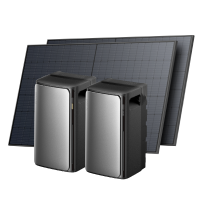
At its core, the OCEAN Pro is a central battery storage system capable of scaling up to 80kWh total capacity (using 8 battery units). It acts as the primary EV charging controller, managing loads across your home with an AC output range of 11.5kW or 24.0kW, ensuring your vehicle charges at maximum speed without compromising your home's electrical stability.
Smarter solar charging
Maximum solar input: The EcoFlow Ocean Pro system supports a massive 40kW solar STC input, allowing you to charge your EV entirely on renewable energy during peak sunlight hours.
Optimization tools: Integrated features like Storm Guard and Time-of-Use (TOU) optimization automatically decide when to draw from the grid or use the internal LFP batteries. This ensures you are always charging at the lowest possible cost while maintaining backup reserves.
The OCEAN EV charger (11.5kW)
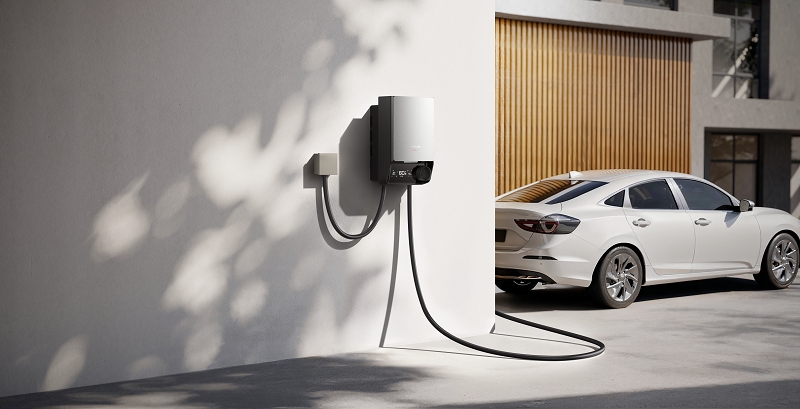
Connector type: It features a heavy-duty SAE J1772 plug, ensuring universal compatibility with the vast majority of EVs in North America.
Power output: Delivering a maximum continuous current of 48A, the charger provides up to 46 miles of range per hour of charging.
Environmental durability: The unit is built to perform in extreme conditions, with an operating temperature range from -30°C to 50°C, and storage temperature range between -40°C to 70°C.
Advanced connectivity: Real-time management is enabled via Wi-Fi (2.4GHz) and Bluetooth, allowing for seamless integration with the EcoFlow mobile app and the built-in LCD display.
Protection: The charger's enclosure is rated NEMA Type 4 and IK 10.
Tips on selecting the right EV charger plug for your home
Choosing a home charging solution is a long-term investment. Understanding your daily driving habits and future vehicle needs will help you select the most efficient hardware.
Determining your amperage requirements:
16A (Entry Level): Best for plug-in hybrids or short-range EVs. It adds roughly 10-12 miles of range per hour.
32A (Standard): The industry standard for most residential garages, providing around 25 miles of range per hour.
48A (Premium): Ideal for large-battery EVs or high-mileage drivers. The EcoFlow OCEAN Pro EV charger supports this high-output current, delivering up to 46 miles of range per hour to ensure your car is always ready by morning.
Future-proofing your garage:
While your current car might only accept 32A, battery sizes and onboard charging speeds are increasing rapidly. Installing a higher amperage circuit (such as a 60A circuit to support 48A continuous charging) or choosing a system like the OCEAN Pro, which is configurable up to 100A AC, ensures you won't need to pay for expensive electrical upgrades when you upgrade your vehicle in the future.
Smart features to look for:
Modern charging shouldn't require manual intervention. Priority should be given to systems offering:
Wi-Fi and app control: Allows you to schedule charging during off-peak hours and monitor real-time energy consumption.
Solar and storage compatibility: The cost-effective way to charge is through home-generated solar power. The EcoFlow system’s ability to coordinate between 40kW of solar power input and 80kWh of battery storage ensures that your EV charging plug delivers sustainable power, reducing reliance on grid.
Plug in EV charger: suggestions for maintenance & troubleshooting
Lastly, if you want to maximize the potential and efficiency of your home EV charger, then be sure to follow our essential tips and tricks outlined below.
Routine cleaning and inspection: Periodically check the plug's contact pins for debris, dust, or carbon buildup. Use compressed air or a soft, dry cloth to clean the terminals; avoid water or liquid cleaners that could cause a short circuit.
Managing cable strain: Ensure the cable is coiled loosely when not in use and avoid letting the heavy connector hang unsupported from the car's inlet. Excessive weight on the plug can damage both the charger and the vehicle's internal charging port.
Monitoring thermal performance: If the plug or cable feels excessively hot to the touch during a session, it may indicate a loose connection or damaged wiring. Modern systems like the EcoFlow OCEAN Pro feature thermal sensors, but manual inspection is a vital safety backup.
Resolving fault signals: Learn to identify common indicator light patterns on your charger. Red or amber flashing lights often signal a ground fault (GFI), an over-voltage surge, or a communication error between the Control Pilot pin and the car.
Signing off
Navigating the landscape of EV charging plugs doesn't have to be a daunting task. By understanding the regional standards, from the traditional J1772 to the streamlined NACS, you can ensure your home is prepared for any vehicle. Modern ecosystems like the EcoFlow OCEAN Pro represent the future of sustainable living, shifting the focus from simple plug-in hardware to intelligent, integrated energy management.
When selecting your setup, prioritize safety certifications, smart connectivity, and future-proof amperage. Investing in a reliable, solar-compatible system today ensures your electric mobility remains efficient, affordable, and resilient for years to come. So, if you are ready to take control of your home energy, then explore the EcoFlow OCEAN Pro and request a consultation with our experts today. Experience the ultimate in EV charging reliability!
FAQ
1. How do I identify the different EV charger plug types for my vehicle?
Match your car's inlet to regional standards like J1772 or NACS. The EcoFlow OCEAN Pro uses the heavy-duty SAE J1772 plug, ensuring universal North American compatibility and reliable, high-speed energy transfer.
2. What is the 80% rule for EV?
This rule suggests charging your EV battery to 80% for daily use to maximize long-term battery health and longevity. The EcoFlow OCEAN Pro makes following this easy by allowing you to set precise charging limits through its smart app interface.
3. Can I use different EV charger plugs with a single charging station?
Generally, stations are fixed, but adapters can bridge J1772 and NACS. The EcoFlow OCEAN Pro provides a versatile foundation that scales with your household’s evolving vehicle and battery needs.
4. Can I plug my EV directly into a 240V outlet?
Yes, using a plug-in Level 2 charger, though hardwiring provides superior durability. EcoFlow OCEAN Pro offers a robust, NEMA 3R-rated hardwired solution, maximizing power and long-term reliability.
5. Are the various types of EV charger plugs interchangeable across different continents?
No, regional standards vary (Type 1 vs. Type 2). EcoFlow OCEAN Pro focuses on North American standards, providing a high-performance hub that handles regional requirements with industrial-grade efficiency and app-monitored precision.
