
How to Plan a Successful Home Renovation in the UK (2026 Guide)
Renovating your home in the UK doesn't have to be stressful—it's your chance to create a space that truly reflects your style and needs. From picking the right colors and layouts to keeping an eye on your budget, there's a lot to think about. These days, many homeowners are also adding solar battery storage to their plans, helping cut energy bills and make homes more eco-friendly. This 2026 guide will show you how to tackle your renovation step by step, so you can enjoy the process and the results.
Do you need a planning permit for home renovations?
Not all home renovations in the UK require formal approval. Minor alterations may fall under permitted development rights, which allow homeowners to make certain improvements without seeking official permission. For example, small interior changes, modest extensions, or window modernisations often do not require approval.
Nevertheless, major renovations typically need authorisation from your local council, especially if you plan to:
Build a large extension
Alter the exterior look of the property.
Develop a house into several living units.
Renovate a listed building
Remodel houses in conservation zones.
The age and location of the property are also important, as stricter planning rules usually apply to older or historic buildings. Many experienced property investors follow a step-by-step checklist for UK home renovations to ensure that planning, budgets, and timelines are carefully considered before work begins.
How do you plan a successful home renovation step by step?
he key to any successful home renovation is careful planning. Without it, homeowners can face unexpected costs, construction challenges, or delays. A clear plan keeps your project on track. Modern UK renovations increasingly incorporate renewable solutions, such as the EcoFlow home energy storage system, to cut electricity bills and boost energy independence. Whether you're renovating a newly purchased property or updating your current home, a systematic approach makes the process much smoother.
Assess the property before purchase
Before renovating a house, examine the structural condition of the property carefully. Older homes may have hidden issues that increase renovation costs.
What to Check | What to Look For |
|---|---|
Damp & walls | Stains, mould, peeling paint |
Roof condition | Missing tiles, leaks |
Electrical wiring | Old or unsafe wiring |
Plumbing | Pipe corrosion, leaks |
Foundation | Cracks, uneven floors |
Windows & doors | Drafts, poor sealing |
Commission a professional building report
Any large home renovation project in the UK must start with a professional survey. Chartered surveyors are used to checking property and raising any issues related to structures that cannot be identified through regular viewing. An in-depth report will indicate such issues as movement of the foundation, roofing imperfections, insulation, or electrical safety. By addressing these issues at an early stage, you save on your budget and also make sure that your home renovations are safe.
Inspection Area | What the Surveyor Checks |
|---|---|
Foundation | Movement, subsidence |
Roof | Structure, leaks, materials |
Electrical system | Compliance, wiring age |
Plumbing | Pipe condition, drainage |
Insulation | Coverage, materials |
Damp & moisture | Damp levels, ventilation |
Overall structure | Load-bearing walls |
Determine planning permission needs
In case your project requires a tremendous makeover in terms of layout or structure, it is advisable to use the services of a planning expert or architect to ensure your home renovation design complies with local requirements.
Renovation Type | Example Work | Permission Required |
|---|---|---|
Interior updates | Painting, flooring | No |
Small extensions | Rear extension (limited size) | Sometimes |
Large extensions | Multi-room expansion | Yes |
Structural changes | Removing load-bearing walls | Yes |
Exterior changes | Facade, windows | Often |
Listed buildings | Any alterations | Yes (strict) |
Conservation areas | External modifications | Yes |
Calculate renovation costs and set a realistic budget
One of the largest issues with home renovations is budget planning. Homeowners do not really have an idea of the real cost of construction, materials, and labour. Begin by estimating how much to renovate a house, depending on the size of your project. Add estimates of structural repairs, contractors, permits and inside finishes. A contingency fund of 10-20% in case of unexpected expenses is also prudent to add.
Cost Category | What It Includes | Cost Variability |
|---|---|---|
Structural repairs | Foundation, roof, walls | High |
Labour | Contractors, specialists | Medium–high |
Materials | Flooring, fixtures | Medium |
Permits & fees | Planning, approvals | Low–medium |
Interior finishes | Paint, cabinets | Medium |
Energy upgrades | Insulation, solar systems | Medium |
Contingency fund | 10–20% extra | Variable |
Upgrade your heating and energy systems
Modern home renovations are becoming energy-efficient. Modifying heating systems and energy infrastructure would go a long way in lowering utility bills in the long run and enhancing property value. Installing solar battery storage during a renovation allows homeowners to store excess solar energy and use it when electricity demand is higher.
Efficient heating solutions
Most homeowners are now making upgrades to their structures that are energy efficient, like using modern boilers, heat pumps, or smart thermostats. These systems enhance comfort and reduce long-term energy expenses. Use of energy is also becoming a significant aspect of sustainable home renovation design in the UK.
System Type | Key Features | Benefits |
|---|---|---|
Modern boilers | High-efficiency gas boilers | Reliable heating, lower energy use |
Heat pumps | Air or ground source systems | Low carbon, energy efficient |
Smart thermostats | App-controlled temperature | Energy saving, convenience |
Underfloor heating | Even heat distribution | Improved comfort, space-saving |
Solar battery storage for renovated homes
Renewable energy is becoming a key part of modern home renovation in the UK. When paired with solar panels, battery storage allows homeowners to generate electricity during the day and store it for use at night or during peak pricing hours.
Systems like EcoFlow OCEAN 2 (three-phase) are designed for higher-performance, future-ready homes. Compared to typical systems, it offers up to 12kW output power and 24kW solar input, meaning it can support more appliances at once while capturing more solar energy. With 3 MPPTs and 3 PV strings, it also performs better in real-world conditions, such as mixed roof directions or partial shading.
For storage, each battery module provides 5kWh capacity, expandable up to 60kWh, allowing longer backup time and better energy independence. In simple terms, this means:
Use more of your own solar power instead of relying on the grid.
Run multiple high-power appliances more smoothly.
Store enough energy for longer outages.
What makes it especially suitable for renovated homes is its all-in-one design, which simplifies installation and reduces space usage—ideal for retrofit projects. It also includes a built-in smart meter, whole-home backup (0ms switchover), and enhanced safety features like AFCI and surge protection, making it more reliable for everyday use.
For homeowners considering renovation costs, adding solar battery storage like OCEAN 2 can significantly reduce long-term electricity bills while improving energy independence and system reliability. Ready to save more energy? Get your solar battery quote today and let our experts create a solution tailored to your home.

Smart home energy monitoring: EcoFlow Intelligent HEMS
Modern home renovations in the UK increasingly prioritise energy efficiency and smart solutions. The EcoFlow Intelligent HEMS is a home energy monitoring system that helps homeowners track and optimise electricity use throughout the house.
It is especially valuable during renovations in homes with solar panels, heat pumps, or other energy-intensive appliances, as it can intelligently manage and distribute power. Key benefits of integrating EcoFlow Intelligent HEMS in your renovation include:
Real-time energy monitoring: See exactly how much electricity each appliance or system consumes.
Automatic power distribution: Prioritises energy for essential devices and optimises solar usage.
Reduced electricity costs: Improves self-consumption of solar power and minimises reliance on the grid.
Enhanced appliance lifespan: Prevents overloads and inefficient energy use.
Smart, sustainable living: Integrates seamlessly into modern renovations for a future-ready home.
By adding Intelligent HEMS during a renovation, homeowners can combine comfort, efficiency, and long-term cost savings in a smart, modern home.

Add extra living space
The creation of more living space is one of the primary motivations behind people investing in home improvements. Home expansion will help enhance comfort and also increase the value of your property for a long time.
Popular extensions or remodelling include loft extensions, kitchen extensions, or the strategic use of unused garages or the garage into another useful room. These extensions are popular home renovation ideas in the UK that property owners opt to have when they wish to enhance the functionality of their house.
Extension Type | Purpose | Benefits | Considerations |
|---|---|---|---|
Loft extension | Add bedrooms or office space | Maximises unused space, increases property value | Check the roof structure; planning permission may be needed |
Kitchen extension | Expand cooking/dining area | Enhances lifestyle, improves flow | Budget and integration with existing design |
Garage conversion | Home office, playroom, or guest room | Makes use of underutilised space | Insulation, ventilation, and access modifications |
Rear or side extension | Create open-plan or extra rooms | Increases living area and natural light | Planning permission may apply at a higher cost |
Choose how the renovation will be managed
Any home remodelling project must have project management. There are those homeowners who engage the services of professional contractors to do all the work and those who do some of the trades themselves. You can use a home renovation checklist step-by-step to organize contractors, schedules, and materials without difficulties, in case you decide to complete the renovation process on your own.
Management Approach | Description | Benefits | Challenges |
|---|---|---|---|
Full contractor service | Professionals handle all aspects | Less stress, guaranteed quality | Higher cost |
Partial DIY | Homeowner completes simple tasks | Cost savings, personal touch | Time-consuming, skill required |
Mixed approach | Contractor handles technical work, DIY for minor tasks | Balanced cost and control | Requires good planning and oversight |
Renovation checklist | Step-by-step guide for tasks | Keep the project on track | Needs regular updates and monitoring |
Upgrade exterior cladding
One of the key components of home renovation UK projects is exterior improvements. The external finish or cladding can be improved by updating to enhance the insulation and the appearance.
Contemporary surfaces include fibre cement boards, brick slips or timber cladding, which are durable and fashionable. Such upgrades may change the outlook of homes drastically to refurbish the outlook and enhance weather resistance.
Cladding Type | Benefits | Cost Range | Best For |
|---|---|---|---|
Fibre cement boards | Durable, low-maintenance | Medium | Modern homes, long-lasting finish |
Brick slips | Classic appearance, weather-resistant | Medium–high | Blend with traditional architecture |
Timber cladding | Warm, natural look | Medium | Contemporary or rural designs |
Composite panels | Lightweight, easy to install | Medium–high | Quick upgrades, modular solutions |
Improve insulation and ventilation
During home renovation design, there should be energy efficiency that is always kept in mind. Adequate insulation helps in saving heat during the winter months, and it helps in keeping homes cooler during summer. Wall insulation, roof insulation, and floor insulation can help cut down the amount of heat loss. Ventilators are also used to ensure a healthy indoor environment.
Upgrade | Benefits | Typical Application | Notes |
|---|---|---|---|
Wall insulation | Reduces heat loss, lowers energy bills | All walls | Can be external or internal |
Roof insulation | Improves temperature regulation | Attics, lofts | Essential for loft conversions |
Floor insulation | Prevents cold drafts | Ground floors | Works well with underfloor heating |
Ventilators / mechanical ventilation | Maintains air quality | Bathrooms, kitchens, attic | Reduces humidity and mould risk |
Update the roof covering
Roof repairs are among the structural additions that many homeowners consider when they look at how to renovate a house. The roofs of older buildings might need new tiles, waterproof sheets or better insulation. Renovating the roof in your home renovation UK project may also enhance weather resistance and the general service of the house.
Roof Upgrade | Benefits | Materials | Considerations |
|---|---|---|---|
New tiles | Improved durability, aesthetic | Clay, slate, and concrete | Match existing style |
Waterproof sheets | Prevent leaks and dampness | Synthetic membranes | Essential for flat or low-slope roofs |
Enhanced insulation | Better thermal efficiency | Mineral wool, foam boards | Works with loft conversions |
Full roof replacement | Maximum lifespan and safety | Tiles + insulation + waterproofing | Higher cost, planning may be required |
5 popular home renovation ideas UK homeowners love
If you're exploring practical home renovation ideas, the following are among the most popular choices in the UK. These improvements not only enhance lifestyle but also increase property appeal.
Open-plan living spaces and kitchen upgrades: Creating open living spaces is one of the top home renovation ideas that UK homeowners love. Removing non-load-bearing walls can transform small interiors into bright, spacious areas. Combining kitchens with dining and living spaces creates a social environment and enhances natural light—one of the most effective ways on how to renovate the home.
Energy-efficient windows and insulation: Modern home renovation in the UK focuses on energy efficiency. Upgrading to double or triple glazing and improving wall and roof insulation reduces heat loss, improves comfort, and saves on energy bills—making these essential home renovation ideas for long-term cost-efficiency.
Smart home technology and automation: Integrating smart home systems enhances convenience and energy efficiency. Smart lighting, heating, and security systems allow remote management via mobile devices and help monitor electricity consumption, adding functionality for homeowners investing in home renovation projects.
Garden rooms and outdoor living spaces: Outdoor living areas, including patios, garden rooms, and outdoor kitchens, are increasingly popular home renovation ideas in the UK. They extend usable space with minimal structural changes, allowing homeowners to enjoy nature while adding value to their property.
Easy home renovation ideas for quick improvements: Not all renovations require major construction. Small, cost-effective upgrades—like repainting walls, updating kitchen cabinets or hardware, replacing lighting fixtures, renewing flooring, or renovating bathroom fittings—can modernise a home quickly without a large budget.
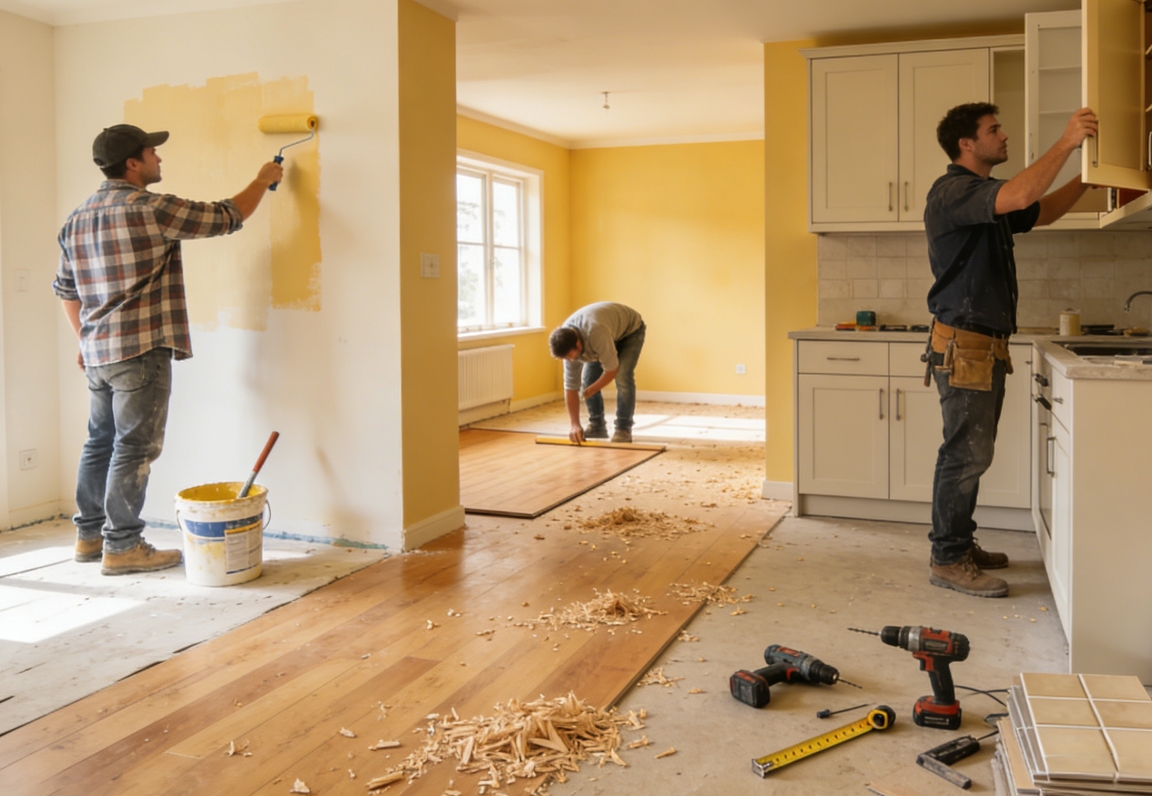
How to renovate a house on a budget
Many homeowners assume that home renovation requires a huge budget. In reality, smart planning and strategic improvements can make a big difference without overspending. The key is to focus on changes that provide the best value.
Focus on structural improvements first: Address critical structural issues—such as roofing, plumbing, electrical systems, and foundation stability—before aesthetic upgrades. Early repairs prevent costly future problems and ensure the home is safe and functional.
Restore or reuse existing materials: Older homes often contain high-quality features that can be restored rather than replaced. Wooden floors can be refinished, cabinets repainted, and doors or fixtures reused, preserving character while saving money.
DIY cosmetic projects: Simple DIY tasks like painting, adding shelves, or updating light fixtures can significantly reduce labour costs and allow homeowners to personalise their space.
Invest in energy upgrades for long-term savings: Energy-efficient improvements, such as insulation, energy-efficient windows, and heating upgrades, reduce ongoing costs. Incorporating solar battery storage, like EcoFlow Ocean 2, and smart energy management systems, such as EcoFlow Intelligent HEMS, helps households save electricity and become more energy-independent.
7 expert home renovation tips for homeowners
Good home renovation design alone doesn't guarantee a successful renovation. Proper planning, budgeting, and professional guidance are essential to avoid costly mistakes. Here are seven key tips:
Plan before starting work: Develop a step-by-step checklist covering design, contractors, budget, and schedule to guide the renovation efficiently.
Set a realistic budget: Include a contingency fund of 10–20% to cover unexpected repairs and ensure financial control.
Hire experienced professionals: Architects, builders, and engineers ensure compliance with building regulations, detect structural issues early, and prevent future costs.
Focus on long-term value: Prioritise renovations that improve energy efficiency, structural integrity, and living space for optimal return on investment.
Prioritise energy efficiency: Upgrades like insulation, efficient windows, and renewable energy systems reduce energy bills. Solar battery storage and smart energy management solutions can further enhance energy independence.
Preserve the property's character: Maintain unique architectural features such as fireplaces, beams, and brickwork to retain charm and value.
Be patient: Delays are common due to weather, material shortages, or approvals. Stay flexible and maintain clear communication with contractors.
Conclusion
Home renovation offers the perfect solution for your existing home, providing a total overhaul and adding value to your property. The most important tool for success is preparation. Being equipped with knowledge of how to plan a house renovation, a realistic budget, and a step-by-step home renovation checklist can help homeowners avoid costly mistakes.
Energy efficiency is another important concern in modern home renovation projects in the UK. By combining intelligent energy control devices like EcoFlow Intelligent HEMS with renewable energy storage devices like EcoFlow Ocean 2, homeowners can lower their electricity bills and make their homes more sustainable.
Schedule Your Free Consultation Today!
What kind of product or solution are you interested in?


FAQs
1. How much does a full house refurb cost?
The full renovation cost can vary significantly depending on the property's size, the age of the structure, and the extent of the envisaged improvements. Most homeowners in the UK invest between 40,000 and 150,000 in a complete revamp. Labour cost and material cost should be considered when planning a home renovation. Refurbishments like plumbing, electrical rewiring, roof repairs, and new kitchens can quickly add to the overall budget.
Another thing you should do is add contingency funds to your budget. Renovations often reveal hidden problems, such as dampness, insulation issues, or outdated electrical systems. Saving 10-20 per cent of your spending will also ensure the project remains affordable throughout the process.
2. In what order do you renovate a house?
When renovating a house, most professionals suggest carrying out the work in phases, beginning with structural work and finishing with cosmetic work. This will keep the house safe and stable before proceeding to the decorative finishes.
An average home renovation order consists of:
Roof work and structural repair first.
Plumbing, electrical and heating systems upgrade.
Interior plastering, flooring, painting and fixtures.
This process will ensure the project is well-organised and does not suffer unjust delays. It also ensures that every phase of the renovation is built on the others.
3. What is the most expensive part of a house renovation?
The most expensive aspect of any home renovation project is usually structural upgrades. The presence of the foundations, roofing, plumbing systems, or electrical rewiring can increase the general budget in a short time. These components require the expertise of labour, specialised materials, and compliance with building regulations.
Kitchen and bathroom remodelling are also very costly. Appliances, cabinets, tiles, and plumbing fixtures should be of high quality, as they can add thousands of pounds to a project. These upgrades, however, are likely to raise property value the most.
4. What is the best way to plan a renovation project?
The secret to a successful, smooth renovation is planning. The absence of a clear strategy would cause the projects to exceed the budget and take significantly longer than anticipated. Your home renovation strategy should begin with defining your goals, budget, and timeline. Being aware of what you are actually aiming to accomplish will help you make all subsequent decisions.
The following are some of the necessary steps:
Develop an elaborate renovation plan and budget.
Seek advice early, e.g., from architects or builders.
Repairs and upgrades of the structure should be prioritised first.
Proper planning helps homeowners avoid expensive mistakes. It is also used to ensure that every phase of the renovation supports the home's overall design and functionality.
5. What is the biggest red flag in a home inspection?
A home inspection can expose issues that cannot be detected during a regular viewing. Early detection of these problems enables buyers and homeowners to avoid future repair costs. Structural damage is one of the main warning indicators during an inspection. Professionals always suggest first investigating foundations, load-bearing walls, and roofs when planning a property renovation guide.
Common red flags include:
Huge cracks on the walls or foundations.
Moist, damp or water-spoiled signs.
Obsolete electric systems or insecure wiring.
These issues can be signs of more underlying structural problems or safety problems on the property. Early correction of them safeguards the building and renovation budget.

