
Fusebox Consumer Unit Upgrade Guide: Safety, Capacity and Modern Standards
From period Victorian terraces to new-build City flats, the consumer unit acts as the ‘brain’ of your home’s electrical system. Relying on an aging fusebox often means living with sub-standard protection. Upgrading to a modern board provides the essential infrastructure to support high-draw tech like EVs, smart storage, and the heavy power demands of a modern household.
This guide breaks down the latest safety standards, walks you through calculating your home’s actual load, and explains how to integrate smart solutions to future-proof your energy setup.
What Is a Fusebox Consumer Unit and Why Upgrade Matters
In British homes, the “fusebox” is the brain of your electrical system, but the modern version, the consumer unit, does much more than just keep the lights on.
1. What a Consumer Unit Does in Your Home
Essentially, the consumer unit is the gatekeeper of your electricity. It takes the power coming in from the electricity grid and distributes it to various circuits around your house, from the kitchen sockets to the power shower. Its primary job is to detect faults and cut the power instantly to prevent electrical fires or nasty shocks.
2. Signs Your Consumer Unit Needs an Upgrade
If you still have an old-fashioned box with literal “fuses” (the ones where you have to wind a bit of wire around a ceramic carrier), you’re long overdue for a change. Other red flags include:
Plastic casings (modern UK standards require non-combustible metal enclosures).
Frequent tripping without an obvious cause.
A lack of RCD (Residual Current Device) protection, which is now a legal requirement for most circuits.
3. Modern Safety "Twin-Shield": SPD & AFDD
Modernising your electrics is about more than just a new enclosure. To stay compliant with the newest UK wiring regulations, you now need to factor in advanced tech like surge protection and arc fault detection as standard.
SPD (Surge Protection Device): Think of this as “body armour” for your sensitive electronics. Under the latest BS 7671 standards, installing an SPD is mandatory for all new installations to protect against grid spikes and lightning. While a homeowner can technically opt-out by signing a written risk waiver, it is rarely advised given the high value of modern appliances like Smart TVs, PCs, and home battery systems.
AFDD (Arc Fault Detection Device): These use microprocessors to identify “micro-sparks” (arcs) caused by damaged cables, loose connections, or crushed wires behind furniture. These arcs generate intense heat that leads to fires, yet they are invisible to standard circuit breakers.
4. Risks of Outdated Consumer Units
The danger of an archaic system isn’t just a blown fuse during Sunday roast; it’s the lack of modern safety triggers. Old units may not trip fast enough—or at all—during a surge, significantly increasing the risk of fire. Furthermore, they simply aren’t designed to handle the sheer volume of gadgets we use today.

How to Determine the Right Capacity for Your Home
Don’t choose a unit without checking its capacity and compliance with UK regulations. You need to be certain it has the on-board capacity to handle a modern household’s peak load without being pushed to its limit.
1. Calculating Household Electrical Load
Your “load” is the total amount of power all your appliances pull at once. If you’re running a heat pump, an electric oven, and a tumble dryer simultaneously, a basic 63A main switch might struggle. An electrician will help you calculate the “diversity” of your load to ensure your main switch and cables are up to the task.
Current demand I (Amperes) is calculated based on the UK nominal voltage $U = 230$V. Ensuring your circuit breakers ($I_n$) are correctly rated is critical for fire prevention:
| Appliance | Power P (kW) | Est. Current I=P/U(A) | Recommended Circuit |
|---|---|---|---|
| EV Charger | 7.2 | approx 31.3 | Dedicated Radial |
| Electric Shower | 9.5 | approx 41.3 | High-Amperage Dedicated |
| Heat Pump | 5.0 | approx 21.7 | Dedicated (Inrush Protected) |
| Electric Oven | 3.5 | approx 15.2 | Dedicated or 32A Ring |
This table helps illustrate why calculating your total household load and planning dedicated circuits for high-draw appliances is essential.
2. Number of Circuits and Breakers Needed
Modern living often requires more “ways” (slots for breakers) than in the past. It’s a good idea to separate high-draw appliances like home EV stations onto their own dedicated circuits to avoid overloading the ring main.
3. Planning for Future Energy Needs
Think about what you might install in two or three years. Are you planning an attic conversion or an electric vehicle? It is far cheaper to install a larger 15-way or 20-way consumer unit now than it is to replace a small one again in 24 months. At this stage, many homeowners also consider how a home energy management system can help balance these future loads, ensuring that as you add more high-draw appliances, your system remains stable and efficient.
Practical Tips for a Smooth Consumer Unit Upgrade
An upgrade is a bit of a “boots on the ground” operation, so a little preparation goes a long way in keeping your home life civilised during the process.
1. Choosing a Certified Electrician
In the UK, you must hire a Part P registered electrician (NAPIT or NICEIC) who can self-certify their work. This ensures the installation meets the latest BS 7671 (18th Edition) wiring regulations.
2. Minimising Disruption During Installation
Expect the power to be off for 4 to 8 hours. Plan ahead by defrosting the freezer or charging your laptop, and perhaps head out to the local café for a few hours while the “sparky” does the heavy lifting.
3. Integrating Renewable Energy and Home Storage
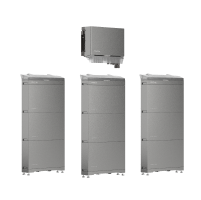
When upgrading your distribution board, it’s the perfect time to consider solar PV or home battery storage to boost your energy efficiency. For instance, the EcoFlow OCEAN 2 Home Storage System is an excellent companion for modern consumer units. Whether your home runs on a standard single-phase supply common in UK terraces or a three-phase setup for larger estates, its modular design integrates seamlessly. The system’s compact, ‘all-in-one’ nature means no messy wiring across your utility room. It supports smart load balancing and manages solar arrays effortlessly, helping you distribute power intelligently and take the pressure off your main unit during peak times.
4. Monitoring Energy Usage for Safety and Efficiency
Once the hardware is in place, knowledge is power. Using a smart monitoring system like the Ecoflow PowerInsight 2 allows you to track exactly how much energy each circuit is guzzling in real-time. By seeing your storage status and solar generation at a glance, you can optimise your load distribution—keeping your home safe while significantly trimming your monthly bills.

Common Pitfalls and Things to Avoid
Even with the best intentions, it’s easy to trip up on the details when modernising your home’s electrics.
1. Underestimating Installation Complexity
It’s rarely as simple as “swapping the box.” Once a new, sensitive consumer unit is installed, it may detect “ghost” faults in your old wiring that the previous fusebox ignored. Be prepared for the possibility that some of your house’s internal wiring might also need attention.
2. Ignoring Local Regulations and Standards
The UK’s “Amendment 2” of the 18th Edition introduced strict rules about Surge Protection Devices (SPDs) and Arc Fault Detection Devices (AFDDs). Skipping these might save you a few quid now, but it could make your home uninsurable or harder to sell later.
3. Overlooking Hidden Costs
Always ask for a quote that includes the EIC (Electrical Installation Certificate) and the notification fee to your local Building Control. These documents are essential for your home’s “deeds” and are often forgotten until the last minute.
Schedule Your Free Consultation Today!
What kind of product or solution are you interested in?

Conclusion
Upgrading your consumer unit is one of the smartest investments a UK homeowner can make. It transforms your home from a potential fire risk into a modern, efficient hub capable of supporting EVs, solar power, and home battery storage like the EcoFlow OCEAN 2. By choosing a certified professional and planning for future capacity, you ensure your home stays safe, compliant, and ready for the energy transition.
FAQs
1. Is a fuse box the same as a consumer unit?
Yes, they perform the same basic function, but a consumer unit is the modern, much safer version. While a “fusebox” uses wire that melts to break a circuit, a consumer unit uses reusable circuit breakers and RCDs for much faster protection.
2. What is the life expectancy of a consumer unit?
A well-installed consumer unit should last between 20 and 30 years. However, because safety regulations (BS 7671) are updated every few years, your unit may become “outdated” in terms of standards before it actually wears out.
3. How much should it cost to replace a consumer unit?
In the UK, a professional replacement typically costs between £400 and £1,000 for a typical 10–15 circuit installation without major wiring upgrades. The final cost can vary depending on your home size, the number of circuits required, and whether any existing wiring needs remedial work to meet current safety standards.
4. Is replacing a consumer unit notifiable?
Yes, replacing a consumer unit is “notifiable work” under Part P of the Building Regulations. This means it must be reported to your local authority building control, usually handled by your certified electrician.
5. Can I upgrade my fusebox myself?
No, you should never attempt to replace a consumer unit yourself. It is complex, dangerous, and illegal to self-certify the work unless you are a qualified professional; doing so will also void your home insurance.

