
The Future of Home EV Stations: Achieving Grid Stability, Peak Load Management, and High-Efficiency Charging Performance
Imagine what the year 2030 looks like in the UK. Flying cars may not be in the picture, but you would envision waking up to a fully charged electric vehicle, its battery refilled overnight using cheap, renewable energy. Your home EV station is more advanced than it’s ever been, avoiding spikes in your bills and the local grid load.
This future is just around the corner, with a government mandate aiming to have 80% of new car sales be electric by 2030. In this guide, we’ll explore how next-generation home EV stations push the reality of an eco-optimistic future.
The Current Landscape of a Modern EV Home Charging Station in the UK
Nowadays, you’ll find that up to 90% of EVs charge at home, with most UK drivers owning a wall-mounted Level 2 unit. On average, these chargers operate at 7.4 kW on a single-phase electricity supply, adding 20 to 30 miles of range hourly. Meanwhile, with EcoFlow PowerPulse 2, you can charge your EV at 22 kW three-phase output power.
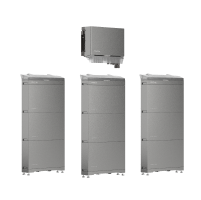
You can also use PowerPulse 2 with a home solar battery, EcoFlow PowerOcean. By integrating these systems, you can opt to use solar energy to power up your vehicle at the optimal times. If sunlight is insufficient, however, you can still use PowerPulse 2 using electricity from the grid.
Since 2022, the UK government has required all private charge points to be capable of default off-peak scheduling and random starts to avoid simultaneous starts.
The government is also offering an OZEV EV chargepoint grant that covers up to 75% of a smart charger’s cost (capped at £350). Thanks to such initiatives, by the end of October 2025, the UK had 86,798 EV charging points at 44,142 locations, with 115,092 EVSE and 121,268 connectors.
The biggest challenge to overcome is the rising demand for EV charging, which is straining residential grids, especially in urban areas.
Grid Stability: Safeguarding the UK's Power Network Amid EV Growth
The next generation of home EV chargers is positioning itself to be grid-friendly—taking on everyday challenges like high demand head-on. Below are some of the initiatives working to ensure grid stability.
Hidden Risks of an Unmanaged EV Charging Station for Home
Suppose every EV owner in the UK plugs in their devices at 6 pm. The country would experience voltage sags and overload local transformers, overburdening distribution channels.
According to the National Grid, electrifying transport may add around 120 TWh of annual electricity demand by 2030 if people don’t manage their charging intelligently. Regulators have begun tackling this problem by introducing tools and techniques to make EV charging more grid-friendly.
Renewable Synergies for Resilience
Pairing EV charging with renewable energy makes home energy cleaner. On average, a 4kW solar system generates roughly 3,400kW annually, accounting for nearly all of an EV’s yearly mileage. Simply charging during sunny hours or storing excess solar energy for later use can reduce grid-drawn charging by up to 40%.
EV Home Charging Station UK: Peak Load Management for Off-Peak Efficiency
Load management is the key to national energy efficiency, and the movement starts at home. Here’s what you should know.
Defining Peaks and UK Household Impact
In the UK, peak hours occur on weekdays between 4 pm and 10 pm. If you charge your EV during this window, you could be paying between £200 and £400 more each year. To eliminate hefty premiums, you can charge overnight on special EV plans like Octopus Energy’s Agile or Intelligent tariffs, which offer off-peak rates under 10p/kWh.
Another potential issue to overcome is the risk of grid supply and demand imbalance if too many EV owners charge simultaneously. Of the 2 million EV charging sessions that occur on the public network each month, 60% involve ultra-rapid chargers.
Through peak load management, UK initiatives can help EV owners shift the bulk of their charging to off-peak times.
Innovative Tools for Peak Shaving in Home EV Stations
One key approach to tackling peak demand is through AI-powered and algorithmic scheduling. Advanced chargers, such as PowerPulse 2, can predict optimal charging schedules according to your usage patterns and electricity tariff. This can be monitored and managed through the EcoFlow app.
It can also temporarily slow or pause EV charging if your home system is reaching its upper consumption limit. If you have multiple EVs, PowerPulse 2’s smart load-balancing capabilities ensure the two chargers share a limited supply and adjust rates.
High-Efficiency Home EV Station Charging Performance: Faster, Smarter, Greener
So, you’re set on an EV charging station for your home. What tech advancements and solar integrations can you anticipate?

Tech Advancements in Home Setups
EV home charging has walked a long path, with most UK homes using Level 2 chargers that fully charge a typical 60kWh EV battery overnight. With faster chargers, you can refill an entire EV in under three hours.
The most significant leap in technological advancements is dynamic load balancing, which saves homeowners from expensive electrical upgrades by automatically adjusting power usage.
Solar Integration
Solar and EV charging is where advancements get even more exciting. A typical 3 to 4kW solar array in the UK can generate most of an EV’s charging needs in a year.
Of course, timing is everything. If you’re often charging at night when solar peaks midday, smart chargers can bridge this gap. A smart charger’s Solar Mode ensures it prioritizes drawing from excess solar power, whenever it’s most optimal.
Schedule Your Free Consultation Today!
What kind of product or solution are you interested in?

Choosing and Future-Proofing Your Home EV Station
Picking a home charger is easy, but a few smart choices can save you the hassle of investing in upgrades later. Here are some tips to keep in mind:
Purchase a smart charger, especially if you live in an older home with a smaller main fuse. A smart charger will automatically slow down when running multiple appliances to avoid blowing a fuse.
If eligible, apply for the OZEV grant, which can reduce your installation costs by up to £350.
If you prefer a grab-and-go experience, opt for a tethered cable, which is similar to a petrol pump hose. On the other hand, an untethered (socket-only) charger offers flexibility, as you can accommodate different connector types.
Future-proof your choice by selecting something with dynamic load balancing, solar integration, and compatibility with Vehicle-to-Home/Grid (V2X) features.
Explore the convenience of EV charging in your own home
Home EV charging stations are quickly becoming a new norm for UK homeowners—and they’re saving a lot of money. Through intelligent scheduling, solar integration, and grid-friendly features, UK households can enjoy cheaper off-peak charging, cleaner miles, and a setup that doesn’t require extensive technical knowledge.
Ready to build your home charging setup? Consult with EcoFlow to discover affordable and renewable charging options.
FAQ
Is solar useful for EV charging in the UK?
Yes, solar is useful for EV charging in the UK because it covers most of an EV’s annual driving energy. With intelligent chargers, home energy management systems and solar energy, EV drivers can cut up to 40% of their typical EV charging costs.
What’s the difference between V2H and V2G?
V2H (Vehicle-to-Home) refers to using your EV to power your home during blackouts, while V2G (Vehicle-to-Grid) refers to exporting energy back to the grid. V2H can help lower your electricity bills, and V2G helps stabilize grid supply.
How long does charging an EV at home take?
It takes between 6-10 hours to charge an EV with a typical Level 2 charger. If you have a faster charger (11-22kW) and three-phase power, you can charge an EV in just 3 hours. Level 2 charging is perfect for those who use EVs daily.

