
Eco-Friendly House UK: Sustainable Living Guide 2026
Sustainable living in the UK is no longer a niche concept—it's becoming a practical and forward-thinking lifestyle choice. From energy-efficient design to renewable solutions like solar battery storage, modern eco-friendly homes are built to reduce environmental impact while lowering long-term energy costs. In 2026, homeowners are increasingly combining smart technologies, green materials, and solar energy systems to create homes that are not only environmentally responsible but also resilient, cost-effective, and future-ready.
What is an eco-friendly house
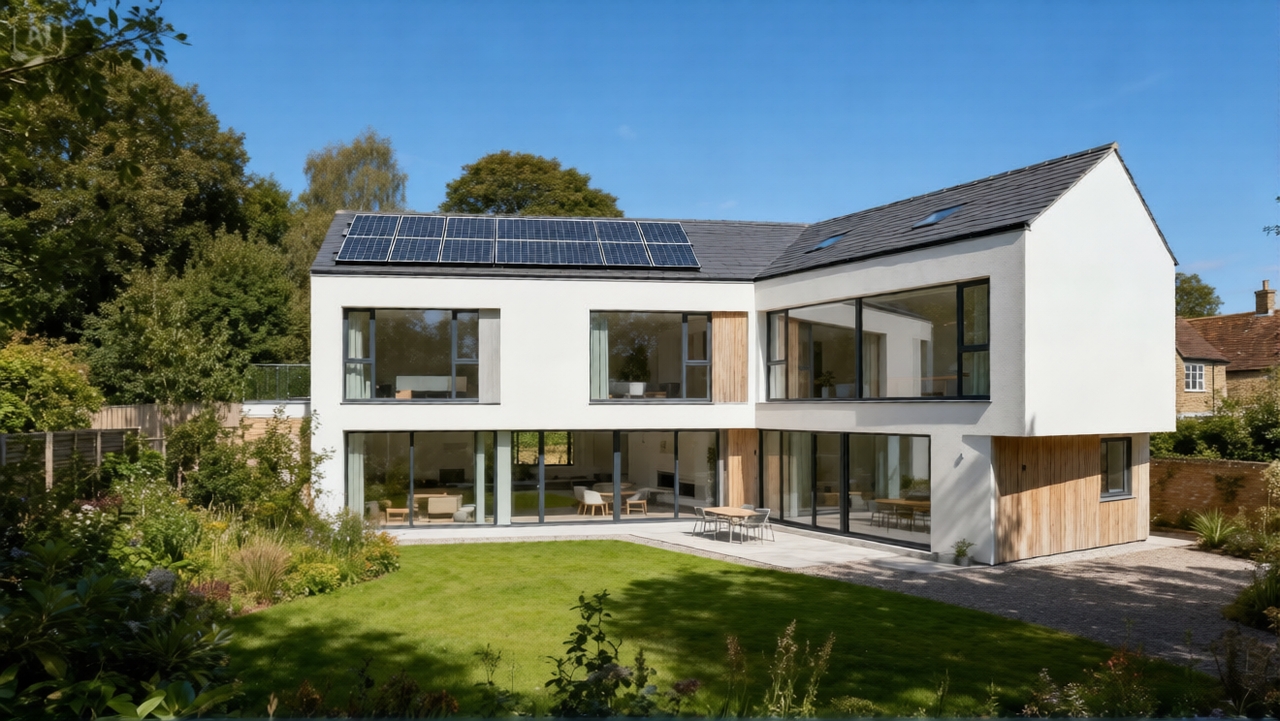
An eco-friendly house focuses on reducing environmental damage and maximising energy savings, comfort, and cost savings in the long term. Modern eco homes in the UK are integrated with the principles of sustainable house design, renewable energy installation, efficient house insulation, and intelligent energy management to form a low-carbon living environment.
The eco-friendly house, as opposed to traditional homes, is concerned with minimising energy waste at all levels, such as construction materials and energy waste in day-to-day activities. This involves recycled or natural materials, better thermal insulation, and the incorporation of renewable resources in terms of solar panels and a home energy ecosystem. These not only reduce carbon emissions but also save a lot on electricity and heating expenses in the long run.
Benefits of living in eco-friendly houses
With the growing number of UK homeowners joining the energy-efficient homes UK solutions, the emphasis is now taken on long-term savings, healthier living spaces, and less environmental impact. To have a better insight into the value, a breakdown of the main benefits will be provided.
Lower energy bills: Eco-friendly homes are designed to use less electricity and heating through efficient systems and smart design choices, leading to noticeable savings on energy costs over time.
Reduced carbon footprint: By using renewable energy and energy-efficient technologies, these homes significantly lower greenhouse gas emissions and support a more environmentally responsible lifestyle.
Energy independence: Generating and storing your own energy reduces reliance on the grid and provides greater stability against rising energy prices.
Improved indoor comfort: High-quality insulation and thoughtful design help maintain consistent indoor temperatures, keeping homes comfortable throughout the year with less energy use.
Healthier living environment: The use of sustainable materials and better ventilation improves indoor air quality, creating a healthier and more comfortable living space.
Higher property value: Eco-friendly features make homes more attractive to buyers, increasing market appeal and contributing to stronger long-term resale value.
You will also see how these technologies, together, will form a complete, future-proof house as we move into the next section of this paper, which discusses renewable energy solutions for eco-friendly housing.
Renewable energy solutions for eco-friendly housing
The eco-friendly house design in modern times does not just begin with the materials and the layout of the house; it is more concerned with the energy production, energy conservation, and utilisation. Integrating renewable energy home systems in the UK, along with effective building methods, enables homeowners to considerably minimise environmental impacts and energy bills in the long run.
Sustainable building materials and reclaimed wood
One of the initial steps towards designing a sustainable home is to use eco-friendly home materials. Use of materials like reused wood, recycled metals, and low-impact concrete minimises construction waste and reduces carbon emissions. Reclaimed wood, specifically, makes it durable and characterful and avoids deforestation.
Such materials also enhance the quality of the air in the home and make the home greener and healthier since harmful chemicals get less exposure.
Material Type | Key Benefits | Environmental Impact | Best Use Cases |
|---|---|---|---|
Reclaimed Wood | Durable, unique appearance | Reduces deforestation | Flooring, furniture, beams |
Recycled Steel | Strong, long-lasting | Lower mining demand | Structural frames |
Bamboo | Fast-growing, renewable | Highly sustainable | Flooring, panels |
Low-carbon Concrete | Reduced CO₂ emissions | Lower carbon footprint | Foundations, walls |
Insulation and thermal efficiency solutions
Any energy-efficient homes UK strategy needs to have high-performance insulation. Effective insulation in walls, roofs, and floors can assist in trapping the heat throughout winter and maintaining the interior's coolness in summer, which means that the heating system is not so heavily used.
Such contemporary options as double glazing, airtight technologies of building houses, and the use of new materials of insulation could significantly reduce energy use and enhance the efficiency of the entire house.
Solution Type | Function | Energy Saving Impact | Notes |
|---|---|---|---|
Loft Insulation | Prevents heat loss through the roof | High | Cost-effective upgrade |
Wall Insulation | Retains indoor temperature | High | Internal or external options |
Double/Triple Glazing | Reduces heat transfer | Medium–High | Improves comfort & noise |
Airtight Design | Minimises air leakage | High | Works best with ventilation |
Natural lighting and ventilation optimisation
The ability of natural light optimisation is one of the main aspects of sustainable house design. The use of large windows, skylights, and open layouts minimises the use of artificial lighting during the daytime. Meanwhile, the appropriate ventilation systems enhance air movement and indoor air quality.
This not only reduces the consumption of electricity but also results in a healthier and brighter living environment.
Strategy | Benefit | Energy Impact | Design Tip |
|---|---|---|---|
Large Windows | Maximises daylight | Reduces lighting usage | South-facing preferred |
Skylights | Adds overhead natural light | Medium | Ideal for dark areas |
Open Layouts | Improves light distribution | Medium | Reduces the need for artificial light |
Cross Ventilation | Enhances airflow | Reduces cooling demand | Align windows/vents |
Water conservation strategies and rainwater harvesting
Another significant aspect of an eco-friendly house is water efficiency. Systems such as rainwater harvesting, low-flow fixtures, and greywater recycling can minimise waste of water and utility bills.
These resolutions are particularly useful in eco-friendly housing, where the efficiency of resources takes first place.
System | Function | Water Saving Level | Application |
|---|---|---|---|
Rainwater Harvesting | Collects and stores rainwater | High | Garden, toilet flushing |
Greywater Recycling | Reuses water from sinks/showers | Medium–High | Irrigation, flushing |
Low-flow Fixtures | Reduces water usage | Medium | Showers, taps |
Smart Irrigation | Optimises outdoor water use | Medium | Gardens, landscaping |
Renewable energy integration for modern homes
Renewable energy integration is one of the most important aspects of eco-friendly houses in the UK. By installing solar panels, heat pumps, or biomass systems, homes can generate clean energy and reduce reliance on fossil fuels. Brands like EcoFlow provide solutions that allow homeowners to store excess solar energy and optimise its use throughout the day.
Solar energy storage
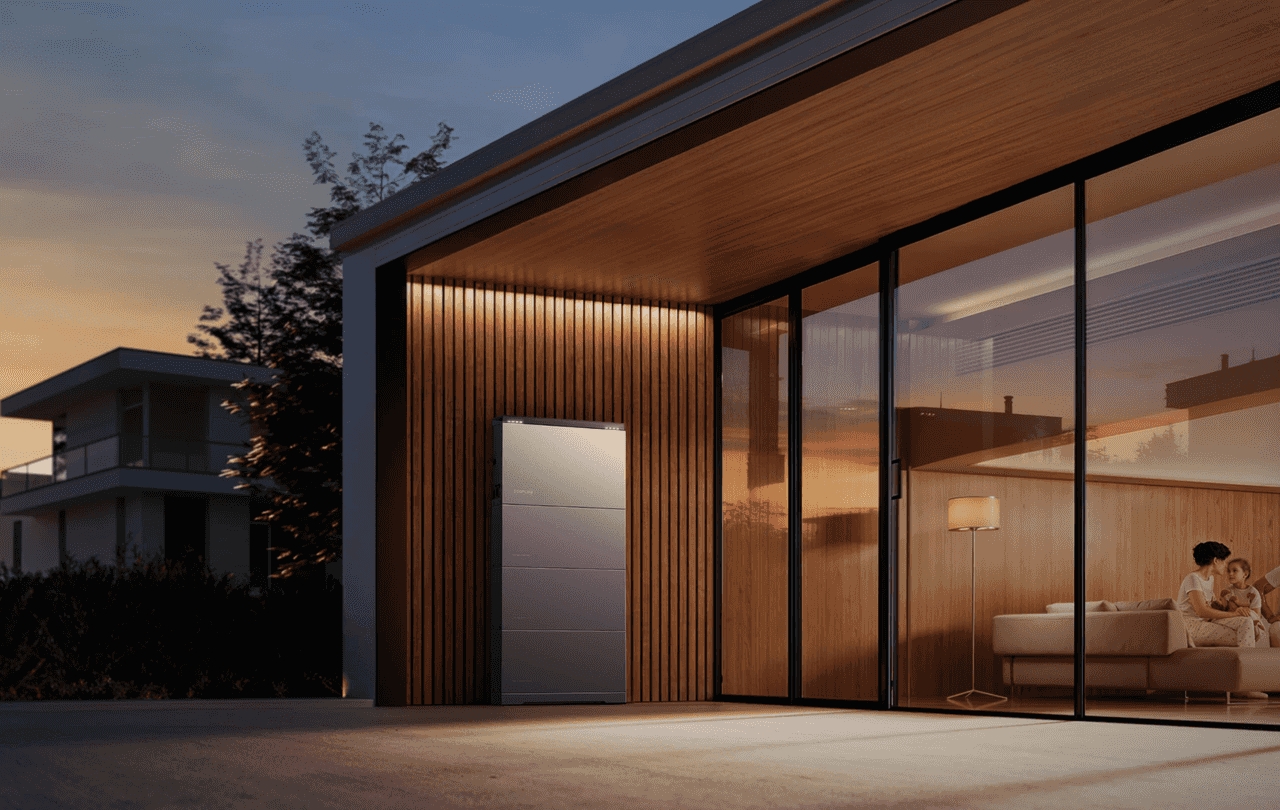
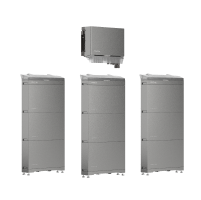
EcoFlow OCEAN 2 provides a complete solution for capturing, storing, and optimising solar power. During the day, solar panels often generate more electricity than a household can use immediately. Instead of letting this extra energy go to waste, OCEAN 2 stores it in its battery modules so it can be used later—at night, during peak energy demand, or in case of a power outage. The system intelligently manages when and how energy is used, directing solar power to appliances first and only drawing from the grid when necessary. This approach maximises efficiency, reduces electricity costs, and gives homeowners greater energy independence.
Key features and benefits include:
High power output: Up to 12 kW to support multiple high-demand appliances simultaneously.
Large solar input: Handles up to 24 kW of solar energy for faster and more efficient charging.
Expandable storage: Each module provides 5 kWh, expandable up to ~60 kWh for longer backup times and greater energy autonomy.
Reliable backup: Instant whole-home backup with 0 ms switchover ensures uninterrupted power.
Durable and weatherproof: IP66 rating protects against dust and water, suitable for UK conditions.
Long-term warranty: A 15-year warranty offers homeowners confidence and peace of mind.
With EcoFlow OCEAN 2, modern homes can maximise self-generated solar energy, reduce reliance on the grid, and maintain a continuous, sustainable power supply—making renewable energy integration both practical and efficient. Request a personalised quote today and discover the right EcoFlow solution for your property.
Smart EV charging for eco-friendly houses
The rise of electric vehicles is a major part of sustainable living in the UK, and integrating smart EV charging into homes is becoming increasingly important. With solar-powered charging, homeowners can use clean energy to charge their vehicles, reducing both electricity costs and carbon emissions.
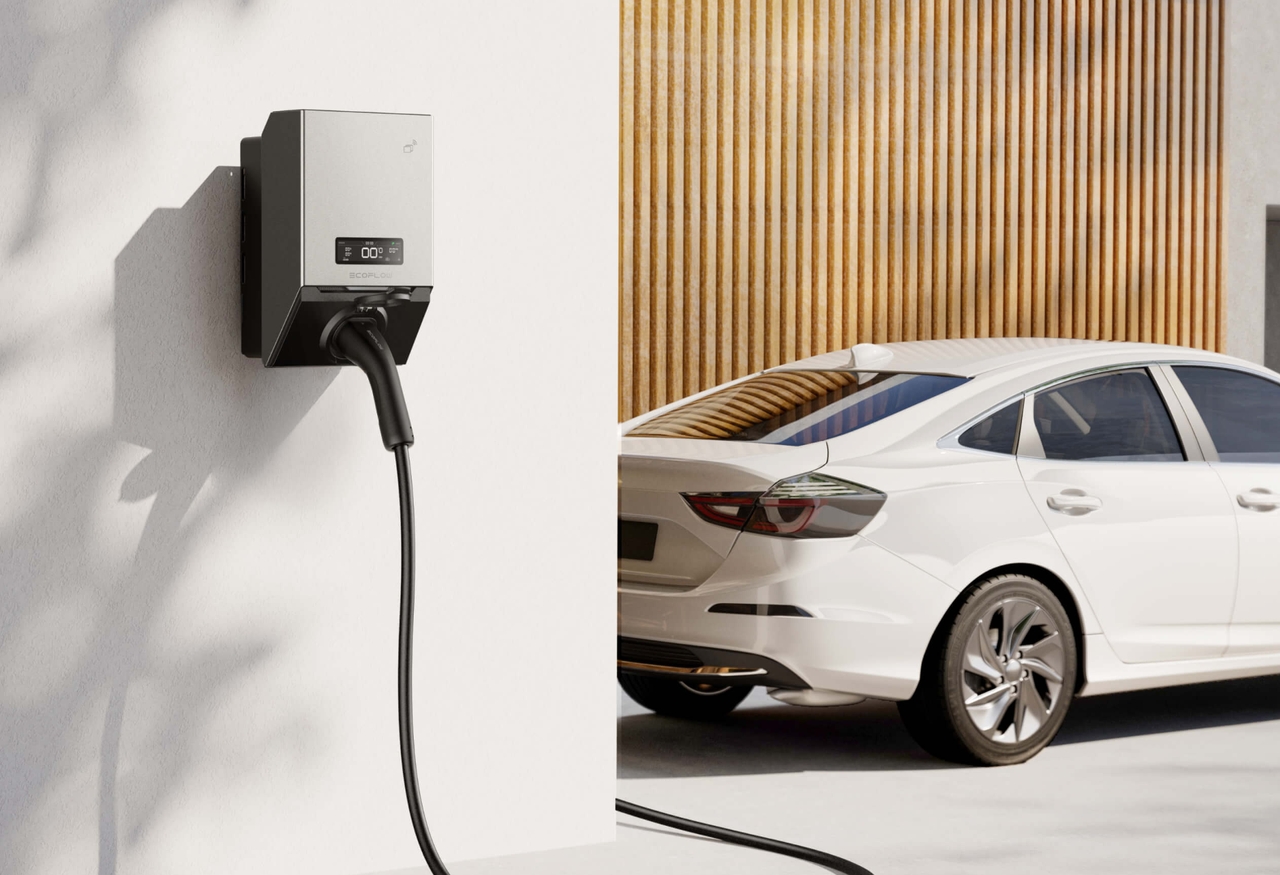
EcoFlow PowerPulse 2 provides a smart, efficient solution for residential EV charging, fully compatible with solar energy systems and home battery storage. It intelligently balances energy from solar panels, the grid, and batteries to maximise renewable energy use while ensuring reliable, fast charging.
Key features and benefits include:
High charging power: Up to 7.4 kW (single-phase) or 22 kW (three-phase), supporting multiple EVs or faster charging.
Smart charging modes: Choose from Solar Mode, Smart Mode, Fast Charging, or Scheduled Mode to optimise efficiency, cost savings, or solar usage.
Seamless solar integration: Prioritises solar energy for EV charging, reducing grid dependence.
Reliable operation: Real-time load balancing ensures safe and uninterrupted charging.
Outdoor-ready design: IP55-rated for protection against dust and water, suitable for UK weather conditions.
Easy control: Monitor and manage charging via the EcoFlow app or RFID card for convenience.
With PowerPulse 2, homeowners can make the most of solar energy, reduce their environmental footprint, and enjoy intelligent, efficient EV charging at home. Interested in smart EV charging for your eco-friendly house? Get a customised quote now and discover the EcoFlow setup ideal for your home.
Smart home technologies for energy management
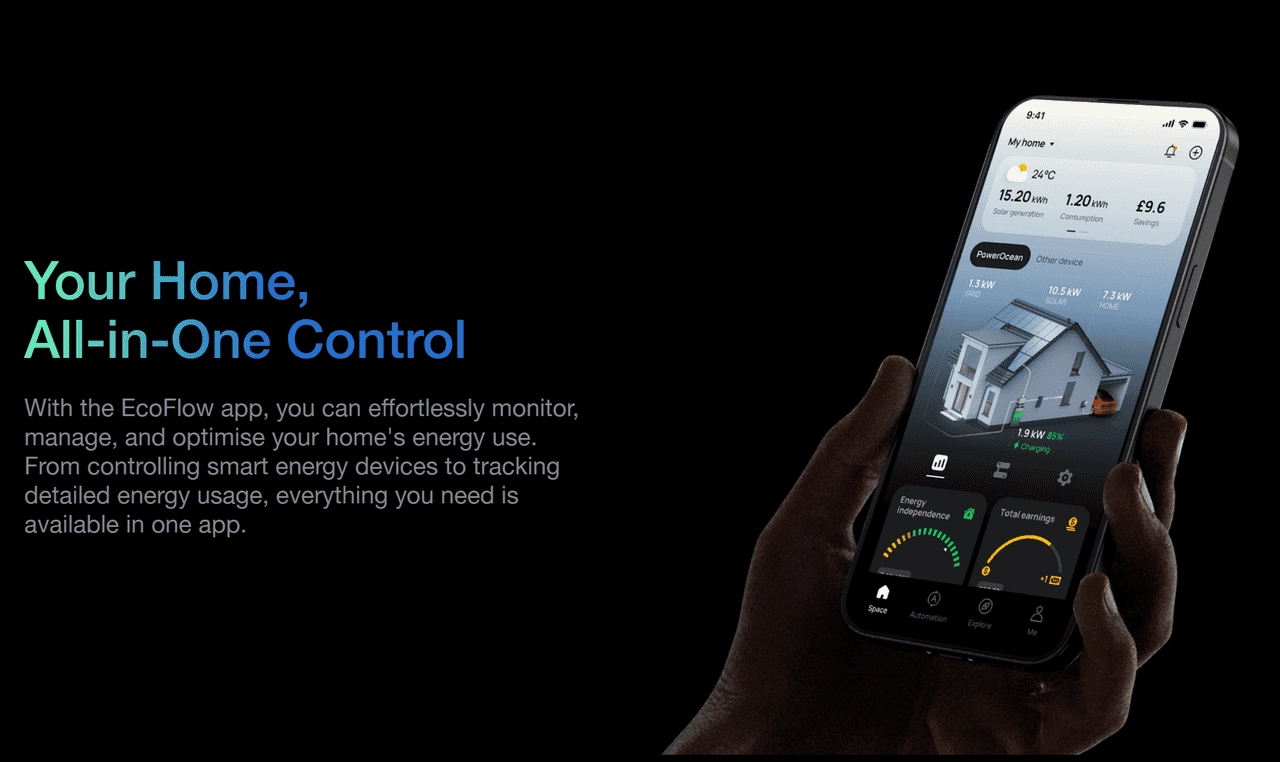
Smart systems are transforming how eco-house features function in modern homes. Technologies such as automated lighting, smart thermostats, and energy monitoring systems allow homeowners to track, control, and optimise energy usage in real time, improving both efficiency and convenience.
Solutions like the EcoFlow Intelligent HEMS take this a step further by offering a centralised platform to monitor household energy consumption, manage connected devices, and optimise how and when energy is used. Analyzing usage patterns and integrating with renewable energy systems helps reduce waste, lower electricity bills, and maximize the efficiency of solar power and battery storage.
Incorporating these smart technologies into an eco-friendly home not only enhances daily comfort but also supports a more intelligent, data-driven approach to sustainable energy management.
Energy-efficient appliances and Energy Star ratings
Eco-friendly house plans largely depend on the selection of appliances that have a high efficiency rating. Energy-efficient appliances use less power and, at the same time, perform in the same manner, reducing the cost of energy and the impact on the environment. From refrigerators to washing machines, efficiency upgrading is in line with long-term sustainability objectives.
Appliance Type | Efficiency Benefit | Energy Saving Potential | Recommendation |
|---|---|---|---|
Refrigerators | Lower constant energy use | High | Choose A+++ rated |
Washing Machines | Uses less water & electricity | Medium | Eco wash settings |
Dishwashers | Optimised water cycles | Medium | Full-load usage recommended |
LED Lighting | Consumes minimal electricity | Very High | Replace all traditional bulbs |
Eco-friendly landscaping and outdoor design inspiration
Sustainable living does not just end in the house. Eco-friendly landscaping involves such elements as the use of native plants, minimising the use of water, and creating outdoor environments that help support biodiversity.
Green roofs, permeable paving, and landscapes with low maintenance are the current trends in eco house design ideas, and they enable homeowners to create a green outdoor environment.
Feature | Benefit | Environmental Impact | Example Use |
|---|---|---|---|
Native Plants | Requires less water & maintenance | Supports biodiversity | Garden beds |
Green Roofs | Improves insulation | Reduces urban heat | Rooftop gardens |
Permeable Paving | Allows water absorption | Prevents runoff | Driveways, paths |
Low-maintenance Yard | Saves time & resources | Reduces water use | Gravel, drought plants |
Tips for planning your eco-friendly renovation or self-build
Creating an eco-friendly home requires more than choosing a few sustainable features—it involves thoughtful planning from the very beginning. Whether renovating an existing property or starting a self-build project, aligning design, budget, and long-term sustainability goals will ensure better performance, lower costs, and a more future-ready home.
Define clear sustainability goals: Start by identifying what sustainability means for your project. This could include reducing carbon emissions, improving energy efficiency, or achieving partial energy independence. Clear goals will guide every decision, from materials to energy systems, and help prioritise investments effectively.
Plan a realistic, long-term budget: An eco-friendly home may involve higher upfront costs, but it often leads to significant savings over time. Plan a budget that balances initial investment with long-term benefits such as lower energy bills, reduced maintenance, and increased property value.
Prioritise insulation and window performance: High-quality insulation and energy-efficient windows are among the most impactful upgrades. They help maintain indoor temperatures, reduce reliance on heating and cooling systems, and significantly improve overall energy efficiency.
Choose sustainable building materials: Opt for materials that are recycled, reclaimed, or responsibly sourced. These choices not only reduce environmental impact during construction but also contribute to healthier indoor air quality and long-lasting durability.
Integrate renewable energy early: Incorporating renewable energy solutions—such as solar panels and battery storage—during the design phase ensures better system integration and efficiency. Early planning allows for optimal placement, scalability, and long-term energy resilience.
Conclusion
Building or upgrading an eco-friendly house design plan is a practical step toward a more sustainable life in the UK and long-term energy efficiency. With smart design, strong insulation, and renewable energy systems, homeowners can reduce environmental impact while improving daily comfort.
Modern eco-friendly homes also integrate technologies to optimise energy use. Solutions like EcoFlow OCEAN 2 help store solar energy and reduce grid reliance, while systems such as EcoFlow Intelligent HEMS enable better energy monitoring and control. With the right planning and system choices, an eco-friendly home can lower energy costs, increase property value, and support a more sustainable future.
Schedule Your Free Consultation Today!
What kind of product or solution are you interested in?
FAQs
1. How to make your house eco-friendly?
An eco-friendly house is made by enhancing energy saving, applying sustainable materials, and incorporating renewable energy sources. Even minor upgrades could be of great help in the long run.
Key steps include:
Enhance insulation and use energy-efficient windows.
Use eco-friendly home materials like reclaimed wood
Put up solar panels and battery storage facilities.
Replace them with energy-consuming appliances.
Intelligent controls are applied to energy consumption.
Integrating these factors, people living at home will be able to save energy and shift towards more green living.
2. What is the most eco-friendly house material?
Low-impact and high-durability materials constitute the most sustainable materials used in an eco-friendly house in the UK. Reused wood, bamboo, recycled steel, and low-carbon concrete alternatives are the common ones.
Reclaimed wood is particularly popular due to the fact that it minimizes deforestation and provides power and beauty. In the same vein, recycled materials allow for reducing building waste and decreasing the total carbon footprint of a house. To be able to construct a long-lasting and environmentally friendly property, it is necessary to use the right materials.
3. How much does it cost to build an eco-friendly house in the UK?
Eco-friendly house construction in the UK is determined by the cost, depending on the size, material, and technology employed. It could be on average between £150,000 and £400,000 or above.
Prices, however, will vary depending on several factors:
Thermal performance and energy efficiency.
Kind of renewable systems installed.
Quality of materials used
Integration of smart energy management.
The initial price might be more expensive, but energy savings in the long run, particularly with systems such as solar storage and smart monitoring, could also save a lot of money in the long term.
4. How can I design an eco-friendly house on a budget?
Considering the budget constraints, it is possible to design a sustainable house design. The trick lies in prioritising high-impact, cost-effective upgrades.
Some of the cost-effective strategies include:
Begin with insulation and an airtight building.
Utilize local/recycled content.
Use energy-saving appliances.
Implement renewable systems such as EcoFlow OCEAN 2 that can be scaled to meet the requirements of large cities.
Measure consumption by using smart devices such as EcoFlow Intelligent HEMS.
This is achieved through these steps to minimise upfront costs and yet achieve energy savings and energy efficiency in the long term.
5. How to heat your house for free?
Although full heating is not easily achieved, a house that is eco friendly house can help cut the heating expenses by a large percentage or even to zero with the intelligent use of energy.
The best strategies are:
Renewable energy (solar power with a battery).
Optimising insulation to keep the heat.
Passive solar design (light through the windows).
Streamlining heating using intelligent energy management.
Homeowners will be able to trust renewable energy a bit more and be less reliant on conventional sources of heating with the help of solutions such as solar storage and smart energy management.

