
Who Is My Energy Provider? A Simple Guide to Finding Your Supplier
Don't worry if you've ever wondered, "Who is my energy provider?" Many Australians are uncertain about which company manages their energy account. This is especially common for those who have just moved house or are renting. Understanding the difference between distributors and power suppliers (retailers) is the first step. It helps you take charge of your energy use. Once you know your current provider, you can compare plans. This can help you reduce your expenses. This guide explains what an electricity supplier is and why knowing yours matters. It also shows the quickest ways to identify them. We will cover the top providers for 2026 and how to switch for better savings. Finally, we'll show how a home battery like EcoFlow PowerOcean can cut your reliance on the grid even further.
What is an electricity supplier?
An electricity supplier, often referred to as a retailer, is the company that sells you the energy you consume. They are the necessary "middleman" between large electricity generators and your home. On the business side, these retailers purchase electricity from the wholesale market. They package this energy into different plans and handle your billing along with customer service. It is vital to understand the key differences between industry players. Retailers compete for your business, giving you a choice in most Australian states. Conversely, distributors are monopolies assigned by your physical location. They own poles and wires and maintain the local network.
Why it matters to know your energy supplier
Knowing "who is my power provider" is the first step toward managing your household budget and energy security. Knowing your specific retailer allows you to take control of your utility costs and service quality.
Manage your bills and accounts
Knowing your supplier gives you direct access to their online portal or app. This makes it simple to track your daily usage and set up direct debits. This visibility helps you avoid bill shock by monitoring your habits before the statement arrives.
Access better deals tailored to your usage
Once you identify your retailer, you can compare your rates against their other plans. Most Australian providers offer tiered pricing. Being informed allows you to request a plan that specifically matches your peak usage times.
Simplifying the switching process
In the competitive Australian energy market, loyalty rarely pays. However, you need your current account details to make a move. Having your NMI and supplier info ready makes jumping to a cheaper deal a seamless five-minute task.
Know whom to contact for issues
When the lights go out or a bill looks suspicious, you need to know exactly who to call. Your local distributor handles the physical poles and wires. However, your supplier is your primary advocate for billing disputes and payment assistance.
How to find out who supplies your power in Australia
If you have ever asked, "Who supplies my energy?" you aren't alone. Figuring out who supplies your energy takes just a couple of minutes. Most people find it straight away with one of these simple steps.
Check your recent bill
The quickest way to identify your electricity supplier is by checking your latest bill. Your retailer’s name, logo, and contact information are typically displayed on the first page. If you’ve recently moved, you may also have received a welcome letter or email from your new provider.
Contact your distributor
If you can't find your bill, you can contact your local electricity distributor instead. These companies manage the physical infrastructure, like the power lines and meters in your street. They can confirm exactly which retailer is currently linked to your home address. You can easily find your distributor’s contact details by doing a quick online search with your postcode.
Use online tools
Several online platforms are designed to help you identify your energy players:
Energy Made Easy: This independent government website has a full list of retailers and distributors, along with their direct phone numbers.
Origin Energy Distributor Lookup: This is an easy-to-use tool that lets you enter your postcode to find out who is in charge of the infrastructure in your area.
EnergyAustralia's Distributor Finder: This tool works like others in the industry to help you find your distributor based on your location.
Top energy providers by state in Australia (2026)
Australia's energy market is divided into competitive retail zones and regulated areas. Depending on your location, you may have many choices or a single government-owned provider.
NSW, VIC, SA, ACT, & South East QLD
These states operate in a fully competitive market, allowing you to choose from a wide range of tier-1 and boutique retailers.
Red Energy and Lumo Energy (both owned by Snowy Hydro).
Alinta Energy.
Powershop, Engie (formerly Simply Energy), and Momentum Energy.
Newer digital-first retailers like OVO Energy and Amber Electric.
QLD (Regional)
Ergon Energy Retail is the primary provider for residential customers outside of South East Queensland.
Prices in this region are regulated by the Queensland Competition Authority.
Tasmania
Aurora Energy (100% state-owned) remains the main retailer for most households.
Other active retailers include 1st Energy, Solstice Energy, and Energy Locals.
Western Australia
Synergy is the government-owned retailer for the South West Interconnected System, covering Perth and surrounding areas.
Horizon Power provides energy to regional and remote communities across the rest of the state.
Northern Territory
Jacana Energy is the main government-owned retailer for residential customers.
Other licensed retailers include Rimfire Energy and Next Business Energy.
How to switch energy providers and save money
Switching energy providers is a simple process. It can help you save a lot of money on your bills. After you find out who supplies power, you can ensure the change goes smoothly by doing the following:
Step 1: Take a close look at your current plan
Take a look at your most recent electricity bill. Find your total usage in kilowatt-hours (kWh), your usage rates, and the daily supply charge. Be sure to check for any exit fees or contract obligations, as these are common if you are on a fixed-term contract.
Step 2: Compare options
Head over to the Australian Government's Energy Made Easy website; it's free and independent. Enter your postcode and usage information. You will receive personalised plan comparisons from different retailers in your area.
Step 3: Choose and sign up
Prioritise factors like competitive pricing, contract terms, and renewable energy options. Consider the provider's customer service reputation as well. Once you have decided, you can sign up online or over the phone in just a few minutes.
Step 4: Let your new provider manage the switch
Your new retailer will notify your old provider. They will manage the entire transfer process for you. There will be no interruption to your power supply. The process can now take as little as two business days.
Step 5: Use the cooling-off period
After signing up, you have a mandatory 10-business-day cooling-off period. Utilize this time to review the contract terms. If you change your mind, you can cancel without paying any exit fees or penalties
Reduce your reliance: Save more with Home Battery Solutions
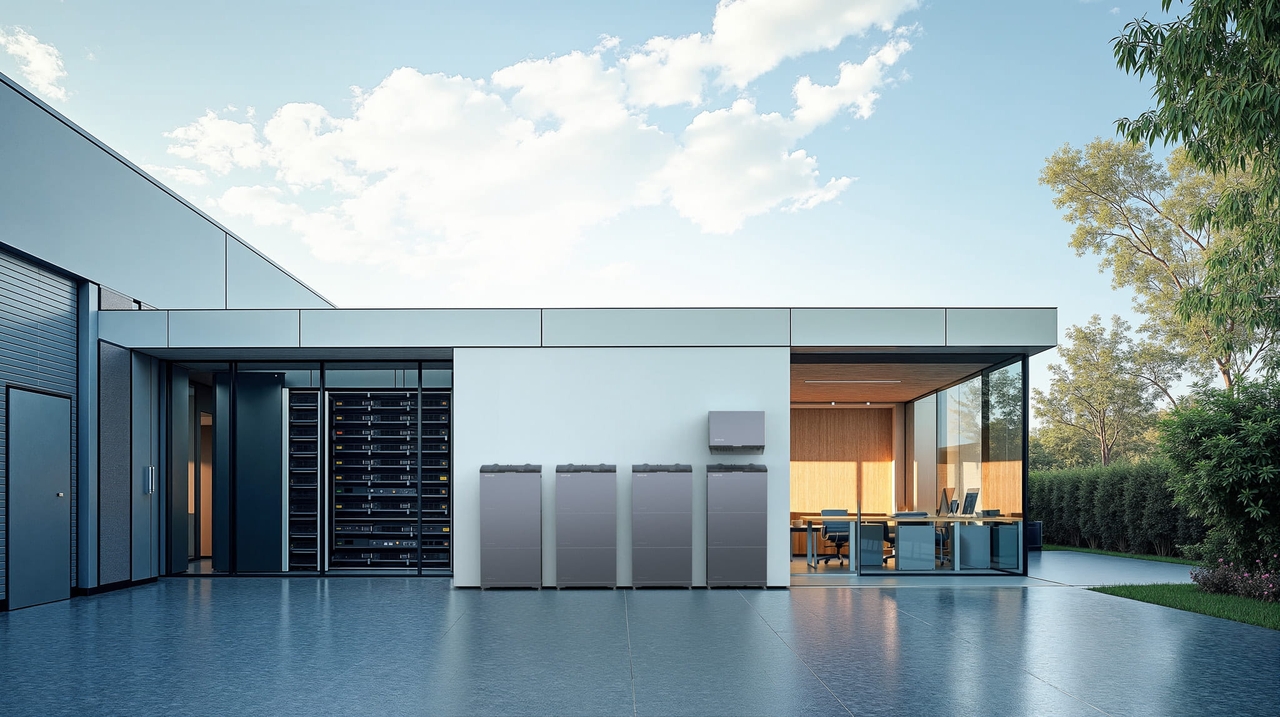
Once you know who provides your power, the next logical step is to need less of it from them. High time-of-use rates sting hardest in evenings when solar isn't producing. A home battery stores your own daytime solar for later – dodging those peak grid prices and cutting bills big time. The EcoFlow Home Battery Solution, especially the PowerOcean series, nails this. It captures excess solar, charges the battery automatically, and powers your home from stored energy when rates spike. This system is CEC approved and eligible for the Cheaper Home Batteries Program.
Here are the three top PowerOcean products:
EcoFlow PowerOcean Single Phase Battery
This system is a secure, modular investment designed for standard Australian homes. It provides high-efficiency output with innovative safety features, ensuring relentless power and peace of mind.
Aspect | Details |
|---|---|
Ideal for | Single-phase homes seeking power independence, solar self-consumption, blackout protection, and easy scalability. Low entry with one 5 kWh pack; future-proof expansion. |
Key Aspects | Capacity: Starts at 5 kWh per pack, expandable up to 45 kWh (one inverter up to 15 kWh; multiple inverters for more). Output: Up to 6 kW continuous off-grid/backup power. Battery type: Industrial-grade LiFePO4 (LFP) cells. Lifespan: Over 6,000 charge cycles. Warranty: 15 years on battery and inverter. Safety: Advanced BMS, fire prevention module, IP65 dust/waterproof rating. |
What it Can Power | Up to 6 kW continuous backup during outages – keeps essentials and key appliances running smoothly: fridge, freezer, lights, Wi-Fi router, computer, phone chargers, microwave, dishwasher, etc. |

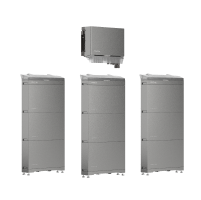
EcoFlow PowerOcean Home Battery (Three-Phase)
This is a premium, modular home solar inverter and battery system built for larger Australian homes on three-phase power.
Aspect | Details |
|---|---|
Ideal for | Larger homes or three-phase setups with higher energy demands; great for full-house backup, dynamic tariffs, and growing solar systems |
Key Aspects | Capacity: The system starts at 5kWh per pack and is expandable up to 45kWh. It uses up to nine independent 800V high-voltage packs connected in parallel. Output: It provides a 10kW continuous rated backup. For high-demand surges, it can reach up to 12kW for 60-second bursts. Battery type: The system utilizes industrial-grade LiFePO4 (LFP) cells. Lifespan: Designed to support 15 years of daily use, it offers over 6,000 cycles to 70% capacity at 25°C. Warranty: Both the battery and the three-phase hybrid inverter are covered by a 15-year warranty. Safety features: The unit is fireproof with an active fire protection module and integrated BMS per pack for fault isolation. It also includes auto-heating for cold weathe |
What it Can Power | During blackouts, it provides 10 kW continuous so you barely notice the outage. Keep important appliances running: microwave, electric stove, dishwasher, washing machine, freezer, refrigerator, computer, router, phone chargers, lights, and more. |

EcoFlow PowerOcean Plus Solar Battery (Three-Phase)
This is a high-performance home solar solution engineered to unlock the full potential of your rooftop. It is specifically designed to handle complex roof configurations and high energy demands, providing a seamless transition to power independence.
Aspect | Details |
|---|---|
Ideal for | Larger or high-demand three-phase homes with complex rooftops (up to 200 sqm solar equivalent); light commercial use; full blackout protection; dynamic tariff optimisation; users wanting to run everything on solar without limits or grid reliance. |
Key Aspects | Capacity: Each battery pack provides 5kWh of storage, with the system expandable up to 60kWh, or even 180kWh in parallel/cascading configurations. Output: The system offers up to 29.9kW of continuous AC output Battery Type: It utilizes industrial-grade LiFePO4 (LFP) cells with an 800V ultra-high voltage system. Lifespan: The batteries are designed for long-term use with over 6,000 charge cycles. Warranty: Both the battery and the inverter are protected by a comprehensive 15-year official warranty. Safety features: Includes an advanced BMS for cell health and temperature monitoring, a fire prevention module, and auto-heating pads for cold weather. Protection: The system features an IP65 weatherproof aluminium casing, AFCI arc fault protection, and safeguards against surges, overcurrent, and overvoltage. Solar compatibility: Supports up to 40kW of PV input and up to 4 PV strings/MPPT, which is ideal for complex roof designs and minimising energy clipping. Backup performance: Features an ultra-fast 20ms switch-over time for seamless protection during outages. |
What it Can Power | Runs your entire home (or light commercial) during outages with up to 29.9 kW continuous three-phase backup. Power everything: EV charger, heat pump, immersion heater, pool pump, microwave, electric stove, dishwasher, dryer, refrigerator, etc. |
Ready to take control of your energy? Get a free solar battery quote today, or talk to the EcoFlow energy consultant to find the perfect setup.
What kind of product or solution are you interested in?
Empower your home with EcoFlow Intelligent HEMS
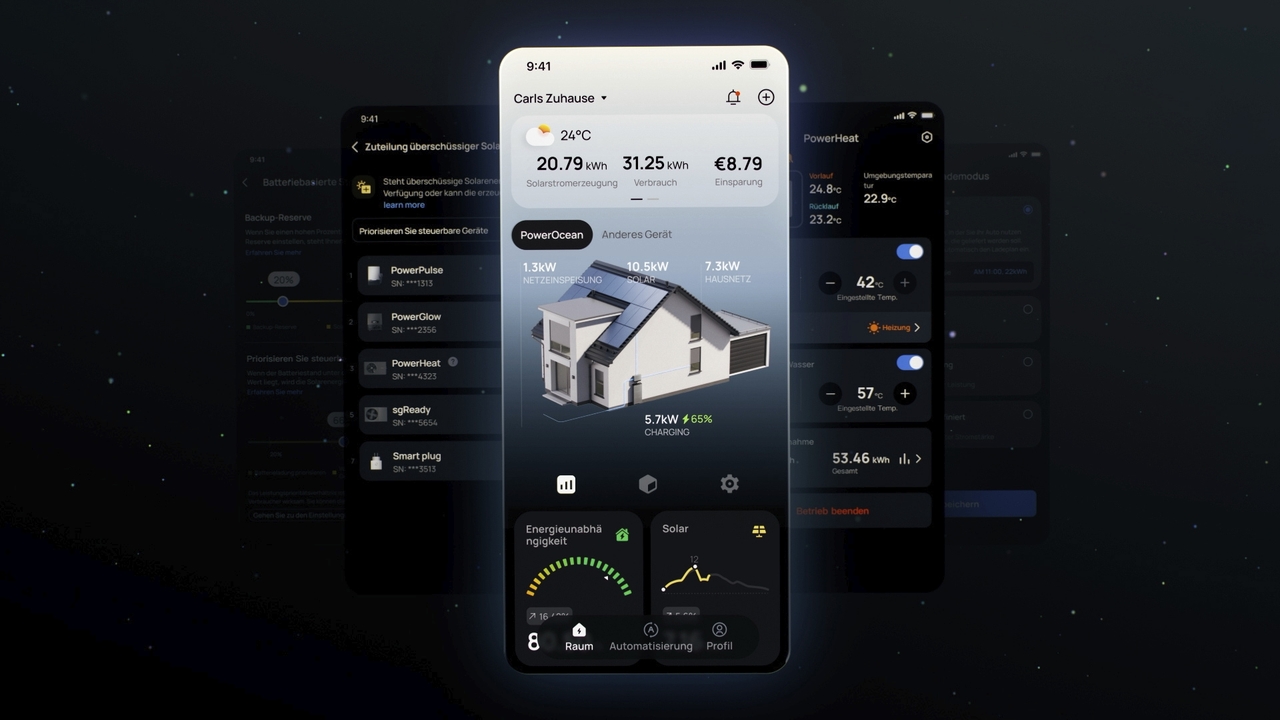
To get the most from your EcoFlow PowerOcean battery, add smart management. That's where the EcoFlow Intelligent HEMS shines. It's a clever Home Energy Management System. It turns your setup into a fully optimised, money-saving machine. HEMS runs mainly through the free EcoFlow App. It watches solar production and battery levels. It also tracks home usage and weather forecasts. Finally, it monitors electricity prices in real-time and makes smart calls automatically.
Key features
Real-time monitoring of solar production, battery status, home consumption, and energy flows via customisable app widgets.
Up to 77.6% simulated bill reduction in optimised solar + battery setups.
Predictive solar and usage forecasting with ~90% average accuracy.
Proactive battery charging to 100% before forecasted bad weather or outages.
Conclusion
Finding the answer to "who is my energy provider?" is the first step toward lower utility costs in 2026. Once you identify your retailer, you can compare current plans. Then, you can choose the most cost-effective option for your household. To truly break free from the grid, consider an EcoFlow PowerOcean for storing solar power. Pair it with Intelligent HEMS, which will automate your energy savings and significantly lessen your dependence on the utility company.
FAQs
1. What does 105 number do?
The number 105 is a national service that lets you report or get information about power outages. If you call this number, you will be connected directly to your local electricity distributor. It is a free service designed to help you stay updated during outages regardless of your retail provider.
2. How do I find out who supplies my power if I've just moved?
If you're wondering "who supplies my energy" after moving, check your new mailbox for a "welcome letter" from the local distributor. You can also look for a sticker with the retailer’s name directly on your meter box. If those fail, ask your property manager for the details. If you still cannot find the information, look up your electricity distributor by postcode online.
3. Can I switch energy providers in Australia in 2026, and is it free?
Yes, in 2026, you can change your energy provider at any time, and generally, it will be free of cost. While there are generally no transfer fees, you might incur some exit fees if you're leaving a fixed-term contract early. Switching is available within deregulated markets (NSW, ACT, VIC, SA, SE QLD).
4. What should I look for when comparing energy providers in 2026?
Focus on unit rates, daily supply charges, and yearly cost estimates. Check solar feed-in tariffs, green options, customer reviews, and no-lock-in flexibility. To further reduce your grid reliance, you can also use the EcoFlow Home Battery to store your solar energy and use it whenever you need it.
5. How do I avoid hidden fees or bad deals when switching energy providers?
To avoid hidden fees and bad deals, you must scrutinize the fine print. Focus on the total annual cost instead of just the headline discount. Check your current contract for exit fees before switching. Then, use government-approved tools to compare available plans. Remember that large conditional discounts often mask higher ongoing rates.

