
Victoria Solar Rebates 2026: How to Save and Who is Eligible
As the prices of power bills rise in Victoria, many households feel quite stressed. Families across the state are looking for cheaper and cleaner ways to use power. Installing solar panels has become one of the most popular long‑term energy choices. Government programs offer helpful solar rebates in Victoria, and homeowners can claim a minimum upfront solar cost.
Both federal and state incentives make switching to solar energy easier and more appealing. Learning about these options can help families save money and plan smarter through 2026. This guide will walk you through the main rebates, savings, and easy application steps.
Federal and VIC State Incentives Explained
Solar rebates are discounts that cut the solar system's upfront cost. They are paid or supported by the government to encourage clean energy. Government incentives can also include small payments and bill credits for going solar. These supports make it cheaper for Australian households to install solar.
Federal incentives are offers from the Australian Government that apply in every state and territory. State incentives are extra offers from your own state government, like Victoria, on top of the federal help. Federal support follows the same rules everywhere, while state programs can change by location. The federal solar rebate comes from the Small‑Scale Renewable Energy Scheme.
Rebates cut the amount you need to pay upfront for your system. Instead of covering the full price, you get a discount taken off the cost of panels. This means your installer claims the rebate for you and lowers your quote. As a result, you pay less on day one and can start saving sooner.
What is Causing Solar Rebate Reductions in Australia
Here are the main reasons solar power rebate Victoria is slowly reducing over time:
The federal STC rebate is shrinking each year until it fully ends in 2030.
Governments see solar systems getting cheaper and more common, so funding slowly reduces.
People who install solar power earlier usually get bigger rebates than people who wait.
Key Victorian Solar Rebates You Can Claim in 2026
Solar panel rebates help cut the upfront price you pay for a new system. These solar rebates in Victoria can make going solar more affordable for many homes in 2026. Look at the sections below to see what you can claim and how.
Federal Government's Solar Rebate (STC)
The federal STC solar rebate is a nationwide discount that helps lower solar costs. It works through Small‑scale Technology Certificates created when you install a new eligible system. Your installer usually handles the STCs for you and discounts your quote. This means you receive the rebate upfront instead of claiming money back later.
To be eligible, your system must meet size rules and use approved components. It must be installed by a licensed electrician and a properly accredited solar company. The number of STCs depends on your solar system size and location in Victoria. More STCs usually mean a larger discount taken off your upfront price.
How to Apply for the Federal STC Rebate in Victoria
To receive an STC rebate, you will need to follow the following steps:
Step 1. Locate Accredited Installer
Get a quote from a Clean Energy Council-accredited solar installer in Victoria.
Step 2. Confirm Rebate Handling
Next, confirm in writing that the installer will assign and claim your STCs for you.
Step 3. Finalize Paperwork
Sign the STC, and the installation forms that the installer gives you after the system is installed.
Step 4. Pay the Discounted Price
Lastly, pay the remaining balance on your invoice, with the STC rebate already taken off.
Victoria Solar Panel Rebate
The Victoria Solar Panel Rebate is a state government discount for new solar systems. It helps cut the upfront cost for eligible households installing rooftop solar in Victoria. This solar rebate in Victoria works with the federal STC rebate, so you can use both simultaneously. They make solar more affordable and help households reduce their power bills.
Key Eligibility Rules in 2026
To qualify for the Victoria Solar Panel Rebate, you must meet the following requirements:
You are the owner‑occupier of an existing home or one under construction.
The property is in Victoria, and its value is under $3 million when complete.
The combined taxable income of all owners is less than $210,000 per year.
The address has not already received a solar panel rebate.
No solar panel system has been installed at the property in the last 10 years.
If you received a solar rebate before but moved, you can apply again at your new address.
How to Apply for it
Solar rebates in Victoria can be claimed as follows:
Step 1. Check Your Eligibility
Visit the Solar Victoria website and make sure you meet the current rebate rules.
Step 2. Get a Quote
Contact an approved solar retailer in Victoria and request a quote for your system.
Step 3. Complete Your Application
The retailer will start your application, and you finish your part online through the portal.
Step 4. Install and Pay
After approval, your installer fits the system, and you pay the invoice with the rebate already taken off.
How Much Will you Save with VIC Solar Rebates in 2026?
The following table provides a rough understanding of the amount of savings you can make with VIC solar rebates in 2026:
Incentive | Applies To | Typical Value in 2026 |
|---|---|---|
Federal STC Rebate | Solar panel systems | Upfront cost reduction of around 20–30%, roughly $1,600–$1,800 for a 6.6 kW system |
Victoria Solar Panel Rebate | Solar panel systems | Up to $1,400 off, capped at 50% of the remaining system cost after STCs |
Combined Rebates | Panels and STCs | Together can cut around $3,000–$3,300 off a typical 6.6 kW system price |
When you use both the Victoria solar rebate and the federal solar rebate, you pay much less upfront. Together, they can cut thousands of dollars from a normal 6.6 kW system.
2026 Additional VIC Incentives
Solar incentives Victoriaprovide additional assistance over federal support. These programs make it easier for everyone to afford solar at home. Here are the main solar incentives available to Victorian households in 2026.
Victorian Energy Upgrades (VEU) Program
The Victorian Energy Upgrades program gives discounts on energy‑saving products like hot water and lighting. Households can access cheaper upgrades through approved providers to cut power use and bills. This program continues through 2026 and is accompanied by new participation fees.
Solar Rebates for Rental Properties
This program helps landlords and renters share the benefits of rooftop solar. Owners can apply for a rebate on solar systems installed on eligible rental homes. This rental rebate stream is ongoing in 2026 under the broader Solar Homes Program.
Solar for Apartments
The Solar for Apartments program supports apartment buildings installing shared solar for multiple residents. Owners' corporations and housing providers can apply for funding to cut upfront solar installation costs. This program is ongoing in 2026, with applications managed through the Solar Victoria website.
Victoria Feed-in Tariff
In Victoria, the energy regulator used to set a minimum solar feed‑in tariff. From July 2025 to June 2026, retailers choose their own solar feed‑in rates. The old minimum feed‑in tariff framework has expired, replaced by a retailer‑set.
Why Adding a Solar Battery Makes Sense for VIC Homeowners
While solar panels save you money during the day, adding a battery lets you use that free power at night. By combining the federal battery rebate with your panel savings, you can lower your upfront costs and cut your energy bills even further. Here are the key benefits of adding a solar battery to your system:
Lower Electricity Bills and Smart Energy Storage
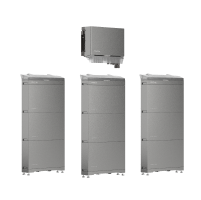
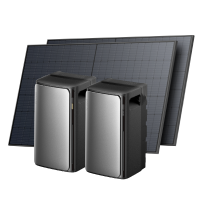
A solar setup with a home battery lets you keep your own solar power instead of sending it back to the grid at low rates. This stored energy can then be used in the evening for big loads like AC or EV charging, which significantly cuts your power bills. To make this even more affordable, systems like the EcoFlow Home Battery are designed to meet federal battery rebate requirements, reducing your upfront costs.

Built for Australian conditions, EcoFlow Home Battery adds smart control, strong backup, and long‑term reliability. The table below highlights the EcoFlow products suitable for VIC households with solar systems:
Product | Category | Key Specs |
|---|---|---|
All‑in‑one home battery system | Battery starts at 5 kWh per pack, expandable up to 15 kWh on one inverter; over 6,000 cycles; IP65 protection | |
High‑capacity three‑phase battery | Expandable up to 45 kWh capacity; rated backup output around 10 kW (12 kW for short bursts) | |
Smart home energy controller | App‑based energy monitoring and control; real‑time load and storage optimization | |
Solar‑aware EV charging unit | Up to 22 kW AC charging (three‑phase); solar‑optimized charging with multiple modes |
If you are ready to explore your options, please contact EcoFlow energy consultants today. They can design the perfect setup for your home.
What kind of product or solution are you interested in?

Better Protection from Changing Power Prices
Electricity prices and time‑of‑use tariffs in Victoria are often higher in the busy evening hours. With a battery, households can charge from their rooftop solar during the day and then use that stored energy later. This gives families more control over when they buy power from the grid.
Backup Power and Future‑Ready Homes
In some setups, a solar battery can provide backup power to keep key circuits running during a blackout. As Victoria moves toward more electric heating and EV charging, having a battery makes it easier to manage higher home energy demand. This helps households be ready for future changes in tariffs.
Conclusion
To sum up, the knowledge of rebates and deadlines will assist Victorians to make smart choices in solar decisions in 2026. Solar rebates Victoria have the potential to reduce the initial expenses, particularly when combined with proper planning of the battery and tariff systems. In order to have sustained savings, families may opt to use high-quality equipment such as EcoFlow and good installers.
FAQs
1. Is the solar rebate still available in Victoria?
Yes, there is still a main solar rebate VIC program running for eligible homes. It helps cut the upfront cost when you install new solar panels in Victoria. You must meet rules about property value and previous rebate use.
2. What is the $1,400 Victorian solar rebate?
The $1,400 Victorian rebate helps pay part of a new rooftop solar system. The solar panels Victoria rebate covers up to half of the system cost. You apply through Solar Victoria and must use an approved installer and products
3. How much does a 6.6 kW solar system cost in Victoria?
A typical 6.6 kW system in Victoria often costs several thousand dollars before rebates. After federal support and the state rebate, many households pay a much lower amount. Final cost depends on panel brand, inverter quality, roof type, and installer.
4. Why is my electricity bill so high with solar panels in VIC?
Your usage might be high at night when solar panels are not generating any power. Feed‑in tariffs can be quite low, so exports do not fully offset grid usage. System size or a wrong tariff plan can also reduce your real savings. Adding a quality battery system, such as one from EcoFlow Home Battery, can help use more of your own solar.
5. Can solar panels work on cloudy days?
Yes, solar panels still work on cloudy days, but they make less energy. Output will drop compared to sunny weather, so savings are usually smaller on those days. Pairing panels with an EcoFlow Home Battery can store extra sunny‑day power to help cover cloudy periods.

