
CEC Approved Battery List: 2026 Homeowner's Safety Guide
Thinking about adding a home battery to store solar and cut power bills? Before you choose a system, you'll likely come across the term CEC approved battery list. It's one of the most important checks for Australian homeowners in 2026. This list helps you find batteries that meet strict safety standards. It also determines whether your system qualifies for federal and state rebates, grid connection, or Virtual Power Plant (VPP) programs. This guide explains what the Clean Energy Council battery list is. You'll learn why it matters, how to check it, and what to confirm before installing a safe and eligible home battery.
What is the CEC approved battery list?
The Clean Energy Council (CEC) serves as Australia's foremost authority on clean energy standards. It manages the official list of battery storage systems approved for home and business use. This approved battery list includes products that meet Australian safety and installation regulations. Each system must comply with AS/NZS 5139, the national standard for battery safety. CEC approval serves as a crucial quality assurance step for the industry. It verifies that a battery has successfully undergone rigorous testing prior to being put into service. These assessments encompass fire safety, thermal regulation, electrical integrity, and overall system functionality. For homeowners, this approval offers peace of mind. It indicates the battery's suitability for Australian conditions. Furthermore, it aligns with the safety standards established by installers, electricity networks, and various rebate initiatives.
Why does CEC approval matter to you?
Choosing a system from the CEC battery list protects your safety, savings, and installation approval.
Safety first
Independent testing helps avoid risks such as thermal runaway and fire. This method eliminates gaps experienced in Australia related to batteries to make your home secure. It ensures every system can handle the heat and electrical stress of our climate.
Rebates and incentives
CEC approval is mandatory to access the federal Cheaper Home Batteries Program. It is also required for SRES STCs and state schemes in Victoria, NSW, QLD, and WA. Without it, you cannot claim thousands of dollars for upfront discounts or join a VPP.
Grid and network compliance
Electricity distributors only allow grid-connected installs if the battery is on the approved list. This ensures your system stays compatible with the local power network. It prevents legal and technical issues when connecting your solar and battery to the grid.
Consumer benefits
Approved products support warranty protection and verified performance. This supports long-term reliability, especially during the 2026 rebate surge. You can trust that your investment will work as promised for many years.
How to check the CEC approved battery list?
To check the list of CEC approved batteries, just go to the official website and follow these simple steps.
1.Visit the official CEC batteries page
Go to the website of the Clean Energy Council. Go to the section marked "Products Program." Then, click on "Batteries," which will be your main hub for this approved list.
2.Use search or filter tools
You can search for specific brands or manufacturers on the CEC website's database. You can quickly find the right battery by filtering by brand, manufacturer, or model number.
3.Check the approval details
Verify the approval status of the battery by checking that it has not been de-listed or suspended. Check the CEC "Approved Date" and "Expiry Date." Verify the Nominal Battery Capacity (kWh) and Usable Capacity (kWh) to meet the required specifications.
4.Download the latest approved list
You can download the complete database as a PDF or Excel file. Grab the most recent one (check the date – it updates regularly). It allows offline searches and simplifies the process of comparing different choices.
5.Verify with the manufacturer's documentation
Double-check the model number on your quote against the precise model listed on the CEC. Ensure it aligns perfectly, including any variants. If there's any doubt, request confirmation from your installer. This could be a photo of the product label, clearly showing the certifier's mark.
Featured home battery solution: The EcoFlow PowerOcean series
If you're after a top-notch way to cut grid reliance in your Australian home, check out the EcoFlow Home Battery Solution. It's modular, powerful, and designed to store your solar energy, handle blackouts seamlessly, and slash bills over time. Great news for rebates: The EcoFlow PowerOcean series is CEC approved. That means it's fully eligible for the Cheaper Home Batteries Program discount.
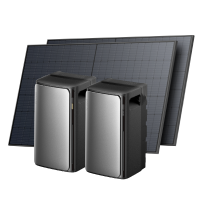
1.EcoFlow PowerOcean Single Phase Battery
This is an all-in-one modular residential energy storage solution. It is a perfect solution for single-phase households in Australia. It's great for families who are just starting out with solar storage solutions.

Key Aspects
Scalable storage limits: Each battery pack provides 5kWh of power. You can start small and expand up to 45kWh using three hybrid inverters.
Superior battery chemistry: The system utilizes high-quality LFP (Lithium Ferro Phosphate) chemistry. This offers the user the best performance for over 6,000 charge cycles.
All-weather durability: The hardware is IP65-certified to resist dust and water. Built-in heating pads also ensure peak performance during freezing winter mornings.
High-output backup: The built-in inverter has a continuous output capacity of 6 kW. This allows you to maintain your lifestyle even when the grid goes down.
Long-term protection: 15-year coverage on both battery and inverter.
What it can power
It is designed to handle essential circuits or even an entire small-to-medium household during an outage. Depending on your battery configuration, it can support:
Appliance Category | Examples |
|---|---|
Daily Essentials | LED lighting, Wi-Fi routers, and laptop/phone chargers. |
Kitchen Appliances | Refrigerators, coffee makers, and microwave ovens. |
Home Comfort | Fans, TV setups, and small portable heaters. |
Heavy Loads | Washing machines and dishwashers (best managed one at a time). |
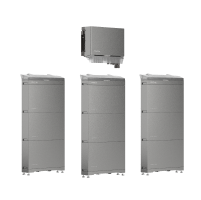
2.EcoFlow PowerOcean Home Battery (Three-Phase)
This system is made for larger households with high energy needs. It keeps everything in your home running smoothly when the power goes out.

Key Aspects
Massive scalability: Start with a 5kWh battery and expand up to 45kWh by connecting multiple units.
High-voltage 800V system: Uses 800V architecture for better efficiency and faster charging. Each battery pack has its own DC-DC converter.
Superior backup power: Delivers up to 10kW–12kW of three-phase backup output. This ensures your heavy-duty appliances keep running during an outage.
Advanced safety: Each battery pack has a fire-prevention module. It also comes with a built-in BMS and automatic heating for cold climates.
Long-term reliability: Backed by an industry-leading 15-year warranty and rated for over 6,000 life cycles.
What it can power
The Three-Phase PowerOcean can power almost all of the appliances in a modern home at the same time. It can handle a lot of output, which supports:
Appliance Category | Examples |
|---|---|
Kitchen Appliances | Electric stove, Microwave, Dishwasher, Refrigerator, Freezer |
Household Laundry | Washing machine, Dryer |
Home Office & Tech | Computer, Wi-Fi Router, Phone charging |
Home Essentials | Lights, Heating rods, Heat pump |
3.EcoFlow PowerOcean Plus Solar Battery (Three-Phase)
This is the ultimate choice for homes and small businesses with large solar arrays. It ensures you reach total energy self-sufficiency.

Key Aspects
Extreme solar input: Supports up to 40kW of PV input. This makes it work best with large and complex roof designs.
Massive AC output: It can provide a steady AC output of up to 29.9kW.
Superior scalability: The system is highly modular. You can start with 5kWh and expand all the way to 180kWh.
Ultra-fast backup: Features a switch-over time of less than 20ms. Your appliances and computers will stay running without a flicker during a blackout.
Smart energy management: It features built-in smart meter technology and supports dynamic tariffs to strategically plan energy purchases at lower rates.
Industrial reliability: Built with LFP technology, it offers 6,000+ charge cycles. It is backed by a leading 15-year official warranty.
What it can power
The PowerOcean Plus is "limitless" for standard residential use. It can power high-voltage, high-drain equipment that typical batteries cannot handle.
Appliance Category | Examples |
|---|---|
Heavy-Duty Equipment | EV Charger, Swimming Pool Pump, Heat Pump, Immersion Heater |
Kitchen Appliances | Electric stove, Microwave, Dishwasher, Refrigerator, Freezer |
Household Laundry | Washing machine, Dryer |
Home Office & Tech | Computer, Wi-Fi Router, Phone charging |
Home Essentials | Lights, Whole-home power |
Ready to slash your energy bills? Get a solar battery quote and speak with an EcoFlow energy consultant to find the perfect setup for your home.
What kind of product or solution are you interested in?

Smart management: The EcoFlow Intelligent HEMS
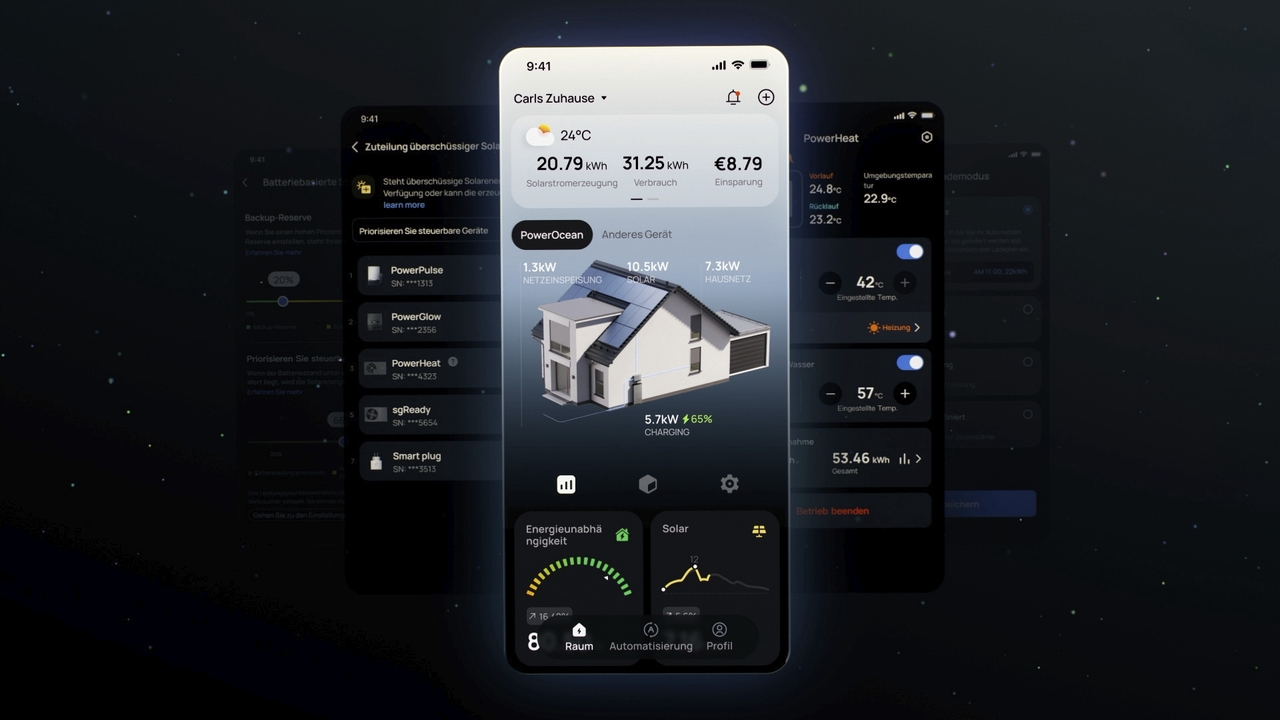
The EcoFlow Home Energy Management System (HEMS) acts as the "brain" of your energy setup. This smart software layer connects your solar panels, PowerOcean batteries, and smart home devices. The system creates a single, automated ecosystem accessible via the EcoFlow app. This integration helps you slash power bills and boost self-sufficiency.
Key Aspects
Intelligent tariff savings: The system links with dynamic prices to charge your battery when rates are low. It can save you up to 77.6% on electricity bills.
Smart forecasting: It uses high-accuracy weather data to predict your solar generation. This ensures your home always runs at peak efficiency.
Proactive blackout protection: The app monitors severe weather alerts. It automatically charges your battery to 100% before a storm hits.
All-in-one control: Manage everything from one app and prioritise specific appliances. You can also track your solar generation with customisable widgets.
Common mistakes when choosing a CEC approved battery
To make sure your system is on the CEC approved battery list, avoid these common mistakes.
Mismatched model numbers or SKUs
Most quotes will have shortened product names. Verify that the exact SKU used on your quote matches the one on the CEC list to be sure your product qualifies.
Checking outdated approval lists
The CEC database is dynamic and can change as products are added or delisted. Always verify the current status of your chosen battery right before your installation date.
Buying before confirming rebate eligibility
Never pay a deposit until you confirm the battery is listed for both federal and state programs. A mistake here could cause you to lose thousands of dollars in government incentives.
Ignoring the installer and network requirements
Your battery must be installed by an accredited professional to meet safety and grid standards. Check that your installer is an authorised solar retailer for your specific region.
Conclusion
Choosing a system from the CEC approved battery list is by far the most reasonable decision in terms of safety and rebate eligibility. It not only ensures the proper level of compliance with the standards of your house, but also captures government incentives in 2026. Make sure that you avoid mistakes by always checking the model and installer accreditation prior to purchase. EcoFlow PowerOcean series is a safe, scalable, and fully compliant solution. It is CEC approved. When combined with Intelligent HEMS, this combination provides smart tariff optimisation and dependable blackout protection. Embark on your journey to energy independence with this reliable, industrial grade system.
FAQs
1. Are solar batteries worth it in Australia in 2026?
Solar batteries are a great investment in 2026. They offer a payback period of roughly 5–7 years for many homes. High grid prices and low feed-in tariffs make storing your own power much more valuable. A battery lets you use more of your own solar energy. This protects you from expensive peak rates and keeps your power on during outages. Systems like EcoFlow help you achieve this independence while qualifying for major rebates.
2. Why do batteries need CEC approval in Australia?
CEC approval proves the battery meets strict Australian safety standards like AS/NZS 5139. It covers fire risks, thermal runaway, electrical safety, and installation rules. To access government discounts, such as federal or state rebates, you must meet certain requirements.
3. If a battery isn't on the CEC list, can I still install it?
You can technically install a non-listed battery, but you will not be eligible for any state or federal rebates or loans. Furthermore, many electricity distributors may refuse to connect an unapproved system to the grid for safety reasons. For safety and compliance, CEC-approved products, like EcoFlow, are typically required for all installations.
4. Why is my electricity bill so high with solar panels in Australia?
High electricity bills in Australia often come from high nighttime consumption. Low feed-in tariffs also make it hard to save money. Many households also underestimate how much power they use in the evening. Without batteries, your daytime solar power is exported for a low return. A battery fixes this by storing your own solar energy for later use. The EcoFlow PowerOcean helps you avoid expensive grid power. Its Intelligent HEMS automatically shifts loads to cheaper times, significantly cutting your costs.
5. How long will the government solar battery rebate last?
The federal government's Cheaper Home Batteries program will run until 2030. However, the rebate value will decrease every six months starting in May 2026. The highest incentives are available for installations finished before May 1, 2026. Due to high demand, the program will switch to a tiered system in May 2026. This new structure aims to maintain a discount of approximately 30%. This change helps the program adapt as battery costs continue to fall.

