
The Ultimate Guide to PG&E Tiered Rate Plan E-1 and Solar Integration
Finding the right balance on the PG&E tiered rate plan e-1 can be a constant struggle for homeowners facing unpredictable "Tier 2" pricing spikes. If you are tired of monitoring every kilowatt-hour just to stay under your baseline, integrating solar with the EcoFlow Ocean Pro offers the ultimate relief. Its advanced intelligent mode automatically manages your energy flow, serving as a reliable, long-term solution that ensures you never overpay for power again.
Understanding the Tiered Rate Plan E-1
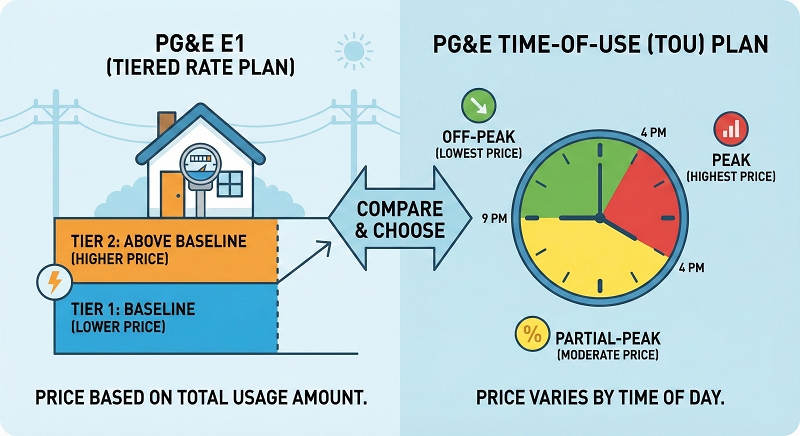
The PG& E tiered rate plan e-1 is a traditional residential structure where electricity costs depend entirely on volume, not timing. Your bill is governed by a "Baseline Allowance", a set quota of kilowatt-hours (kWh) determined by your geographic territory, the season, and your primary heating source.
Additionally, all residential bills now include a mandatory Base Services Charge, a fixed monthly fee that covers the costs of grid maintenance and customer service regardless of how much energy you consume.
The mechanics are straightforward: Tier 1 (Baseline) offers the lowest price for your essential energy needs. Once your usage exceeds 100% of your allowance, you enter Tier 2, where costs significantly increase for every additional kWh. While this plan is ideal for households with lower usage or those who cannot shift tasks like laundry to off-peak hours, the rising baseline costs and fixed service charges can still lead to high bills.
Tiered Rate Plan E-1 vs Time of Use (TOU)
Choosing between a tiered and a time-based structure is the most critical decision for a PG&E customer’s bottom line. While E-1 focuses on volume, TOU plans prioritize when you use energy.
Time-of-Use (TOU) explained:
Under TOU, prices fluctuate based on demand. The "Peak" period usually runs from 4 PM to 9 PM, when rates are highest. Outside of these hours, you benefit from "Off-Peak" or "Super Off-Peak" windows (typically late night or midday), offering much cheaper electricity.
Cost analysis - Tiered vs. TOU:
When E-1 wins: This plan is superior if your energy consumption is flat across 24 hours or if you are home during the day and cannot avoid using heavy appliances during peak evening hours.
When TOU wins: This is the better choice if you have solar panels or the ability to automate high-draw appliances (like dishwashers or EV chargers) to run during cheaper daylight or midnight hours.
The "Baseline Credit" in TOU:
To bridge the gap, newer plans like E-TOU-C attempt to blend both worlds. They use time-of-use pricing but offer a "Baseline Credit", a discount on your first block of energy usage, to ensure that low-volume users aren't unfairly penalized by shifting to a time-based model.
Maximizing ROI with smart energy storage
As utility rates continue to climb, simply choosing a plan is no longer enough to secure long-term financial relief. Modern energy management requires a more proactive approach to stay ahead of the pricing cliff.
The problem with rising baseline prices:
Staying within Tier 1 is becoming an increasingly difficult feat for California residents. As PG&E adjusts baseline allowances and increases the cost-per-kWh for both tiers, even conservative households often find themselves pushed into the expensive Tier 2 bracket. This baseline shrinkage means that your essential energy needs are costing more every year, reducing the effectiveness of the E-1 plan for the average family.
The role of home battery systems:
Smart energy storage systems have become the ultimate tool for reclaiming control over your utility bill. By using a home battery to shave the top off your consumption, you can prevent your home from ever crossing the Tier 2 threshold. The system stores excess solar energy produced during the day, or pulls inexpensive power from the grid during off-peak windows, to bridge the gap when your household demand is highest.
Transitioning to a sophisticated ecosystem like the EcoFlow Ocean Pro takes this a step further. It doesn't just store power; it actively manages your home's relationship with the grid to ensure your Return on Investment (ROI) is maximized from day one.
Spotlight: the EcoFlow Ocean Pro & intelligent savings

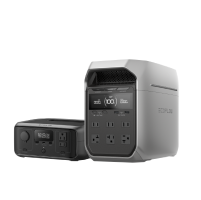
Ocean Pro
Overview of the hardware:
The Ocean Pro is a powerhouse, delivering up to 24kW of continuous AC output and a configurable maximum current of 100A. This high-capacity system can easily handle heavy startup loads with its 205A LRA capability.
For E-1 users, scalability is a game-changer: you can start with a 10kWh battery unit and scale up to 80kWh total capacity per inverter. This multi-source system seamlessly integrates solar power (up to 40kW input), grid power, and even generators to provide a fail-safe battery backup for your home.
The EcoFlow App’s intelligent mode:
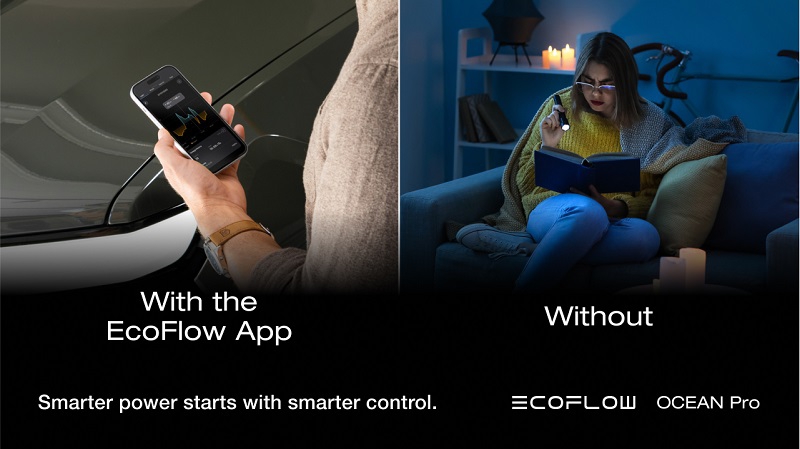
True magic happens within the EcoFlow app. Its "Intelligent Mode" uses analysis-driven management to learn your household’s unique consumption patterns and cross-reference them with local weather forecasts to predict solar yields.
Dynamic tier management: For E-1 users, the app acts as a financial bodyguard. It monitors your cumulative monthly usage and, as you approach your PG&E Tier 1 baseline limit, it automatically switches your home to battery power.
Scheduled tasks: If you ever decide to switch to a TOU plan, the app allows you to schedule discharges during peak hours (4 PM–9 PM) or set strict caps on grid pull to maintain the lowest possible rate.
Implementation strategy: how to switch and save with EcoFlow?
Navigating the transition to a more efficient energy model doesn't have to be complex. By combining PG&E's digital tools with EcoFlow’s advanced hardware, you can build a customized roadmap to savings.
Step-by-step for PG&E customers to maximize energy savings:
Step 1: Audit your current plan
Sign in to your PG&E online portal and navigate to the "Usage and Rates" section on your dashboard. Here, you can verify if you are currently enrolled in the tiered rate plan e-1 or a TOU alternative.
Step 2: Use the rate comparison tool
PG&E offers a personalized "Rate Comparison" tool that analyzes your last 12 months of actual energy data. This tool will project what your annual bill would look like on different plans, allowing you to see exactly how much you might save by switching.
Step 3: Check your baseline
Ensure you know your specific Baseline Territory (climate zone) and heating source, as this defines the "Tier 1" limit that the EcoFlow system will help you protect.
Integrating the EcoFlow ecosystem:
While switching plans can offer incremental savings, the EcoFlow Ocean Pro is the missing link for E-1 users who want to transition from simply managing bills to achieving true home energy independence.
By physicalizing your energy strategy through 80kWh of scalable storage and 40kW of solar input, you remove the volatility of utility rate hikes. The Ocean Pro doesn't just complement the E-1 plan; it masters it, using its "Intelligent Mode" to ensure that your household functions as a self-sustaining microgrid that only draws from PG&E when it is most cost-effective for you.

Signing off
In conclusion, the tiered rate plan e-1 remains a viable and stable option for many PG&E customers, especially those who prefer predictable volume-based pricing. However, as baseline costs rise, mastering your energy usage is no longer optional.
By combining a deep understanding of your rate tiers with the advanced intelligent mode of the EcoFlow Ocean Pro, you can target a substantially lower energy bill while enjoying total peace of mind. So, if you are ready to take control of your energy future and discover how the EcoFlow Ocean Pro can transform your home into a high-efficiency powerhouse today, then be sure to request a consultation right away.
What kind of product or solution are you interested in?
FAQ
1. Is the tiered rate plan e 1 still available for all residential customers?
Yes, E-1 remains a valid choice for PG&E customers. The EcoFlow Ocean Pro makes it even better by using its Intelligent Mode to keep your usage within Tier 1, avoiding expensive surcharges automatically.
2. What are PGE Tier 1 peak hours?
The E-1 plan doesn't have peak hours; it’s based on total volume. The EcoFlow Ocean Pro monitors this total volume daily, discharging stored energy to prevent you from exceeding your monthly baseline allowance.
3. How can I find my baseline allowance on the pge tiered rate plan e-1?
Check your paper bill or online portal for your Baseline Territory. The EcoFlow app tracks this daily limit in real-time, notifying you exactly how much Tier 1 power remains available.
4. Which PGE rate plan is best for EV charging?
EV2-A is often recommended, but the Ocean Pro makes any plan viable. With its 24kW output, it can charge your EV from stored solar, bypassing high utility rates entirely.
5. Does solar energy work well with the tiered rate plan e-1?
Yes, solar reduces your grid pull to stay within lower tiers. The EcoFlow Ocean Pro maximizes this by storing excess solar for use when your grid usage threatens to hit Tier 2.
