
Stop Overpaying for PG&E Rates: A Step-by-Step Home Energy Audit

High pg&e rates shouldn't be a monthly mystery that drains your savings. Most homeowners are frustrated by invisible energy leaks and appliances that peak at the worst possible times. By conducting a systematic home audit, you can pinpoint these high-cost zones. However, the EcoFlow Ocean Pro provides the perfect solution by automating your savings, ensuring your home intelligently switches to stored power the moment expensive grid rates kick in.
Understanding PG&E rate plans: choosing your strategy
Pacific Gas and Electric Company (PG&E), incorporated in 1905, is one of the largest combined natural gas and electric energy companies in the United States. Being responsible for the generation, transmission, and distribution of energy, including over 100,000 miles of electric lines and 40,000 miles of gas pipelines, the way it structures its billing has a profound impact on millions of households.
Below is a breakdown of its various rate plans that users can choose from:
Tiered Rate Plan (E-1)
The E-1 plan is a non-time-differentiated structure where the price of electricity depends solely on how much you use, not when you use it.
The baseline allowance: This is a set amount of energy, determined by your climate zone, season, and heating source, offered at the lowest price.
The tier jump: Once you exceed your baseline (typically 50-60% of average regional use), you move from Tier 1 to Tier 2, where costs can jump by over 25%.
Best for: Low-usage households or those unable to shift energy habits away from the evening.
Time-of-Use (TOU) plans
TOU plans prioritize when you use energy, aligning costs with grid demand.
E-TOU-C (4–9 p.m. Peak): The standard plan for most. It includes a baseline credit but charges high rates every day during the 5-hour evening window.
E-TOU-D (5–8 p.m. Peak): Features a shorter 3-hour peak window on weekdays only (weekends are off-peak). It lacks baseline credit, making it better for high-usage homes.
Electric Home (E-ELEC): A specialized plan with a $15 monthly base charge but lower off-peak rates. It is specifically designed for users with EVs, battery storage (like the EcoFlow Ocean Pro
Gas rates (G-1)
PG&E gas rates fluctuate monthly based on market procurement. Unlike electricity, gas usage typically spikes in winter for heating, leading to higher costs in months such as December and January.
Peak vs. off-peak: what time of day are PG&E rates the lowest?
Understanding exactly what time of day PG&E rates are the lowest is the key to mastering Time-of-Use billing. By shifting heavy loads to off-peak hours, you can effectively bypass the highest premiums.
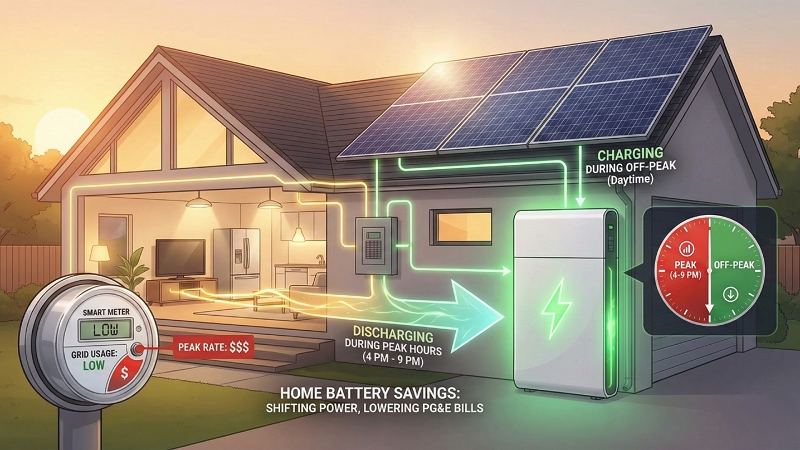
For the vast majority of California residents, the golden window for energy savings is from midnight to 3 p.m. or 4 p.m. During these hours, demand on the grid is significantly lower, and the influx of solar energy into the California grid often creates a surplus of power, driving prices down.
Additionally, the severity of peak pricing changes with the weather:
Summer Peak (June 1 – September 30): This is the most expensive period. Rates are at their highest between 4 p.m. and 9 p.m. as air conditioning demand strains the grid.
Winter Peak (October 1 – May 31): While the peak hours (4–9 p.m.) remain the same, the overall cost per kWh is generally lower than in the summer. However, PG&E gas rates often peak during these months due to heating demand.
The price difference isn't just a few cents; it's a significant multiplier. Consider a standard dishwasher cycle:
Off-Peak (10 p.m.): Cost = 1.5 kWh x $0.35/kWh = $0.52
Peak (6 p.m.): Cost = 1.5 kWh x $0.62/kWh = $0.93
By simply pressing a delay start button, you reduce the cost of that single chore by over 40%.
Furthermore, during the spring months of March, April, and May, PG&E often features a super off-peak period (typically between 9 a.m. and 2 p.m.). This occurs because mild temperatures reduce the need for HVAC, while California's massive solar infrastructure produces record amounts of energy.
The history and future of PG&E rate increases
The trajectory of PG&E rates has been a source of significant concern for Californians. Between 2024 and 2025, customers faced a massive surge following a 13.5 billion budget approval aimed at wildfire mitigation, including undergrounding 1,230 miles of lines and extensive vegetation management. Furthermore, the grid is being modernized to handle the rapid adoption of Electric Vehicles (EVs).
Looking ahead, March 2026 marks a major shift with the Base Services Charge (mandated by AB 205). This restructures bills by introducing a fixed monthly fee, roughly $24.00 for most households ($6.00 for CARE, $12.00 for FERA), while lowering the price per kilowatt-hour (kWh).
While this encourages electrification, solar users will also pay this charge to support infrastructure. Navigating these fluctuations requires more than just behavioral changes; it requires a technological hedge. The EcoFlow Ocean Pro serves as this bridge, allowing you to bypass these rising costs through intelligent energy management.
Integrating the solution: the EcoFlow Ocean Pro ecosystem
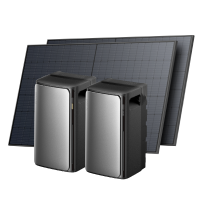
The EcoFlow Ocean Pro represents the pinnacle of next-gen home energy storage, moving beyond simple backup to become a proactive grid-management tool. This NEMA 3R-rated system is designed for both indoor and outdoor resilience, featuring a scalable architecture that allows homeowners to link up to 8 battery units per inverter for a massive 80kWh total capacity
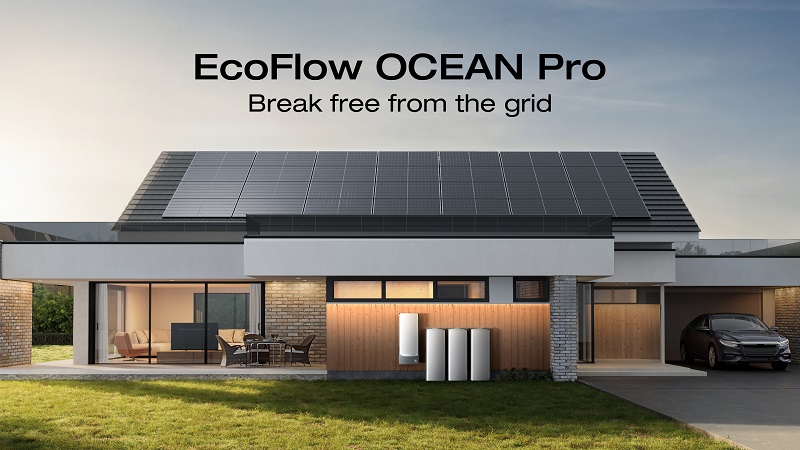
How it directly counteracts PG&E rate hikes:
Peak saving: During the expensive 4–9 p.m. peak window, the system automatically discharges its stored energy. By drawing from your 80kWh reserve rather than the grid, you effectively erase the high-tier rates from your bill.
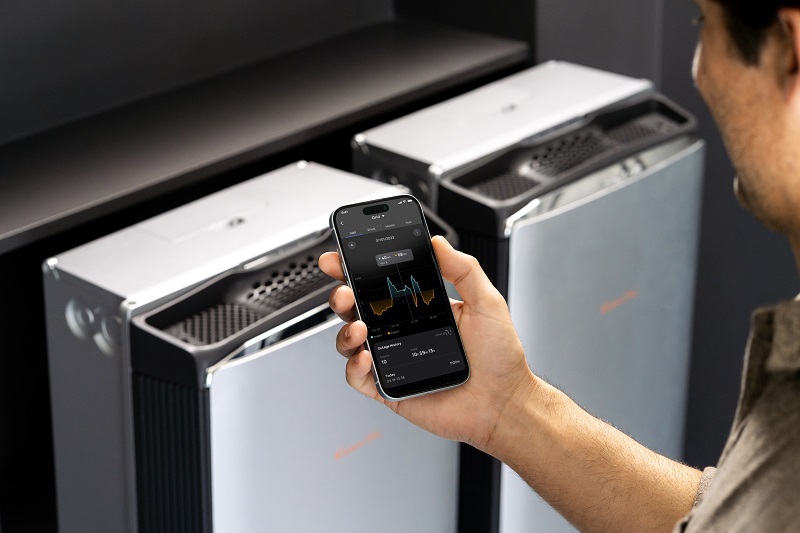
Smart grid charging: Using the EcoFlow Mobile App, the system can be programmed for grid-to-battery charging from midnight to 6 a.m. window, when PG&E rates are the lowest. This ensures your home is powered by the cheapest possible energy around the clock.
The technical edge:
While other systems struggle with heavy appliances, the Ocean Pro excels with a 24kW continuous AC output.
Whole-home power: With a 205A LRA (Locked Rotor Amps) load-start capability, it can effortlessly kick-start high-demand loads like central AC units and pool pumps that typically trip smaller inverters.
Maximum solar absorption: Featuring 8 MPPTs and a staggering 40kW solar input capacity, the system maximizes free energy harvest even on cloudy days, maintaining 97.5% efficiency for Solar-to-Home conversion.
The ROI math:
The return on investment for an Ocean Pro system is driven by the widening gap between peak and off-peak pricing
Equation:Daily Savings = (Peak Usage x Rate Differential) + (Baseline Avoidance)
By utilizing the system's 89% solar-to-battery-to-home efficiency, a household shifting 30kWh of daily usage from a peak rate of $0.62 to an off-peak rate of $0.35 can save over $2,900 annually on electricity alone, paying for itself through avoided utility premiums.
Practical tips for lowering your bill
The following are some essential tips and tricks that you can conveniently follow to lower your electricity bill in the long-term.
Strategic load shifting: The most immediate way to save costs is to move heavy electricity usage, such as laundry, dishwashers, and EV charging, to off-peak hours. These typically fall before 3 p.m. or after midnight. By timing your 40-amp EV charger or 5,000-watt dryer to run when grid demand is lowest, you avoid the high-tier volumetric charges that can double your cost per kWh.
Eliminating phantom loads: Devices like televisions, gaming consoles, and desktop computers, can account for up to 10% of a typical household bill by drawing power in standby mode. Using smart power strips allows you to completely cut power to these electronics when not in use. This simple shift can save an average California household up to $100 per year.
Comprehensive home weatherization: Your HVAC system is likely your home's largest energy consumer. Sealing air leaks around windows and doors and upgrading attic insulation reduces the thermal load on your furnace and AC. This directly lowers your dependence on both electricity and expensive PG&E gas rates during extreme weather months, allowing your home to maintain its temperature with significantly less mechanical intervention.
Smart home integration: Leverage technology to do the heavy lifting. By utilizing the EcoFlow app, you can integrate with smart thermostats and appliances to automate your energy consumption based on real-time TOU pricing schedules. The app's Intelligent Mode can automatically prioritize solar energy or battery discharge during 4–9 p.m. peak windows, ensuring your home operates at maximum efficiency without requiring constant manual adjustment.
Signing off
Successfully navigating PG&E rate plans requires more than just awareness; it requires a shift from being a passive consumer to an active energy manager. By understanding when energy is cheapest and auditing your home's efficiency, you regain control over your monthly expenses.
However, as PG&E continues raising rates for infrastructure and wildfire safety, behavioral changes alone may not be enough. The EcoFlow Ocean Pro serves as the perfect technology for automating your savings and shielding your household from the volatility of the grid. Don't let rising utility costs dictate your budget, invest in a smarter, more resilient energy future today by requesting a consultation with our professional experts!
What kind of product or solution are you interested in?
FAQ
1. How do I know which of the PG&E rate plans is right for my household?
Analyze 12 months of usage to choose between Tiered (stability) or TOU (shifting potential). The EcoFlow Ocean Pro optimizes TOU plans by automating shifts for you.
2. What is the cheapest PGE rate plan?
The Electric Home (E-ELEC) often offers the lowest usage rates for high-load homes. EcoFlow Ocean Pro maximizes this plan's benefits by using ultra-cheap off-peak power.
3. Will the March 2026 "Base Services Charge" affect my PG&E gas rates as well?
No, this restructuring only affects electric billing. However, gas users can save by electrifying with EcoFlow Ocean Pro to take advantage of the lower 2026 electric usage rates.
4. What time of day are PG&E rates the lowest?
Rates are lowest during "off-peak" hours, usually midnight to 3 p.m. EcoFlow Ocean Pro intelligently charges during these windows to power your home through expensive peak periods.
5. Why is PG&E raising rates even though I am using less energy than last year?
Increases often fund infrastructure like wildfire safety and grid modernization. EcoFlow Ocean Pro acts as a technical hedge, reducing your grid dependence regardless of fixed rate hikes.
