
Understanding Power Grids: The Role of Megawatt and Gigawatt Units
Navigating the complex world of megawatt and gigawatt scales can be daunting when rising utility costs and grid instability threaten your home’s comfort. Many homeowners feel powerless against massive infrastructure failures that operate on a scale far beyond their control. The EcoFlow Ocean Pro, paired with the intelligent monitoring of Power Insight 2, addresses these pain points by offering a reliable, long-term energy solution. This system provides industrial-grade durability and precision control, ensuring your household remains powered regardless of the stresses placed on the broader grid.
Defining the units: Megawatt and Gigawatt
To navigate the energy landscape, one must first understand what a watt (W) is, which is the fundamental unit of power representing energy transfer at a rate of one joule per second.
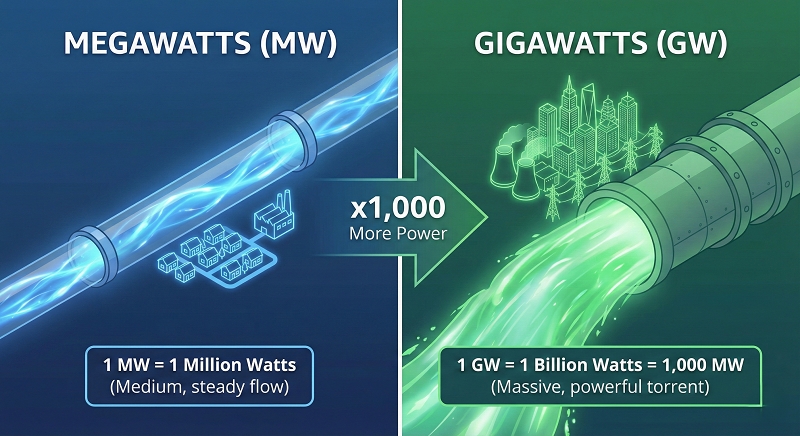
When we scale this up, we encounter a megawatt (MW), which equals 1,000,000 watts. In a practical context, a single megawatt provides enough electricity to power roughly 400 to 900 homes, depending on regional demand and appliance efficiency.
Moving further up the scale, we reach the gigawatt (GW), a massive unit representing 1,000,000,000 watts. This is the scale of national infrastructure; a gigawatt is the typical output of a large-scale nuclear power plant or a vast offshore wind farm.
Understanding the relationship between the aforementioned two units is simplified by the "rule of 1,000": there are exactly 1,000 megawatts in one gigawatt. Mastering this conversion allows us to visualize how individual systems eventually scale up to define the strength of an entire national power grid
Comparing the two: key difference between Megawatt and Gigawatt
While mathematical conversion/measurement is simple, the functional difference between these units determines how we build and manage energy infrastructure. Understanding where a megawatt ends and a gigawatt begins is essential for grasping the hierarchy of modern power grids.
Infrastructure applications
The Megawatt (MW) is the standard unit for localized and high-performance energy projects. You will find megawatt-scale ratings in community solar farms, small industrial manufacturing plants, and advanced maritime vessels, such as those utilizing high-capacity electric propulsion.
Conversely, the Gigawatt (GW) is reserved for utility-scale generation and national grid capacity. When a country discusses its total energy reserves or the output of a massive hydroelectric dam, they speak in gigawatts. It is the unit of macro-energy, defining the survival of entire metropolitan regions rather than individual industrial sites.
Visualizing the scale
To truly grasp the magnitude of these figures, it helps to use a more physical comparison. Imagine a fleet of heavy-duty semi-trucks; the collective power of that fleet represents the megawatt scale. However, to reach the gigawatt scale, you would need to visualize a massive, ocean-crossing cargo ship.
Just as a cargo ship can carry thousands of truckloads, a single gigawatt manages the workload of a thousand megawatts, illustrating the staggering leap in capacity between the two.
The evolution of energy management: from the grid to the user
Historically, the relationship between the user and the power grid was one-way: the utility generated power at a megawatt and gigawatt scale, and the consumer simply used it. However, we are currently witnessing a historic shift from passive consumption to active generation.
Individuals are no longer just statistics on a utility bill; they are managing their own energy footprints. This transition allows homeowners and businesses to operate small-scale power plants that handle several kilowatts locally, which, when aggregated, can impact the megawatt-scale demand of an entire neighborhood.
A critical driver of this evolution is the role of advanced storage technology. High-capacity battery systems are effectively blurring the lines between residential and industrial power levels. By storing excess solar or grid energy, these systems allow a single property to maintain high-voltage, high-current reliability that was once only possible for industrial facilities.
This decentralization of power is where the personal grid meets professional infrastructure, creating a need for systems that offer both massive capacity and intelligent oversight. This is precisely where professional-grade solutions like the EcoFlow Ocean Pro come into play.
What kind of product or solution are you interested in?

Harnessing modern energy: the EcoFlow Ocean Pro system
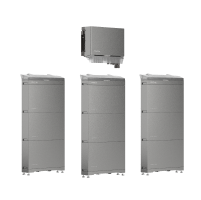
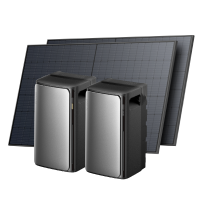
Modern energy management has moved beyond simple backup power. Systems like the EcoFlow Ocean Pro are designed to bridge the gap between residential convenience and industrial-scale efficiency, allowing users to aggressively manage their power levels to cut costs on energy bills over time.
By acting as a sophisticated energy buffer, it captures power when it is cheapest or most available, such as during peak solar hours, and deploys it when grid prices soar.
Technical deep-dive into the Ocean Pro
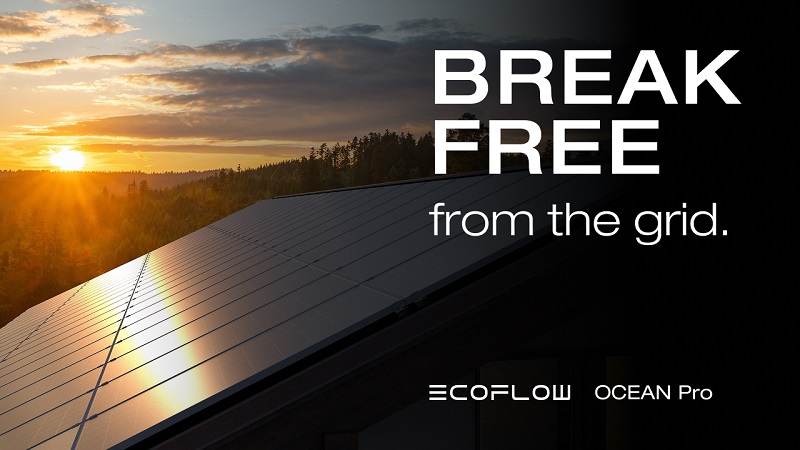
The Ocean Pro stands as a powerhouse of scalability and efficiency. Its modular design features a nominal battery energy of 10 kWh DC per unit, which is expandable up to a staggering 80 kWh.
This massive storage capacity is matched by high-output capabilities, where the nominal output power ranges either 11.5 kW or 24 kW AC, depending on your family's specific requirements. Notably, the system is engineered to handle a 205A Locked Rotor Amps (LRA) load start, ensuring that heavy-demand machinery like central AC units, industrial pumps, and elevators start without a hitch.
The charging performance of the Ocean Pro is equally impressive. It supports a market-leading 40 kW solar power capacity facilitated by 8 MPPTs, each capable of handling 5 kW. With a maximum continuous charge power of 24 kW DC, the system can recharge its massive battery bank with incredible speed.
Furthermore, the system boasts a 97.5% efficiency for solar-to-home conversion, ensuring that very little energy is lost in the process.
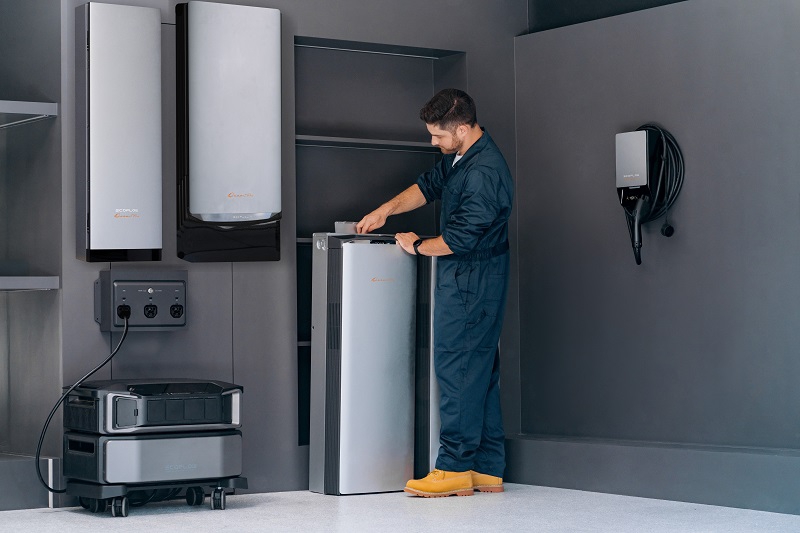
Reliable decentralized infrastructure requires more than just high specs; it requires resilience. The EcoFlow Ocean Pro is built for extreme conditions, featuring an IP67 rating for the battery and electronics (IP55 for the wiring compartment) and a NEMA 3R enclosure.
This level of protection provides significant flood resistance, up to 3.3 feet, and allows for seamless operation in temperatures ranging from -20°C to 60°C. Supported by a 15-year warranty, this LFP storage system provides the long-term reliability necessary to stabilize a personal power grid against the unpredictable nature of the modern environment.
Precision control via the EcoFlow Power Insight 2 monitor
The EcoFlow Power Insight 2 serves as the system's "brain", featuring a 10.95-inch IPS touch screen for real-time energy orchestration. It unifies solar, battery, and consumption data into one hub, allowing users to monitor usage down to the individual watt.
This granular visibility identifies energy vampires, preventing aggregate demand spikes that necessitate expensive megawatt-scale power grids. Supporting Matter 1.4, the dashboard automates third-party devices and optimizes usage based on peak utility pricing. Additionally, with a 9300mAh battery and voice control, it offers the intelligent oversight required to maintain a truly modern, self-sufficient power grid.
Real-world scenarios of megawatt and gigawatt usage
Understanding these units is easier when looking at the specific infrastructures they power. Here are four scenarios showcasing how these power levels function across different sectors of our modern world.
Community solar projects: Community solar farms usually operate in the 1–5 megawatt range. This provides enough clean energy for hundreds of subscribers, proving megawatt-scale projects are ideal for localized, decentralized municipal power grids.
Global data infrastructure: Large-scale data centers often consume between 20 to 100 megawatts. These facilities require immense, reliable power to sustain the servers and cooling systems that keep our global digital infrastructure online.
Utility-scale nuclear power: Utility-grade nuclear power plants typically generate around 1 gigawatt per reactor. This massive output provides enough carbon-free electricity to sustain millions of residents across entire states or major metropolitan areas.
Macro-scale hydroelectric dams: The Three Gorges Dam features a 22.5 gigawatt capacity. As the world’s largest power station, it represents the pinnacle of gigawatt-scale generation, fueling vast industrial hubs and millions of homes.
Signing off
Understanding the vital difference between a megawatt and a gigawatt is more than a technical exercise; it is the key to grasping the scale of our global energy challenge. While a megawatt powers a neighborhood, a gigawatt sustains a city. By mastering these units, we gain the perspective needed to transition from passive consumers to active energy managers.
Tools like the EcoFlow Ocean Pro and Power Insight 2 empower us to make smarter financial and environmental decisions. The future of energy isn't just about massive generation, it’s about how intelligently we manage every single watt. Take control of your energy future today by requesting a consultation, and experience the reliability of an independent power ecosystem.
FAQs
1. How many watts are in a megawatt and gigawatt?
One megawatt contains one million watts, while a gigawatt equals one billion watts. These units measure massive power scales. EcoFlow users can utilize EcoFlow Power Insight 2 to monitor their specific consumption, seeing how their personal usage fits into these larger benchmarks.
2. Which is bigger, megawatt or gigawatt?
A gigawatt is significantly larger, containing 1,000 megawatts. While a megawatt can sustain a few hundred homes, a gigawatt represents the capacity of national grids or major power stations. This thousand-fold increase defines the scale between regional and national energy.
3. What is the practical difference between megawatt and gigawatt in terms of home usage?
Practically, a megawatt supports small neighborhoods, whereas a gigawatt powers entire metropolitan areas. While individual homes use kilowatts, high-capacity systems like the EcoFlow Ocean Pro bridge this gap by offering up to 24kW output, ensuring industrial-grade reliability for modern residential households.
4. How many homes can 1 GW power?
One gigawatt typically powers roughly 750,000 homes, though this varies based on peak seasonal demands and local efficiency. This unit represents the energy required to sustain a large city, highlighting the immense infrastructure needed to support modern electricity consumption nationwide.
5. Why do utility companies talk about both gigawatt and megawatt capacities?
Utilities use gigawatts for total national generation and megawatts for local distribution or specific plant outputs. The EcoFlow Power Insight 2 translates these complex grid-level metrics into clear residential data, allowing you to monitor and manage your local energy impact.
