
How Long Does It Take a Car Battery to Recharge? A Comprehensive Guide
There is nothing quite as frustrating as the "click-click-click" of a dead battery when you're already running late. Whether you've just jump-started your engine or left your lights on overnight, the first question on your mind is likely: How long does it take a car battery to recharge so you can get back on the road safely? While the alternator in a traditional vehicle does its best to trickle-charge while you drive, the 2026 energy landscape offers much more efficient solutions. For those looking for professional-grade reliability, the EcoFlow OCEAN Pro for car support and home backup provides a seamless, high-voltage bridge to keep every vehicle in your garage ready to move.
How long does it take to recharge a car battery on the road
To understand recharge times, we must first look at the relationship between the battery and the alternator. In a standard gasoline vehicle, the battery is a sprinter, not a marathon runner. Its sole primary function is to deliver a massive, instantaneous burst of amperage (often exceeding 400-600 amps) to crank the heavy internal components of the engine. Once the engine fires, the battery's job is largely done, and the alternator takes over as the primary power plant.
However, the alternator is not a "charger" in the sense that a wall-plug battery tender is. It is a maintainer. It is engineered to run the car's electronics and slowly replenish the energy lost during that initial start-up. It is not optimized to refill a deeply depleted reservoir from zero.
The 30-minute highway rule
If you ask a mechanic, "How long does it take to recharge a car battery after a jump?", the standard industry advice is the 30-minute highway rule.
The baseline: You must drive the vehicle for at least 30 minutes without shutting off the engine.
The caveat: This driving must be active. This does not mean sitting in a driveway; it means keeping the car in motion, preferably at highway speeds.
The result: After 30 minutes, you will likely have achieved a "surface charge." This is a temporary chemical state on the surface of the lead plates that provides enough voltage for one or two subsequent starts. It is not a full charge. The battery is likely hovering around 60% to 70% capacity, which is "functional" but not "healthy.
Why RPM matters: The physics of current
Why does speed matter? You might wonder, how long does a car take to recharge its battery if you just drive slowly through your neighborhood? The answer is: significantly longer, and potentially not at all.
The alternator is a belt-driven device. Its output is physically linked to the rotation speed of the engine's crankshaft, measured in Revolutions Per Minute (RPM).
Highway speeds (2,000+ RPM): When you are cruising on the freeway, the engine is spinning fast. Consequently, the alternator spins rapidly, generating its maximum rated current (amperage). This high pressure allows electricity to overcome the battery's internal resistance and flow into the cells effectively.
City traffic (Stop-and go): In urban environments, you spend a lot of time decelerating or waiting at traffic lights. When the engine drops to idle (roughly 600–900 RPM), the alternator's output plummets. In this state, it is barely generating enough power to run the car's own systems, leaving almost nothing left over for the battery.
Does idling actually charge your car battery
This leads us to one of the most pervasive and damaging myths in car ownership: the idea that you can "warm up" a dead battery by letting the car idle in the driveway
The efficiency gap
If you find yourself asking, "If I am idling,how long does it take a car battery to recharge?" the honest answer is that you are likely wasting gas for almost no gain.
While the engine is technically running, an alternator at idle speed produces very low amperage. It is generating just enough electricity to keep the spark plugs firing, the fuel injectors pulsing, and the engine computer (ECU) online.
Electronics overload and "Parasitic Draw"
In a vintage car from the 1970s, idling might have worked because the car had no computers. But in a 2026 vehicle, the electrical demand is enormous. Even when parked, a modern car is a mobile data center. You are powering:
High-intensity lighting: LED daytime running lights and dashboard clusters.
Climate systems: Blower motors, AC compressors, and seat heaters.
Connectivity: 5G modems, GPS navigation, and large touchscreen infotainment displays.
Safety tech: Radar sensors, cameras, and proximity detectors.
If you sit in your driveway with the AC on and the radio playing, the electrical load of these devices can easily exceed the trickle of power coming from the idling alternator. This creates a power deficit. The car is forced to pull energy out of the battery to keep the electronics running, meaning you are actually draining the battery further despite the engine being on.
The better alternative: High-voltage home ecosystems
Compare this mechanical struggle with the precision of a modern 400V home ecosystem like the EcoFlow OCEAN Pro. Instead of relying on the inefficient burning of fossil fuels to generate a variable 12V current, the OCEAN Pro provides a stable, high-efficiency power foundation for your home and Electric Vehicles (EVs).
This professional-grade solution completely bypasses the inefficiencies of idling. With an intelligent home energy system, your EVs are maintained with digital precision, ensuring they are topped up without noise, carbon emissions, or mechanical wear-and-tear.
Recovery times after a jump start: The chemistry of recharge
To truly comprehend how long does it take to recharge a car battery, we have to look inside the black plastic box at the chemistry of lead and acid.
Starter motor draw and internal resistance
When you turn the key, the starter motor draws hundreds of amps in a fraction of a second. This violent discharge converts the chemical energy on the lead plates into electrical energy, leaving behind lead sulfate. Recharging is the process of breaking down that sulfate and returning it to the electrolyte solution. This process is not instant; it requires time and steady pressure (voltage).
The real-world charging timeline
Here is what you can expect in different scenarios after a jump start:
0–30 minutes (city driving):High risk. If you drive for 20 minutes in stop-and-go traffic, the battery likely hasn't absorbed enough energy to restart the engine. If you turn it off, you will likely be stranded again.
30–60 minutes (highway driving):Functional recovery. The battery has reached a state of "surface charge" where it can reliably start the engine, but it is still vulnerable.
4+ hours (highway driving):Full saturation.To charge a dead lead-acid battery to 100% capacity using only the car's alternator, you would need to drive across the state. The alternator slows down as the battery becomes fuller, which means the last 20% of the charge takes the longest to complete.
The gold standard: The only way to guarantee a complete recharge and extend the battery's life is to use a dedicated AC charger connected to a wall outlet overnight. According to AAA safety guidelines, relying solely on the alternator after a deep discharge can permanently damage the battery's lifespan.
The impact of temperature and age
The environment dictates the speed of chemistry
Winter freeze: In the freezing temperatures common to American winters, the electrolyte fluid inside the battery thickens, and internal resistance skyrockets. It becomes much harder for the alternator to "push" energy into a cold battery. In sub-zero weather, recharge times can double or triple.
Battery health: As batteries age, they suffer from permanent sulfation—hard crystals that form on the plates and cannot be dissolved. An old battery acts like a small cup; it fills up quickly because it has very little capacity left, but it also drains instantly.
The high-voltage solution for modern electric vehicles
For many American households in 2026, the conversation about "car batteries" is shifting. We are moving away from the 12V lead-acid starter battery and toward the massive 400V or 800V lithium-ion architectures that power modern electric vehicles.
As we transition to EVs, the question changes from "How long must I drive to charge?" to "How fast can my home charge my car?"
The transition to 400V standards
Modern EVs require energy transfer rates that standard household outlets cannot provide. Relying on a standard Level 1 (120V) wall outlet is the EV equivalent of filling a swimming pool with a garden hose—it works, but it takes days. A standard outlet might take 48 to 72 hours to fully charge a modern long-range EV
Superior home integration with EcoFlow OCEAN Pro
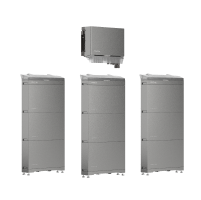
The EcoFlow OCEAN Pro serves as the central nervous system for the modern, electrified home. Unlike generic battery backups that are merely large power banks, the OCEAN Pro is built on a professional-grade 400V architecture. This matches the native voltage of many modern solar systems and EV batteries, allowing for energy transfer with minimal conversion loss.
Aerogel thermal protection: Batteries are sensitive to temperature. The OCEAN Pro is engineered with 360° Aerogel insulation, a space-age material that locks in optimal operating temperatures. This allows the system to perform reliably in environments ranging from -4°F to 140°F, protecting the LFP battery cells from the thermal stress that kills lesser batteries.
Surge capability: With a 205A LRA (Locked Rotor Amps) startup capability, the OCEAN Pro is designed to handle the heavy inrush current of central air conditioners, well pumps, and EV chargers without flinching.
EcoFlow OCEAN Pro: The ultimate home & automotive power hub

EcoFlow OCEAN Pro
Move beyond the alternator
While traditional cars rely on the variable, mechanical charging of an alternator, the EcoFlow OCEAN Pro offers consistent, professional-grade storage. It allows you to store energy when it is cheap (or free, from the sun) and use it when it is valuable.
Scalable capacity for growing needs
Your energy needs today might not be your energy needs tomorrow. The OCEAN Pro features a modular, stackable design that grows with you.
Flexible start: Begin with a 10kWh unit to cover critical circuits and basic backup.
Massive scale: As you add an EV or expand your home, you can stack units up to a massive 80kWh of storage. This ensures you never have to replace your system; you simply expand it.
Rapid EV support and whole-home resilience
With a continuous output capability of 24kW, the OCEAN Pro is powerful enough to run a whole-home scenario. You can cook dinner on an electric range, run the HVAC, and charge your electric vehicle simultaneously. During a blackout, this capability transforms your garage into a private energy oasis.
Smart generator connectivity
For extreme weather events where the grid is down for days and solar generation is low, the OCEAN Pro integrates seamlessly with EcoFlow Smart Generators. This creates a hybrid system that can auto-start the generator to recharge the batteries, ensuring you have power indefinitely, regardless of the weather.
Intelligent home charging and future-proofing your garage
To truly solve the charging equation, you need hardware that is purpose-built for speed and intelligence.
Accelerated charging speeds with OCEAN EV charger
The EcoFlow OCEAN EV Charger is the high-performance partner to the OCEAN Pro system. It upgrades your home from a passive parking spot to a high-speed refueling station.

11.5kW high output: While standard cables trickle power, the OCEAN EV Charger delivers a robust 11.5kW flow.
Range per hour: This translates to adding up to 46 miles of range for every hour the car is plugged in. A quick one-hour top-up gives you enough range for your daily commute, while an overnight charge ensures you always leave with a full "tank."
Solar-powered savings
When networked with the OCEAN Pro, the OCEAN EV Charger unlocks the full potential of solar ownership. You can configure the system to charge your EV using excess solar energy only. Instead of exporting your clean power to the utility company for a fraction of its value, you divert it into your car. This means you are essentially driving for free, powered by the sun.
Smart scheduling & durability
Cost optimization: Through the EcoFlow App, you can schedule charging to occur strictly during off-peak windows when utility rates are lowest. This automated arbitrage can save significant money over the lifespan of the vehicle.
NEMA 4 durability: Designed for the realities of North American weather, the charger carries a NEMA 4 rating. It is dust-tight and water-resistant, capable of withstanding rain, snow, and ice, making it suitable for both indoor garage and outdoor driveway installations.
Professional reliability
True energy independence requires professional execution. A certified installation of the OCEAN Pro and OCEAN EV Charger ensures your system is compliant with local electrical codes and optimized for your home's specific layout. It is an investment in infrastructure that adds tangible value to your property.
Conclusion
The question of how long does it take a car battery to recharge serves as a reminder of how far automotive technology has come. While we still rely on the "30-minute highway rule" for our gas-powered vehicles, the future is clearly electric.
Relying on an alternator to keep you moving is a legacy solution. In 2026, energy independence is about having a smart, integrated home system that manages power for you. It is about capturing solar energy, storing it in high-voltage LFP batteries, and delivering it to your vehicle at rapid speeds.
The EcoFlow OCEAN Pro and OCEAN EV Charger offer the efficiency, power, and reliability needed to navigate this transition. They ensure that whether you are powering your home through a storm or preparing your car for a road trip, you are always in control.
Ready to upgrade your home energy ecosystem? Request a consultation today to see how the OCEAN Pro can power your future.
What kind of product or solution are you interested in?

FAQ
1. If I am idling, how long does it take a car battery to recharge?
It is highly inefficient to charge a battery by idling. Because engines at idle run at low RPMs (usually under 1,000), the alternator generates very little excess current. If you have accessories like the AC, radio, or headlights on, you might actually drain the battery rather than charge it. Driving at highway speeds is the only effective way to recharge via the alternator.
2. How long does it take to recharge a car battery after a jump-start?
To ensure the vehicle will restart, you should drive for a minimum of 30 minutes without stopping, ideally at highway speeds. This provides a "surface charge." However, to restore the battery to 100% health and extend its lifespan, you should use a plug-in wall charger for several hours or overnight.
3. Is 30 minutes of running time enough, or how long does a car take to recharge its battery?
30 minutes is generally considered the "safe minimum" to get the battery to a point where it can restart the engine one more time. It does not fully recharge the battery. If you frequently drive only short distances, the battery will eventually fail prematurely due to chronic undercharging.
4. Can a completely dead battery be recharged by the alternator?
In many cases, no. If a battery's voltage has dropped below a certain threshold (typically 10.5 volts), the internal chemistry may be too damaged for the alternator to revive it. Modern smart alternators often stop sending current to a "dead" battery to protect the vehicle's electronics. For a deeply discharged battery, a professional recovery tool or a high-voltage home system like the EcoFlow OCEAN Pro is required to safely manage the load.
5. How does temperature affect how long it takes to recharge a car battery
Temperature plays a massive role in charging efficiency. In freezing weather, the chemical reactions inside a lead-acid battery slow down, and the battery develops higher internal resistance. This means the alternator must work much harder and longer to push energy back into the cells. This is why integrated systems with Aerogel thermal protection, like those found in the EcoFlow OCEAN Pro, are superior—they maintain an optimal temperature for the fastest possible energy transfer regardless of the weather outside.
