
Why a Hardwired EV Charger is Superior for Homes in the US
As electric vehicle adoption accelerates across the US, homeowners face a critical infrastructure decision: choosing between a hardwired vs plug in EV charger. While the convenience of a simple plug might seem appealing initially, the long-term benefits of a permanent connection are becoming increasingly clear. For those seeking maximum performance, safety, and aesthetic integration, a hardwired EV charger is often the superior choice. This guide explores why moving away from the standard NEMA outlet to a dedicated hardwired connection unlocks the full potential of Level 2 charging, ensuring your vehicle is ready whenever you are.
Understanding the Connection Differences
Let's cut through the jargon. You start reading about NEMA ratings and amperage and your eyes glaze over. I get it. But the difference between these two setups is actually pretty simple.
Defining the Setup
Think of a hardwired EV charger like a ceiling fan. You don't plug a ceiling fan into a wall socket, right? No. It is wired directly into the house. The copper wires run from your breaker box, through a pipe (we call it conduit), and screw tightly into the guts of the device. It is solid. It is not going anywhere.
A plug-in model? That is just a heavy-duty appliance. It is basically a toaster on steroids. It has a thick cord and a giant plug—usually a NEMA 14-50—that shoves into a receptacle on the wall.
Permanence vs. Portability
This is where people get hung up. The biggest argument in the hardwired vs plug in EV charger fight is always "portability."
"But what if I move?" people ask. "I want to take my charger with me!"
Okay, fair point. But be honest with yourself. Are you really going to hire an electrician to come unmount a charger, cap off the live wires, and patch the drywall just so you can save a few hundred bucks five years from now? Probably not. You are going to leave it there as a selling point for the next guy, especially if you have already invested in a robust home battery backup system.
Hardwired units are permanent fixtures. That sounds restrictive, but in the electrical world, permanent means reliable. Every time you plug something in or yank it out, you loosen the grip of the metal contacts inside the outlet. Loose connections create heat. Heat is the enemy. Hardwiring deletes that risk entirely. It is one less thing to fail.
Amperage Limits (The Speed Trap)
Here is the math that usually bites people. In the US, the electrical code (NEC) has a "continuous load" rule. It is a safety buffer. It basically says you can't run a circuit at full blast for hours on end. You have to cap it at 80%.
Most plug-in chargers use a 50-amp outlet.
80% of 50 amps = 40 amps.
That is your speed limit. You cannot legally pull more than 40 amps from a plug.
Hardwired connections don't have that bottleneck. If your panel has the room, we can run a 60-amp breaker and hardwire the unit.
80% of 60 amps = 48 amps.
That is an 8-amp difference. It might not sound like much, but that is a 20% boost in charging speed. Over a year, that is hours of your life you aren't waiting on your car.
Safety, Durability, and Aesthetics: Hardwired EV Charger
Safety isn't just about passing a city inspection; it is about physics. Charging at home is brutal on your home's grid. It draws massive power for 6, 8, maybe 10 hours straight. Your oven doesn't do that. Your dryer doesn't do that.
Eliminating Weak Points
Every connection point is a weak point. When you shove a plug into an outlet, you are creating resistance. Resistance makes things get hot.
There is a dirty little secret in the industry right now regarding "cheap" NEMA 14-50 outlets. You know the ones—you buy them for $12 at the big box store. They are garbage. They are built for ranges that cycle on and off. They are not built for the marathon heat of EV charging. We've seen cases where they melt under prolonged use, which is a known risk with low-quality outlets.
A hardwired level 2 EV charger skips this drama. There is no receptacle to melt. The wire is clamped down inside the unit with a torque screwdriver. It runs cooler, safer, and longer
Outdoor Reliability
If your garage is full of bikes and Christmas decorations and you have to park in the driveway, the hardwire vs plug in EV charger choice is simple: hardwiring is practically mandatory.
Plug-in units outdoors are a nightmare. You have to use those ugly "bubble covers" to keep the rain off the plug. Spoiler alert: they leak. Spiders get in there. Humidity gets in there. The contacts corrode.
A hardwired unit uses liquid-tight conduit. It is sealed. Rain, snow, sleet, desert dust—it doesn't care. It is a submarine compared to a leaky rowboat.
Cleaner Look
Let's talk curb appeal. A hardwire EV charger install just looks pro. You don't have a thick, ugly black cord drooping down the wall. You don't have a bulky gray box sticking out. The conduit can be hidden inside the wall, leaving you with a sleek, "floating" look. If you spent $60,000 on a car, don't power it with something that looks like a tangled mess of extension cords.
Charging Speed and Power Efficiency
Time is the one asset you can't buy back. If you drive a big EV—like one of those new electric trucks or a three-row SUV—charging speed isn't a luxury. It is logistics.
Maximizing Output
If you want the fastest charge possible at home, you have to hardwire. It is that simple.
That 48-amp charging speed (11.5 kW) adds roughly 20% more range per hour compared to the 40-amp limit of a plug-in.
Picture this: You get home at 5:00 PM with 10% battery. You have a dinner reservation at 7:00 PM that is 40 miles (64 km) away. That extra 20% speed from the hardwired connection is the difference between taking your car or having to call an Uber. It gives you a buffer.
Efficiency Gains
This is for the nerds in the room. Fewer connections mean less voltage drop. When electricity jumps from a plug prong to an outlet contact, you lose a tiny bit of energy as waste heat. Over ten years of daily charging, that adds up. Hardwiring is simply more efficient. You pay for those kilowatts; put them in your battery, not into heating up the drywall in your garage.
Future-Proofing
Batteries are getting bigger. The trucks coming out now have massive packs. Installing a robust hardwired circuit now ensures your home is ready for the next generation. Today's car might only need 11kW, but tomorrow's might want more. Hardwiring is the scalable choice.
The Synergy: EcoFlow OCEAN Pro + OCEAN EV Charger

EcoFlow OCEAN Pro + OCEAN EV Charger
Okay, you are sold on hardwiring. Smart move. But if you just slap a charger on the wall and hook it to the grid, you are missing half the picture. You are plugging a smart car into a "dumb" system.
You need an ecosystem.
The Powerhouse: EcoFlow OCEAN Pro
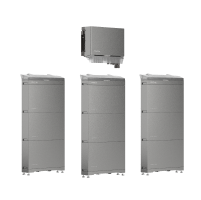
The OCEAN Pro is a beast. It is a Powerful & Future Proof Hybrid Inverter. It uses a 2X-BUS Architecture designed for all scenarios.
It supports 400V DC coupling. Why should you care? Because it is efficient. It gets 5% higher generation efficiency than the standard AC-coupled solutions. That is free power.
And it is built to last. The industry standard warranty is 10 years. EcoFlow laughs at that and gives you 15 years on key components.
But let's talk power. It handles up to 40kW of solar input via 8 MPPTs. That means you can put panels on every weird angle of your roof—north, south, east, west—and the system will squeeze every drop of juice out of them.
And the backup? It isn't just for lights. The OCEAN Pro provides Unlimited Whole-Home Backup. It pumps out 24kW continuous output. It has a 205A LRA (Locked Rotor Amperage). That is enough grunt to kickstart two 5-ton air conditioners at the same time.
Grid goes down? It switches over in 0ms. Zero. Your clocks won't even blink.
The Charger: OCEAN EV Charger
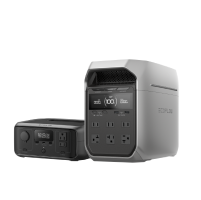
Now, take that monster system and hardwire the EcoFlow OCEAN EV Charger to it. This charger is designed for the US market to take full advantage of that power. It isn't just pushing amps; it is managing them.

Smart Energy Management Integration
The old way of charging was: plug in, walk away, pray the bill isn't too high.
The new way is: plug in, let the Intelligent Mode handle it, and profit.
Holistic Ecosystem
The OCEAN EV Charger talks to the OCEAN Pro. They are best friends. This is huge.
Because they communicate, they can balance your home's load. If you are running the dryer, the oven, and the AC, a dumb charger might trip your main breaker. The OCEAN system sees that coming. It throttles the car down for a few minutes, waits for the oven to turn off, and then ramps back up. You don't have to do a thing.
Solar Prioritization (Self-Powered Mode)
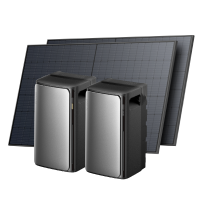
This is the holy grail. With the OCEAN Pro's Self-Powered Mode, you can charge your car using only surplus solar.
Imagine it is a sunny Saturday. Your panels are crushing it—generating 15kW. Your house is only using 3kW. Instead of selling that extra 12kW back to the utility company for pennies, the OCEAN EV Charger grabs it and dumps it straight into your EV. You are driving on sunshine. It is free fuel. If a cloud rolls in, the solar battery fills the gap.
Automated Savings (Time-of-Use)
Utility rates are a scam. They charge you double or triple the price when everyone is home (4 PM to 9 PM).
A smart hardwired EV charger knows this. It syncs with Time-of-Use (TOU) rates to help you Cut Cost significantly. You plug in when you get home at 6 PM, but the charger says, "Whoa, power is expensive right now." It pauses. It waits. Then, at midnight when rates drop to rock bottom, it wakes up and blasts the battery full. You save a fortune without lifting a finger.
Installation and Cost Considerations
Let's talk about the elephant in the room. Money.
Professional Requirement
Yes, a proper hardwire EV charger install needs a pro. You need a licensed electrician to run the conduit. Do not DIY 240 volts unless you have a death wish or want to void your homeowner's insurance. This is not a "plug and play" toy.
You might be thinking, "I'll save cash by just getting the plug-in version."
Stop right there. Here is the catch: You still have to pay an electrician to install that NEMA 14-50 outlet. If you are searching Google for a "Solar Installer Near Me," make sure they know you want a hardwired setup.
The "Cheap" Option is Expensive
Those GFCI breakers cost over $100. And they hate EV chargers. Since the charger has its own internal safety checks, it fights with the wall breaker. It causes "nuisance tripping." You wake up to a dead car because the breaker popped at 2 AM.
A hardwired system minimizes this headache by using built-in GFCI protection that complies with NEC standards, so you don't need the expensive, finicky breaker in the panel. You also don't need to buy an $80 industrial-grade receptacle.
In many cases, hardwiring is actually cost-neutral compared to a safe, code-compliant plug-in install. Plus, it is a "set it and forget it" investment.
Rebates and Incentives
Don't leave free money on the table. Many utility companies offer fat rebates for installing chargers, but there is a catch: they often require a hardwired installation. They want hardwired units because they are reliable and good for the grid. That rebate check can often cover the entire install cost, making it the best hardwired EV charger financial strategy.
And hey, the EcoFlow system is built for the extremes. It works from -4°F to 140°F (-20°C to 60°C). It handles crazy voltage swings (up to 290V), which is great if you live in a rural area with dirty power. It is built to survive.
Conclusion
Look, the debate is pretty much over. Plug-in chargers are fine if you are renting an apartment or need a temporary fix at a vacation cabin. But for a homeowner? The EV charger hardwired or plug-in decision overwhelmingly favors hardwiring.
It is safer. It is cleaner. It is faster. And it stops you from worrying about melting outlets.
But hardware is only half the battle. To really win, you need an energy ecosystem. The EcoFlow OCEAN Pro + OCEAN EV Charger gives you that. With industry-leading 15-year warranties, instant backup power that can run your AC, and the ability to turn solar power for your home into mileage, it transforms your garage from a parking spot into a personal power plant.
Don't just charge your car. Power your life. If you are ready to future-proof your home, Request A Consultation today and let's get your energy independence started.
What kind of product or solution are you interested in?
FAQ
Can you install a level 2 charger at home by yourself?
No. This is not a DIY project. Working with high-voltage electrical panels requires a licensed electrician to ensure safety and compliance with local building codes.
Does a hardwire EV charger charge faster than a plug-in?
Yes. Hardwired chargers can legally run at 48 amps (11.5 kW). Plug-in units are limited to 40 amps (9.6 kW) due to safety codes. This 20% difference adds significant range per hour.
How complicated is a hardwire EV charger install compared to using an outlet?
It is roughly the same work for an electrician. Both require running a new circuit. Hardwiring actually saves time later because you don't have to deal with tripping GFCI breakers.
Is it cheaper to charge my EV at home or at a charging station?
Absolutely. Home charging rates are usually a fraction of public charging costs. If you pair your charger with the EcoFlow OCEAN Pro and solar panels, your cost per mile can drop to zero.
Should I choose an EV charger hardwired or plug-in for long-term savings?
Hardwired is the long game. You won't have to replace worn-out outlets. You won't have to deal with breaker issues. And the faster charging speeds let you squeeze more juice into the car during those short windows when electricity is cheap.
