
Lithium Battery Swelling: Why It Happens and How to Prevent It
Noticing your device screen lifting or a bulging casing is a terrifying sign of battery swelling that ruins your electronics. This dangerous phenomenon usually stems from heat and aging, leaving users worried about safety and data loss. Unlike the volatile pouch cells in mobile devices, the EcoFlow Ocean Pro leverages industrial-grade LFP chemistry to virtually eliminate expansion risks. It stands as the ultimate long-term solution for those seeking uncompromising reliability and peace of mind.
Why does lithium battery swelling take place?
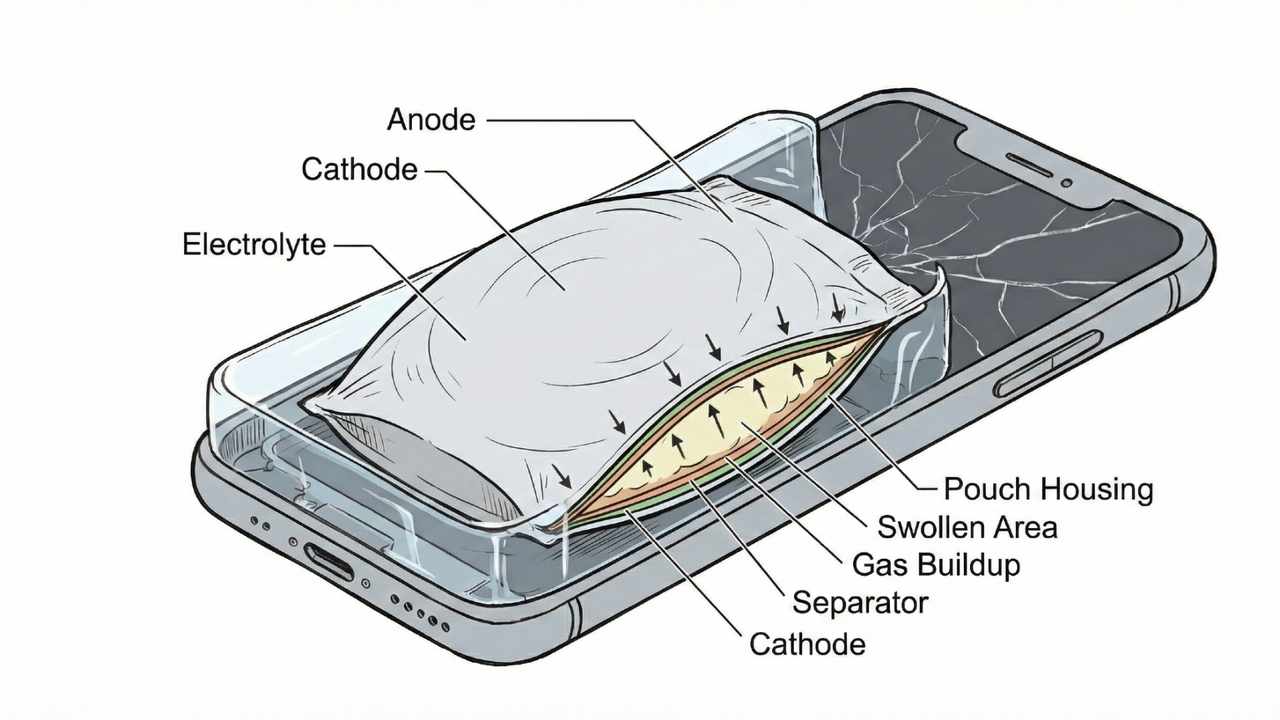
Lithium-ion cells function through the movement of ions between an anode and a cathode via a liquid electrolyte. Under optimal conditions, this process is stable. However, lithium battery swelling occurs when the electrolyte begins to decompose, a process known as outgassing. As the liquid breaks down, it releases gases like oxygen, carbon monoxide, and carbon dioxide, which become trapped inside the battery's sealed pouch.
A critical component is the Solid Electrolyte Interphase (SEI) layer, a protective film on the anode. When extreme heat or overcharging causes the SEI layer to bridge or collapse, the electrolyte reacts directly with the electrode, accelerating gas production.
While all batteries experience minor reversible swelling during thermal expansion, excessive gas leads to irreversible swelling. This structural failure indicates that the internal pressure has reached a dangerous threshold, transforming a standard power source into a potential fire hazard.
Primary causes of lithium or phone battery swelling up
Understanding the catalysts behind battery expansion is essential for extending the lifespan of your electronics. While the chemistry of outgassing is complex, the practical causes usually boil down to environmental stress, usage habits, or the natural passage of time.
Overcharging and voltage stress
Leaving your device plugged in at 100% for extended periods is a silent killer for lithium-ion cells. Continuous voltage stress forces lithium ions into the anode beyond its comfortable capacity, leading to the plating of metallic lithium and the eventual breakdown of the electrolyte solution.
Thermal abuse
Heat is the primary enemy of battery health. External heat, such as leaving a phone on a car dashboard, combined with internal heat from intensive gaming or fast-charging, creates a thermal feedback loop. This accelerated heat causes the electrolyte to vaporize much faster than it would at room temperature.
Manufacturing flaws
In some cases, the fault lies in the factory. Microscopic metal impurities left behind during production or an uneven electrode coating can create hot spots within the cell. These defects cause localized short circuits that lead to premature phone battery swelling up.
Physical trauma
Drops, compressions, or punctures can compromise the thin separator between the anode and cathode. This mechanical failure leads to internal short circuits, which generate immediate heat and gas, often resulting in visibly warped battery swelling phone cases.
Aging
Even with perfect care, all batteries have a finite lifespan. As a battery ages, the chemical reactions become less efficient, and the protective SEI layer naturally thickens and degrades. This inevitable chemical exhaustion makes older batteries significantly more susceptible to gassing and swelling.
Preventive strategies for lithium ion battery swelling
There are several ways through which you can prevent lithium-ion batteries from swelling up, few of which have been explained below for your safety.
Adhere to the 20/80 rule: Avoid the chemical stress of extreme charge levels by keeping your battery percentage between 20% and 80% whenever possible; modern lithium-ion batteries prefer shallow discharge cycles over full 0-100% swings.
Optimize thermal environments: Avoid charging your device in direct sunlight or under a pillow, as heat is the primary catalyst for electrolyte decomposition; if the device feels uncomfortably hot during a "fast charge," consider removing the case or pausing use.
Utilize certified power accessories: Use only manufacturer-original or high-quality third-party chargers and cables that include regulated voltage protection, as cheap knock-off chargers often deliver inconsistent currents that degrade the battery’s internal structure.
Implement safe state storage: When putting a device away for several weeks or months, never store it at 0% or 100%; instead, discharge it to approximately 50% and keep it in a cool, dry place to minimize the rate of natural chemical degradation.
Scaling up: from mobile safety to home reliability
The journey from handheld electronics to whole-home power represents a massive leap in engineering.
While smartphones rely on lightweight, fragile pouch cells designed for space efficiency, industrial-grade home systems must prioritize structural integrity. Transitioning to home reliability means moving away from the disposable nature of mobile batteries toward systems designed to last decades rather than years.
When a smartphone battery swells, it might ruin a $1,000 device; however, lithium-ion battery swelling in a home backup system is a much higher-stakes issue. Because these systems store massive amounts of energy (kilowatt-hours vs. watt-hours), a chemical failure at scale can lead to significant property damage or fire risks.
The aforementioned increased risk is why high-end systems like the EcoFlow Ocean Pro are engineered with fundamentally different chemistry and safety protocols to ensure that swelling batteries never become a household hazard.
Understanding EcoFlow Ocean Pro’s long-term reliability

EcoFlow Ocean Pro
Additional features:
Advanced thermal management
The Ocean Pro is engineered to handle extreme environments that would cause standard batteries to fail. It features 360° Aerogel insulation and advanced active cooling systems to maintain optimal internal temperatures.
According to its specifications, the system maintains full operability in extreme ranges from -4°F to 140°F (-20°C to 60°C). Crucially, it requires no power de-rating below 113°F (45°C), ensuring consistent performance without thermal stress that typically catalyzes battery swelling.
The smart battery management system (BMS)
Safety is managed in real-time by a sophisticated battery management system. This provides precision voltage monitoring for every cell to prevent the overcharge and deep-discharge cycles that lead to voltage stress.
Through the EcoFlow mobile app and cellular/Wi-Fi connectivity, the BMS performs real-time diagnostics to identify weak or deviating cells long before they can pose a structural risk, allowing for preemptive maintenance.
Safety certifications and compliance
The reliability of the Ocean Pro isn't just claimed; it is certified. It meets the rigorous UL 9540 system-level certification and UL 1973 for battery safety.
Specifically, its adherence to the UL 9540B milestone, the industry’s gold standard for fire safety and overheat protection, confirms that the system is designed to contain thermal events and prevent the dangerous structural failures associated with typical lithium-ion swelling.
Why EcoFlow's ecosystem is safe from battery swelling issues?
The EcoFlow ecosystem presents a number of advantages that differentiate itself from its competitors, few of which have been described below, so that you can get a better understanding of the topic at hand.
Professional installation vs. DIY
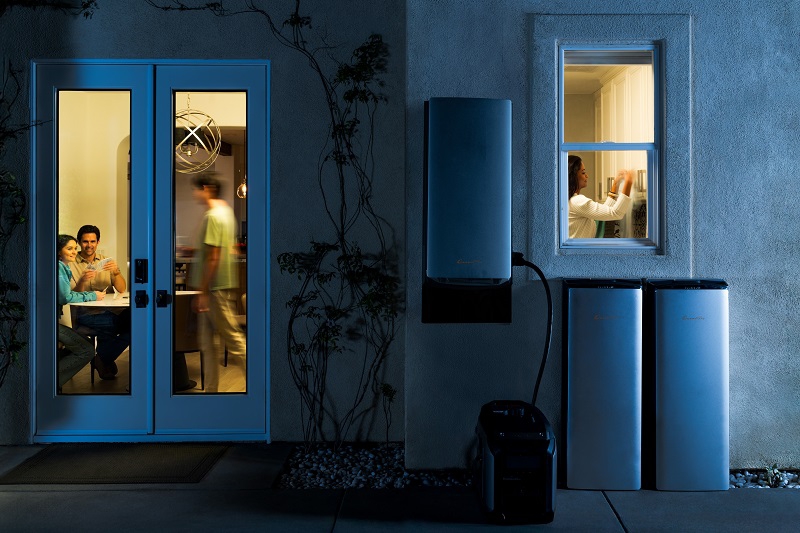
The EcoFlow Ocean Pro requires professional installation by certified technicians. This ensures optimal electrical integration with your home’s grid, proper ventilation clearances, and strict adherence to local fire codes.
Modular thermal dispersion
The Ocean Pro’s modular architecture is a key design feature for safety. By separating the energy storage into distinct 10kWh battery units, the system allows for significantly better heat dissipation between stacked components.
Prevention vs. mitigation
While the primary goal is prevention, the Ocean Pro includes built-in fire suppression as a secondary fail-safe. In the highly unlikely event of a thermal anomaly, the system's integrated mitigation tech works to contain the issue locally, ensuring that a single-cell failure does not escalate into a system-wide hazard.
Optimized intelligent mode
Through the EcoFlow mobile app, users can access the in-app Intelligent Mode, which utilizes advanced algorithms to optimize energy management over time. This cloud-connected software monitors usage patterns and environmental conditions to refine charging speeds and depths of discharge.
Signing off
Ultimately, while battery swelling is a common consequence of our modern reliance on portable electronics, it remains a manageable risk with the right knowledge and hardware choices. However, when it comes to powering your home, the stakes are far too high for.
While we can't always control the fate of a battery swelling phone, we can choose home energy systems built on a foundation of safety-first architecture. The EcoFlow Ocean Pro represents the pinnacle of this approach, offering the stability of LFP chemistry and the intelligence of a professional ecosystem.
So, if you are looking to invest in a power solution that prioritizes long-term reliability and professional-grade safety today, then be sure to request a consultation with our experts today!
What kind of product or solution are you interested in?

FAQ
1. How can I tell if I am experiencing lithium battery swelling in my device?
Look for screen bulging or a warped casing. While phones physically expand, the EcoFlow Ocean Pro uses ultra-stable LFP chemistry and real-time BMS monitoring to identify internal irregularities before they ever compromise the system's structural integrity.
2. How long until the phone battery swells?
The usual timeline is typically 3-4 years, though heat accelerates this. Mobile batteries degrade quickly; conversely, the EcoFlow Ocean Pro is designed for years of use, utilizing industrial-grade components that maintain stability far longer than standard consumer electronics.
3. Is a battery swelling phone dangerous to keep in the house?
Yes, it’s a fire hazard. Unlike volatile phone batteries, the EcoFlow Ocean Pro features built-in fire suppression and UL-certified enclosures, ensuring your home backup remains a safe, stable asset rather than a liability.
4. Is it okay if I leave my phone charging overnight?
It causes voltage stress and swelling. While phone chargers lack smart cutoff, the EcoFlow Ocean Pro’s intelligent BMS automatically regulates charging cycles to prevent overcharge, maintaining peak battery health without manual intervention.
5. Why does lithium ion battery swelling happen more frequently as devices age?
Electrolytes decompose naturally over time, creating gas. While phone cells inevitably fail, EcoFlow Ocean Pro’s LFP chemistry and analysis-driven "Intelligent Mode" drastically slow chemical aging, ensuring reliable power for over thousands of charge cycles.
