
Warm Homes Plan UK Guide 2026: Grants, Loans and Energy Upgrades
With energy prices remaining a hot topic across the British Isles, the Warm Homes Plan 2026 has arrived as a cornerstone of the UK’s strategy to cut bills and carbon. This guide unpacks the latest funding landscape—from eligibility criteria and available grants to smart technology making 'net zero' a reality for the average semi-detached. Whether you’re looking to insulate your loft or install a state-of-the-art battery system, we’ve mapped out the route to a cosier, cheaper-to-run home.
What Is the Warm Homes Plan?
The Warm Homes Plan is the government's ambitious framework designed to transform the UK's ageing housing stock into energy-efficient havens. It’s not just about slapping on some insulation; it's a holistic approach —incorporating everything from fabric improvements to a home energy management system—to how we heat and power our lives.
1. Why the Warm Homes Plan Matters in 2026
In 2026, the focus has shifted from "quick fixes" to long-term energy independence. With the UK aiming for tighter climate targets, the plan provides the financial muscle needed to transition away from volatile gas markets toward stable, home-grown green energy.
2. Who the Plan Is Intended to Support
The scheme primarily targets low-income households, those living in fuel poverty, and residents in properties with poor energy performance. However, there are also provisions for "middle-income" households who need a bit of a nudge to invest in high-tech decarbonisation.
What Determines Eligibility and Application Outcomes
It’s not quite a "one size fits all" affair; your eligibility depends on a mix of your home’s "health" and your personal financial circumstances.
1. EPC Rating Requirements (Usually D–G)
Your Energy Performance Certificate (EPC) is the golden ticket. The Warm Homes framework typically prioritises homes rated D–G, particularly where poor insulation or inefficient heating is identified, as part of the broader mission of how to make your home more energy-efficient. If your home is already an A or B, you’re likely already doing your bit, so the funding is steered toward those lagging behind.
2. Household Income and Benefit Criteria
Financial support is often tiered. Where income thresholds apply, they are often set locally — commonly in the £31,000–£36,000 range. Those receiving certain means-tested benefits may qualify for full funding, while others may be eligible for significant discounts based on total household income.
3. Property Type and Ownership Considerations
Whether you own your home outright or rent privately, you can often apply. However, private tenants will need their landlord’s explicit permission, and social housing usually has its own dedicated stream of funding within the plan.

What Funding Options Are Available Under the Warm Homes Plan
Understanding the "how" of the funding is just as important as the "what." The 2026 plan uses a mix of three main financial vehicles.
1. Fully Funded Grants for Eligible Households
For the most vulnerable or those in the lowest-rated properties, "fully funded" means exactly that—the government covers 100% of the cost for specific upgrades like cavity wall insulation or air source heat pumps.
2. Part-Funded Support and Contribution-Based Upgrades
If you fall outside the lowest income brackets, you might receive a "top-up" grant. You pay a portion of the cost, and the Warm Homes Plan covers the rest, making premium tech much more affordable than it would be on the open market.
3. When Government-Backed Loans Are Used Instead
In some cases, especially for higher-cost installations like massive solar arrays, the government offers low-interest, long-term loans. The idea is that the savings on your monthly energy bill will more than cover the loan repayments.
What Home Upgrades Are Commonly Covered
The menu of upgrades is more extensive than ever, moving beyond just keeping the heat in to actively generating and storing your own power through advanced home battery storage solutions.
1. Insulation and Heat Retention Improvements
The first rule of energy efficiency is "fabric first." Expect support for loft, floor, and solid wall insulation—the essential barriers that stop your hard-earned money leaking out through the bricks.
2. Low-Carbon Heating and Hot Water Systems
Out with the old gas boilers and in with air-source and ground-source heat pumps. The 2026 plan heavily subsidises these transitions to ensure homes stay warm without the carbon footprint.
3. Solar, Electricity, and Home Energy Systems
By 2026, UK home energy policy has increasingly shifted from simple power generation toward more integrated, whole-house energy systems. Policy guidance under the Warm Homes framework increasingly supports home battery storage to solve the problem of solar panels being useless once the sun goes down over a rainy English afternoon.
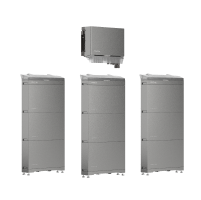
The policy encourages a "self-consumption" model, guiding residents to store excess daytime energy to slash evening bills. Systems like the EcoFlow PowerOcean (Single Phase) are perfect for this; offering up to 45kWh of storage capacity, it’s designed for larger UK households with high winter energy demands. Plus, its IP65 rating means it can handle our famously unpredictable British weather, ensuring your investment remains a durable long-term asset.
4. Smart Controls and Energy Monitoring
Smart monitoring is the "brain" that ensures the Warm Homes Plan delivers. The 2026 guidelines emphasize that you can’t manage what you can’t measure; only by seeing real-time data can we stop energy being wasted invisibly.
Integrated interfaces are now the standard for energy-efficient homes. For example, using a device like the EcoFlow PowerInsight 2, an 11-inch touchscreen, families can see exactly how much solar they are capturing versus their current load. This "visualised" dispatch capability doesn't just meet government requirements for precision energy management; it lets homeowners see exactly how many pounds and pence the Warm Homes Plan is saving them every single day.

Common Misunderstandings About the Warm Homes Plan
Before you sign on the dotted line, it’s worth clearing up a few bits of "over-the-fence" gossip that might be misleading.
1. “Fully Funded” Means Every Upgrade Is Free
Only specific measures are free. If you want a specific premium brand or an extra-large system not deemed "necessary" by the assessment, you might have to pay the difference.
2. You Can Choose Any Upgrade You Want
The upgrades are determined by a professional retrofit assessment. If your house needs insulation more than it needs a heat pump, the plan will prioritise the insulation first.
3. All Approved Homes Receive the Same Upgrades
Every house is different. A Victorian terrace in Manchester will require a very different plan than a 1970s bungalow in Cornwall.
4. Approval Guarantees Immediate Installation
Demand is high. While you might be approved quickly, the "wait time" for qualified installers can sometimes take a few months.
5. All Upgrades Will Dramatically Reduce Energy Bills
While they usually do, the impact depends on your habits and external factors like the current energy price cap. If you turn the thermostat up to 25°C just because you have a heat pump, your bills might stay the same!
Schedule Your Free Consultation Today!
What kind of product or solution are you interested in?

Conclusion
The Warm Homes Plan 2026 represents a massive leap forward for UK residents. By combining traditional insulation with cutting-edge tech like the EcoFlow PowerOcean, the government is helping us move toward a future where our homes are not just shelters, but efficient power stations in their own right. If you’re tired of the "heating vs. eating" dilemma, now is the time to check your EPC and see what support is waiting for you.
FAQs
1. Is the Warm Homes Local Grant only in England?
No, while specific names might vary (such as Warmer Homes Scotland), similar funding structures are available across the UK. Each devolved nation has its own delivery partner, but the core goal of the Warm Homes Plan remains consistent nationwide.
2. Can I combine grants with loans?
Yes, many homeowners use a grant to cover the bulk of an installation and a government-backed loan to cover the remaining balance. This is a common way to afford larger systems like full solar-plus-storage setups.
3. How long does the application process usually take?
Expect the process to take anywhere from 4 to 12 weeks from initial application to the final home assessment. Actual installation dates will depend on the availability of MCS-certified contractors in your local area.
4. Do I need an energy assessment before applying?
No, you don't need to pay for one beforehand; a professional assessment is usually part of the application process itself. The scheme will send an assessor to determine which upgrades will actually benefit your specific property.
5. Will these upgrades actually lower my energy bills?
Yes, most households see a significant reduction in annual energy costs, especially when combining insulation with smart storage systems. By relying less on the grid during peak hours, the savings can be substantial over the course of a year.

