
How Much Does a Loft Conversion Cost in the UK?
Got an attic that’s just gathering dust? Why not turn it into a smart master bedroom or a quiet home office? Plenty of people have. Across the UK, where space is tight, loft conversions are the favourite route for those wanting to “improve rather than move.” In this guide, we cover everything from the structural basics and current costs to savvy tips for keeping your energy bills down.
Understanding Loft Conversions
Before you start faffing about with paint swatches, it’s worth knowing what’s really involved in “opening up” the roof. It’s a lot more than just chucking down some floorboards.
1. What a Loft Conversion Involves
A loft conversion is a significant structural project rather than a simple interior renovation.
First off, the floor needs strengthening with new joists to handle the extra weight of a master suite. Then there’s the staircase—it has to be a fixed, permanent one to meet regs—and adding dormers or roof lights to stop it feeling like a cave. You’ll also likely have to get the plumber in to extend the pipes and radiators so the top floor is just as comfy as the rest of the house.
2. Types of Loft Conversions
How tricky and costly your loft conversion will be depends a lot on the style:
Velux/Roof Light: The simplest and most affordable, keeping the original roof but adding windows.
Dormer: The UK’s most popular choice because they physically “box out” the roof to create more standing room.
Hip-to-Gable: Common on semi-detached houses, this replaces a sloping roof side with a vertical wall to maximise space.
Mansard: That’s the premium choice that replaces the whole roof for a full-height storey. It’s the most expensive, but the results are pretty life-changing.
3. Benefits of a Loft Conversion for Home Value
A well-executed conversion can be a brilliant investment.
Getting a loft conversion done properly can really pay off. According to the Royal Institution of Chartered Surveyors, a carefully designed loft can add up to 20% to your property’s value in many UK markets. It’s often much less expensive than the whole rigmarole of stamp duty and estate agent fees when moving.
4. Planning Permission and Building Regulations
You’ll be glad to hear that a standard conversion rarely needs full planning permission, thanks to Permitted Development rights. That said, roof volume extensions are capped: 40 m³ for terraced houses and 50 m³ for detached or semi-detached homes.
Even without planning permission, every loft job has to meet UK Building Regs. This ensures everything from the floor strength and fire safety to the insulation and staircase design is up to scratch. It’s all about making sure the new space is actually legal and safe.
Typical Cost Ranges for Loft Conversions in the UK
The obvious first question is: “How much will this cost?” Costs vary by region, and London and the South East are on the pricey side. Expect to pay 20–40% more than the national average, largely down to higher labour and skip hire charges.
According to Checkatrade, you can expect a typical dormer loft conversion in the UK to set you back anywhere from £35,000 to £60,000, depending on size, complexity, and where you live.
1. Key Factors Influencing Loft Conversion Cost
Several variables will shift your quote:
Structural integrity: Does the roof need a complete “cut and pitch” rebuild?
Plumbing: Adding a bathroom adds complexity and cost.
Finishings: High-spec bespoke joinery vs. standard flat-pack solutions.
2. Typical Price Ranges by Conversion Type
The final cost largely depends on the conversion style you choose. Below is a typical price guide based on current UK contractor estimates.
| Conversion Type | Typical Cost | Average Cost per m² |
|---|---|---|
| Velux / Roof Light | £20,000–£35,000 | £1,200–£1,800 |
| Dormer | £35,000–£60,000 | £1,500–£2,200 |
| Hip-to-Gable | £45,000–£70,000 | £1,700–£2,400 |
| Mansard | £60,000+ | £2,000–£3,000 |
Note: These figures are based on national averages. In the UK, most building quotes carry 20% VAT, so you’ll need to add that to your total budget.
3. Additional Costs to Consider
Keep those “hidden” costs in mind. Factor in architect fees (around £1,000–£2,500), structural engineer reports (£500–£1,000), building control fees, and possibly a Party Wall Agreement if your property shares a wall with a neighbour.

How to Optimise Loft Investment and Ongoing Costs
While the build cost is a one-off hit, a new loft adds extra square footage to heat and light, which can creep up your monthly outgoings. Here’s how to keep those bills in check.
1. Choosing Cost-Effective Loft Designs
Simple is usually cheaper. If you can achieve your goals with a Dormer rather than a Mansard, you’ll save thousands in labour and materials without sacrificing much functional space.
2. Planning for Energy Efficiency
The UK’s Building Regulations are strict on insulation for a reason. Proper high-performance PIR boards in the rafters will keep your new room warm in the winter and—crucially—cool during those rare British heatwaves. Learning how to save energy at home through better insulation and smart design can significantly lower the long-term running costs of your new space.
3. Integrating Solar Panels and Battery Storage
Converting the loft gives you a fresh roof surface—a brilliant chance to get solar panels installed. Add a home battery storage and you can cope with the loft’s extra electricity needs. By day, solar power runs the house, and any excess is saved for the evening, cutting down your grid dependence.
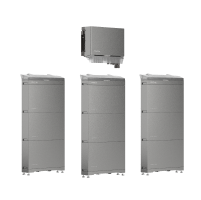
For a seamless setup, the EcoFlow OCEAN 2 storage system is designed for compact residential installations. Its compact design makes it suitable for UK homes where utility space is often limited, and its simple wiring makes maintenance a doddle. The best bit is it tracks different solar panels independently. If one side of your roof is in the sun while the other’s in the shade, the system just balances the load itself. It’s a brilliant way to ensure you’re getting the maximum return on what you’ve spent.
4. Monitoring and Managing Electricity Usage
Once the builders leave, you’ll likely notice your energy usage tick upwards due to new lighting, heating, and gadgets in the loft. To keep costs from spiralling, you need data.
A smart energy monitor like the EcoFlow PowerInsight 2 provides a crystal-clear look at your home’s energy flow via a high-def touchscreen. It tracks your solar generation and battery levels in real-time, helping you decide when to run the washing machine or heat the new loft room. Even if your Wi-Fi drops out, the PowerInsight 2 stays running, giving you stable, wall-mounted control over your home’s long-term energy efficiency.

Common Pitfalls and Things to Avoid
A loft project can quickly turn into a headache if you cut the wrong corners. Avoid these classic British building blunders:
1. Underestimating Structural Work
It’s a common mistake to think you can simply “board over” existing beams. Original ceiling joists are designed for light storage, not the weight of a master suite. Skimping on the RSJs (Rolled Steel Joists) recommended by your engineer is a recipe for sagging ceilings or structural cracks that cost a fortune to fix later.
2. Skipping Official Paperwork
Even if your project falls under Permitted Development (PD), don’t just “crack on.” You should always secure a Lawful Development Certificate. Without this “get out of jail free” card, solicitors may flag the conversion as unauthorised when you eventually sell, potentially scuppering your house sale at the eleventh hour.
3. Overlooking Fire Safety and Ventilation
Because it’s a third storey, Building Control usually requires FD30 fire doors below to make a protected corridor. And watch your eaves—if insulation is stuffed in too tightly without airflow, condensation can form and slowly rot the roof timbers from within.
4. Choosing Low-Quality Materials
Money a bit tight? You might be tempted by no-name skylights or minimal insulation—but in a damp climate like ours, that’s a false economy. High-quality glazing (like triple-glazed Velux units) offers much better U-values. Saving £500 now isn’t worth it when your energy bills spike or your windows start to whistle in a January gale, potentially leading to a larger hit from the energy price cap than you anticipated.
Schedule Your Free Consultation Today!
What kind of product or solution are you interested in?

Conclusion
Transforming your loft is perhaps the most satisfying way to make your home feel bigger. You’ll finally have some proper space and it’ll likely give your property price a decent nudge up, too. Stick in some clever design and a smart home energy management system alongside energy-efficient tech like solar batteries, and your new master suite won’t cost a fortune to keep going.
FAQs
1. What is the "4-year rule" for loft conversions?
In the past, you could get away with a loft conversion if it wasn’t challenged for four years. These days, thanks to the Levelling-up and Regeneration Act 2023, the enforcement period is 10 years across the board. That makes getting a Lawful Development Certificate before you begin more important than ever.
2. What is cheaper, loft conversion or extension?
A loft job usually beats an extension on price per square metre. Since the basic structure—the roof and walls—is already in place, you save a fortune by skipping the heavy lifting of digging foundations and pouring new concrete slabs.
3. How long does a loft conversion take?
A normal dormer loft conversion usually hits the plaster finish stage in 6–10 weeks. Custom builds, such as Mansards, may take 12 weeks or more, depending on how tricky the design is and what the weather does.
4. What is the most expensive part of a loft conversion?
The structural steelwork and the staircase are usually the biggest costs. Getting heavy steel beams into a roof and configuring a staircase that meets building regs without eating up too much space requires precision engineering and expensive labour.
5. Do you need neighbours' permission for loft conversion?
You don’t usually need their “permission” in a legal sense if it’s Permitted Development, but if you are touching a shared wall, you must serve a Party Wall Notice under the Party Wall etc. Act 1996. Your neighbours have the right to appoint a surveyor to ensure your work won’t damage their property.

