
How to Choose the Right Home Power Storage Battery for Your Solar System?
Adding a home power storage battery to your solar panels provides a solution for storing excess solar power generated during the day for use at night. With storage, your household will jump from using 30% of the energy it produces to 80%.
Another benefit of home storage adoption is that you’ll also get access to backup power if you experience a power outage in your area, and the opportunity to access tariffs by charging when rates are low. But the question is: are all batteries good?
Step 1: Define Your Home Battery Goals
It’ll pay to understand why you want a home battery. Defining your goals can shape how best to use it. Here are a few common reasons why homeowners opt to purchase a home electric battery:
Maximizing self-consumption: Most people want a home battery to achieve grid independence by increasing the solar energy they consume.
Backup power: If you live in a rural area that experiences power outages, having a battery can keep essential items powered when the grid goes down.
Time-of-use tariff optimization: Knowing when your electricity costs more helps you charge when it's less expensive. You may even get paid for supporting the grid with excess power.
Step 2: Size Your Household Battery Correctly
Battery size refers to the energy capacity, measured in kilowatt-hours (kWh). If your battery is too small, you’ll run out of power quickly. A battery that’s too large may cost more than you can afford. Home solar batteries like EcoFlow PowerOcean are perfect solutions when it comes to battery sizing since you can start with a single 5kWh battery unit and add more as your home’s energy needs grow.
Understanding Battery Capacity
Capacity refers to the amount of energy, measured in kWh, that a battery can store. For example, 1kWh can power a 1000-watt appliance for roughly an hour. A typical smaller system offers around 5kWh, which is appropriate for a smaller flat. A single-family home might require 10 kWh or more.
Consider this equation:
Daily electricity use x proportion you want covered by stored solar = suggested capacity
If you’re using 10kWh of electricity daily and want a battery to cover roughly half of that, aim for a 5-6kWh battery.
Usable Capacity and Depth of Discharge (DoD)
Depth of Discharge (DoD) is the percentage of usable battery that doesn’t affect its lifespan. Lithium-ion batteries have a DoD of 80-100%, which allows you to use most of their energy each cycle. Older lead batteries have a DoD of only up to 50%.
A battery’s kWh capacity differs from its usable kWh capacity. A 10kWh battery may not have 10kWh of usable energy—if it has 80% DoD, then only 8kWh is usable. In terms of PowerOcean, a 5kWh battery pack has a DoD of 95% and a usable capacity of 4.8kWh.
Step 3: Match the Battery Power to Your Household Needs
A battery’s power rating (kW) indicates how quickly it delivers energy. For instance, a battery with a 5kW output rating can power 5,000 watts of appliances at once. It’s best to align power ratings to usage habits. Things to consider include:
General household loads: Consider what appliances you run most frequently. 3-5kW typically covers essential appliances, such as your fridge, WiFi, lights, and other kitchen gadgets.
High-demand appliances: Need to supply high-demand appliances like a heat pump or even an electric vehicle? You may need more than 7kW of power. For whole-home demand, consider at least 10kW.
Remember, a battery’s power and capacity are different specs—a battery might store lots of power but release it more slowly than you need it to. List which appliances you want to run simultaneously and note your peak usage.
Step 4: Understand Battery Chemistry and Lifespan
A battery’s makeup determines how well it performs, how long it lasts, and how safe it is. Here’s what you should know.
Common Chemistries: LiFePO4 and more
The two standard chemistries in solar batteries are LiFePO4 (LFP) and Nickel-Manganese-Cobalt (NMC). LFP is safe and long-lasting—it’s thermally stable, less prone to overheating, and can withstand over 6,000 charge cycles (equivalent to 15 years of daily cycling). However, they have slightly lower energy density.
NMCs have higher energy densities, storing more kWh in a compact unit. The downside is they support fewer cycles—nearly half of what an LFP can manage. Older, off-grid homes might use lead-acid batteries, though these offer a maximum of 1,000 cycles and require significant maintenance. They’re now being phased out for residential use.
Cycle Life and Warranties
A cycle refers to one full charge and discharge, with lithium batteries slowly losing capacity with each cycle. High-quality home batteries like PowerOcean can withstand up to 6,000 cycles at an 80% end-of-life capacity.
Manufacturers offer time-based warranties and a performance guarantee, which is determined by the number of cycles and energy throughput. A standard warranty might be 10 years long or a specific throughput—whatever comes first. In practice, if you have a 10kWh battery, a manufacturer would promise at least 7-8kW of power after 10 years of normal use, or they would replace it.
Step 5: Choose Your Home Electric Battery System Type
Integrating a battery will have different configurations. The difference is how the battery connects to your solar panels. AC-coupled systems connect to your home’s mains side with their own inverter and charger. They’re ideal for retrofitting to existing solar PV systems. On the downside, AC systems have a slightly lower efficiency due to multiple conversions.
DC-coupled systems are better suited for hybrid inverters that combine solar PV and a battery. Because they don’t undergo the conversions an AC system would, their efficiency is higher. A well-coupled system can achieve round-trip efficiencies of up to 98%.
Hybrid inverters, such as the ones integrated in PowerOcean batteries, can function as both a solar and battery inverter in a single unit. These units are highly flexible—they can charge batteries, export to the grid, and provide backup power.
Below, we provide a comprehensive table comparing these three system types.
| Feature/Aspect | AC-Coupled | DC-Coupled or Hybrid |
|---|---|---|
| Best Use | Retrofitting/add-on | New installations |
| Efficiency | Up to 90% round-trip (extra conversions) | Up to 95% round-trip (fewer conversions) |
| Components | Two inverters | Handles both PV and battery |
| Installation | Easier for battery retrofits with minimal changes to the current system | Costly retrofitting but simpler for new systems |
| Compatibility | Works with any grid-tied solar setup | Requires solar panels and battery to be connected to the same inverter |
Step 6: Check Performance and Smart Features
Newer home battery systems are chock-full of smart features and other capabilities that influence your purchasing decisions. Here are a few to note:
Round-trip efficiency: Higher efficiency means less wasted energy. Opt for 85-90% as a benchmark.
Monitoring and control apps: Pick a battery with real-time insights to determine how much you’re generating, how charged your battery is, and if you’re importing from or exporting to the grid. PowerOcean can be fully managed and monitored through the EcoFlow app.
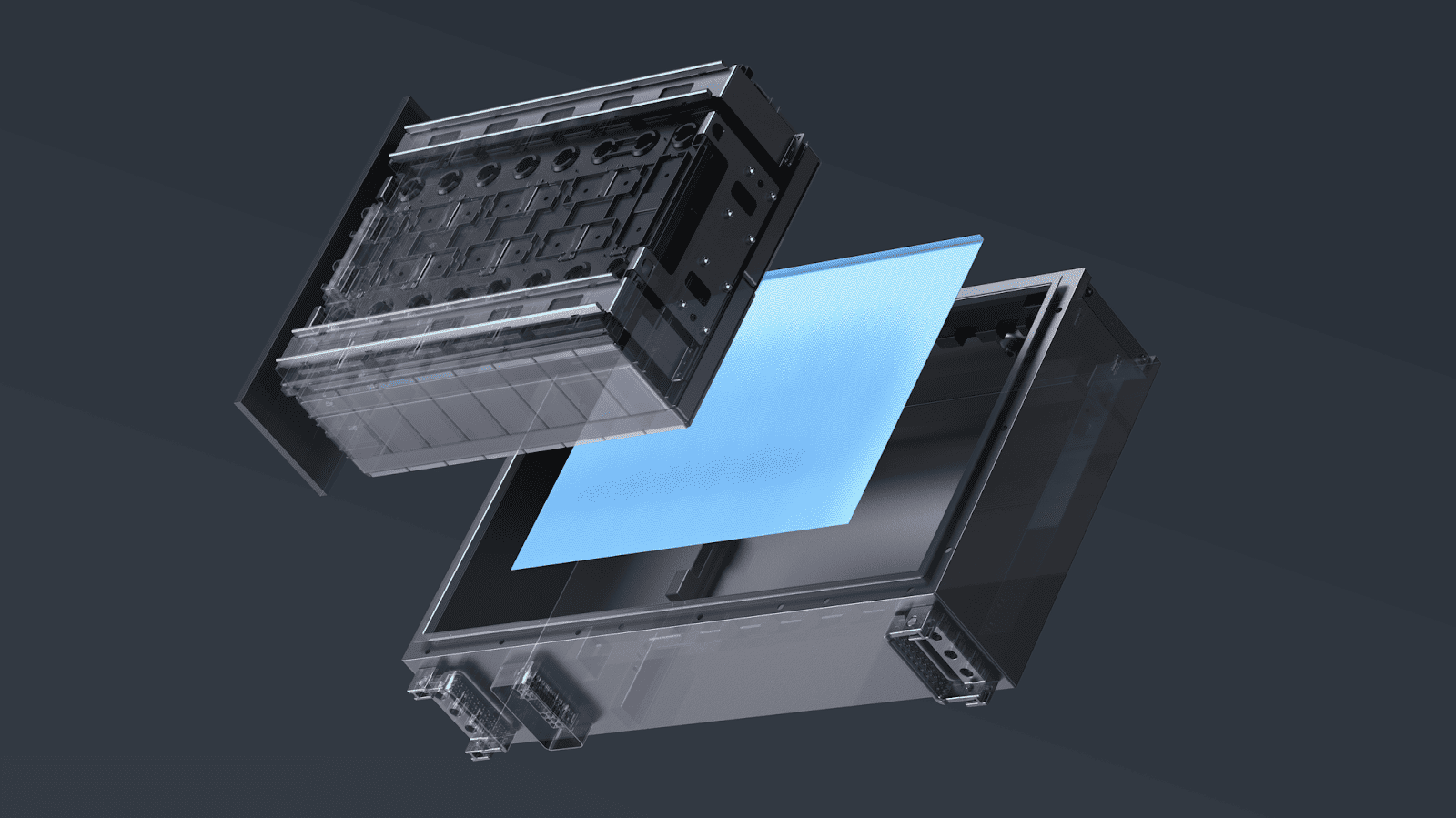
Modularity and expandability: Your needs might grow in the future, and your battery should grow with you. PowerOcean features unit stacking, allowing you to start as small as 5kWh, expanding up to 45kWh.
Smart charging features: Advanced systems can integrate with tariffs and weather forecasting, charging your devices when it’s most practical and financially sound.
Step 7: Evaluate Costs, Payback, and Incentives
Energy savings will come from reducing the amount of energy you purchase from the grid. While selling energy back can earn you a few pounds, it isn’t always worth it. In most cases, Smart Export Guarantee (SEG) payments range between just 2p-6p, so you might save more money using solar in your home than by exporting it.
Are Solar Batteries Worth It?
The answer to whether solar batteries are worth it is tied to personal goals and circumstances. Consider asking yourself these questions before you make an investment:
Do you want to achieve energy independence? How can a battery help you achieve this self-reliance?
How will you use your battery to lower bills and provide potential earnings? How do you plan to use your solar array as a home power plant?
Will you use your battery for backup power? What devices will require energy in the case of a blackout?
Schedule Your Free Consultation Today!
What kind of product or solution are you interested in?

FAQ
How long does a home solar battery last?
A modern home solar battery lasts between 10 and 15 years or over 4,000 charge cycles, given that it’s integrated well and undergoes regular maintenance. Newer LFP models have the longest lifespans, lasting over 6,000 cycles.
What size solar battery should I get for my home?
The size of your solar battery depends on how much energy your home uses. Most UK homes buy 5-15kWh batteries. Choose one that can cover your nightly and peak usage—you can measure this with a smart app or energy meter.
Can a solar battery save me money?
Yes, a solar battery can save you money, as it provides up to 90% of your energy generation, making you less reliant on the grid. It also provides backup power during outages, preventing the need for expensive generators.

