
How to Apply for the ECO4 Scheme Before the New 2026 Deadline
If your home still feels like a "sieve" for heat every time the British winter bites, 2026 might be your most important year yet. The ECO4 scheme is currently in its final stretch, moving away from quick fixes toward massive, non-repayable "whole-house" grants that can transform your property's EPC rating. But with energy suppliers racing to meet their final quotas by year-end, the clock is ticking. This guide cuts through the noise to show you exactly how to qualify and why waiting until the last minute could mean missing out on thousands of pounds in upgrades.
What the ECO4 Extension Means for UK Households
The push as the scheme moves toward its 2026 end date isn’t just the government moving the goalposts; it represents a fundamental shift in how we fix our drafty housing stock. For years, energy schemes offered "piecemeal" fixes—a bit of loft insulation here or a boiler service there. ECO4 has effectively ripped up that playbook in favour of what’s known as a "Deep Retrofit," designed to create a more resilient home energy ecosystem.
For the average British semi or terrace, this is a significant step up. The government is no longer interested in just patching up a leaky window. Instead, they’re looking at your property’s entire energy profile as one big puzzle. The goal is to drag homes out of the "cold zones" of EPC bands E or F and get them up to a solid C. It’s about making sure your home is actually affordable to heat when those January frosts bite, tackling fuel poverty by fixing the house, not just the bill.
Pro Tip: Don’t Wait for the 2026 Deadline
While the scheme has been extended to the end of 2026, funding is not infinite. Each energy supplier has specific quotas to meet; once their target is reached, they may stop accepting new applications for that period. To avoid the "end-of-scheme rush" and ensure you secure a top-tier installer, it is highly recommended to start your application at least 6–9 months before the final cut-off.
Who Is Eligible for the ECO4 Scheme in 2026?
To make the most of ECO4 in 2026, it’s important to check who qualifies. The scheme now goes beyond traditional benefits, offering help to a wide range of households facing high energy bills.
1. Income and Benefit-Based Eligibility
If you or anyone living in your household receives certain means-tested benefits, you are likely to qualify through the "Help to Heat" group. In 2026, the primary qualifying benefits include:
Universal Credit and Housing Benefit
Pension Credit (both Guarantee and Savings Credit)
Income Support and Income-related ESA or JSA
Child Tax Credits and Working Tax Credits
Child Benefit, provided your total household income falls below typical thresholds (e.g., approx. £34,400 for a couple with two children; exact figures may vary by year and region).
2. LA Flex (Local Authority Flexibility)
This is perhaps the most important route for those who don't claim benefits but still struggle with high bills. Under LA Flex, local councils can "flex" the rules to include households based on:
Gross Income: Generally, if your total household income is under approx. £31,000 per year, you may qualify regardless of benefits; thresholds can vary slightly depending on local authority.
Health Conditions: If a resident has a chronic condition made worse by a cold home—such as cardiovascular issues, respiratory diseases (like COPD or asthma), or limited mobility—the council can refer you for a grant with a simple GP declaration.
Vulnerable Groups: This also covers households with young children or elderly residents who are at higher risk during a British winter.
3. Property Requirements and EPC Ratings
Even if you qualify personally, your house must also "qualify" for the upgrades. The scheme focuses on the least efficient homes in the UK:
The EPC Threshold: Your home must have an EPC rating of D, E, F, or G. However, it’s worth noting that Ofgem applies a 15% delivery cap to EPC Band D properties. This means that while Band D homes are eligible, suppliers prioritize the least efficient homes (E, F, and G) first. If your home is in Band D, you may find the application process more competitive or subject to longer wait times, so applying early is essential.
Tenure: The scheme is open to homeowners and private tenants. If you are renting, your landlord must give formal consent for the work. For social housing, the rules are slightly stricter, usually requiring an EPC rating of E, F, or G to unlock the full range of measures.

What Home Improvements Can ECO4 Cover?
The "Whole-House" mandate means you might receive a package of measures rather than just one.
Insulation and Heating
This usually starts with the "fabric first" approach: Solid Wall or Cavity Insulation and Loft Upgrades. Once the heat is trapped inside, the scheme often funds the transition to low-carbon heating, such as Air Source Heat Pumps, which are significantly more efficient than aging gas boilers. To ensure you're prepared for the transition, it's helpful to understand how do heat pumps work within a modern home setup.
The Rise of Solar PV
In 2026, more ECO4 applications include Solar PV panels. This turns your roof into a micro-power station, reducing your reliance on the National Grid and shielding you from price spikes.
To summarise the main measures and their typical impacts, see the table below:
| Upgrade Type | Typical Benefit | Estimated Impact on Home Efficiency |
|---|---|---|
| Wall insulation | Reduces heat loss | High |
| Heat pump | Lower running costs | High |
| Solar PV | Cuts electricity bills | Medium |
| Battery storage | Improves self-consumption | Improves self-consumption; indirect EPC benefit |
The "Post-Retrofit" Challenge: Managing Your New System
A common frustration for UK homeowners after an ECO4 upgrade is that their bills don't drop as much as expected. This usually happens because new tech requires new habits. A heat pump, for instance, runs very differently from a combi-boiler. Without visibility, it’s easy to "waste" the efficiency your grant just paid for.
Bridging the Data Gap with PowerInsight 2
Many UK households notice smaller-than-expected savings after an ECO4 retrofit. This is rarely due to the upgrades themselves—modern systems like heat pumps operate differently from traditional boilers.
Whole-home energy monitoring tools help by showing real-time usage, peak-time costs, and consumption patterns, making it easier to adjust daily habits. One example is the EcoFlow PowerInsight 2, which provides a clear, wall-mounted overview of electricity use so households can identify high-cost periods and optimise system efficiency.
Maximizing Solar Yield with Battery Storage
Exporting excess solar electricity typically yields limited financial return under current Smart Export Guarantee (SEG) rates, which average approx. 5.5–6p per kWh in 2026. Many households therefore add battery storage to store daytime generation for evening use, improving self-consumption and reducing reliance on peak-time tariffs.
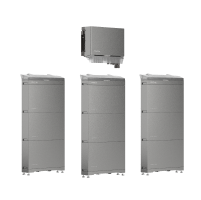
Systems like the EcoFlow PowerOcean (Single-Phase) allow households to increase self-consumption, reduce reliance on high tariffs, and manage energy more flexibly. With modular capacity up to 45kWh, it provides practical support for solar-equipped homes.

How to Apply for ECO4: A Simple 3-Step Roadmap
ECO4 funding does most of the hard work, but timing is everything. In 2026, the biggest risk isn't eligibility—it's availability. Energy suppliers operate on strict quotas, and as the deadline nears, installer schedules fill up rapidly. To ensure you don't miss out as the scheme winds down, follow this 3-step roadmap to get your application moving today.
Step 1: Prepare Your Documents
First, check your eligibility. Look up your EPC on the GOV.UK register—homes rated D or below may qualify.
If you receive benefits, prepare a recent DWP award letter (issued within the last 3 months).
Applying via LA Flex? You’ll need proof your household income is under £31,000.
Save everything as clear PDFs—this alone can shave weeks off the process.
Step 2: The Survey & Your Custom Plan
Once your paperwork is in order, you’ll need a TrustMark-approved installer to take it from there. They’ll send out a Retrofit Assessor to give your house a proper once-over. This isn’t a five-minute glance at the boiler; they’ll be poking into the loft, checking wall thickness, and looking at your ventilation to see what the building can actually handle. Based on those findings, the installer puts together a "Whole-House" plan—maybe a mix of floor insulation and a heat pump—and handles all the tedious funding paperwork with the energy companies so you don't have to.
Step 3: Getting the Work Done
After the green light, the engineers move in. Depending on what’s being installed, you’re usually looking at a week or two of work. Before the team packs up and heads off, make sure they walk you through the new heating controls—don't let them leave until you’re comfortable with the "handover pack" and know exactly how to run things efficiently. Once the final inspections are signed off, you’ll be issued a fresh EPC certificate, officially marking the end of the project and the start of a much warmer, cheaper-to-run home.
Schedule Your Free Consultation Today!
What kind of product or solution are you interested in?

Conclusion
The ECO4 scheme represents a rare opportunity to future-proof your home for free (or at a significantly subsidised cost). By upgrading your insulation and heating systems before the 2026 deadline, you’re taking the first step toward a cheaper, greener lifestyle. Pair those upgrades with advanced home battery storage solutions, and you’ll be well on your way to energy independence.
FAQs
1. How much money can I get from ECO4?
The ECO4 scheme doesn't provide a cash payout; instead, it covers the full cost of eligible home energy improvements. These upgrades can be worth tens of thousands of pounds, in some cases up to around £30,000, depending on the property type and the combination of measures required to bring the home up to an EPC Grade C.
2. Do you have to pay back an ECO4 grant?
No, ECO4 grants are completely non-repayable as they are funded by energy suppliers as part of a government mandate. It is not a loan, and there are no hidden interest charges.
3. Does ECO4 grant cover windows?
Windows are rarely the main focus, as ECO4 prioritises high-impact measures like wall insulation and heat pumps. However, if your windows are so poor they prevent the home from reaching its efficiency target, they may be included in a whole-house plan.
4. What health conditions qualify for ECO4?
Respiratory diseases, cardiovascular conditions, and limited mobility exacerbated by the cold can qualify you through the LA Flex route. You will generally need a referral from your GP or local council.
5. Can I apply for ECO4 if my home already had insulation or heating upgrades?
Yes, as long as your property still has an EPC rating of D, E, F, or G, you can apply for further measures. Many homes have loft insulation but still lack the wall insulation or modern heating required to be truly efficient.

