
Solar Feed-in Tariff QLD 2026: Should You Sell Solar Back to the Grid or Store It?
Looking at the 2026 outlook, Queenslanders are stuck with a bit of a 'win some, lose some' deal on their rooftop solar. Yeah, we’re still leading the charge on green energy, but the financial kickback for sending power back to the grid is feeling a bit light these days. With bills going up and feed-in tariffs slipping, lots of households are starting to wonder if it’s time to stop being a supplier for the grid and start making the most of their own solar instead.
We’ve unpacked the 2026 Queensland solar outlook, putting today’s solar feed-in tariff QLD rates side by side with the future benefits of battery storage to help you squeeze the most value possible from your system.
Understanding Solar Feed-in Tariffs in Queensland
Take a look at your power bill and you’ll see what we mean — the terms can be pretty confusing. Across Queensland, your solar payments mostly hinge on which network you’re on: Energex network in the south-east or Ergon network if you’re in regional QLD.
1. What a Feed-in Tariff Is
Your solar feed-in tariff is the rate you're paid for pumping your extra power back into the network. It’s a bit of a lopsided deal, like selling veggies from your garden back to the Coles or Woolies. They’ll grab your surplus at a massive discount, then turn around and sell it back to your neighbors at the much higher retail price.
2. Current QLD Feed-in Rates for 2026
In 2026, the gap between what you pay for power and what you get for solar has widened.
Regional QLD: If you’re out in the regions, the Queensland Competition Authority (QCA) has pinned the flat-rate solar credit at roughly 8.6 cents per kWh for the 2025–26 stretch. It’s a notable step down from the old rates, making it crystal clear that the financial kickback for simply 'selling' your power back to the grid isn't the winner it once was.
South East QLD (Brisbane, Gold Coast, Sunshine Coast): FiT rates in South East QLD are market-driven, meaning Origin, AGL, and the rest set the price. Most offers hover between 3c and 10c, but keep an eye out for 'daily export caps.' A lot of plans will give you a decent rate for the first few units you send back, but once you hit that limit, the price drops off a cliff. So don’t just assume you’re on the best rate; be sure to check your specific plan.
These rates are indicative; actual offers vary by retailer and may include daily supply charges or export caps.
3. How FiT Payments Are Applied to Your Bill
Your smart meter tracks how much energy you use versus how much you export. At the end of your billing cycle, your total exports are multiplied by your FiT rate and deducted from your total charges. It’s important to note that this credit rarely covers your "daily supply charge," so even high exporters usually still have a small bill to pay.
When Selling Solar Back to the Grid Makes Sense
Despite the lower rates, there are still scenarios where exporting power is the most practical path forward for a Queensland household.
1. Small Home Battery or No Storage
If you don't have a battery yet, exporting is your only option for excess energy. Rather than letting that power go to waste, sending it back to the grid—even for 5 or 8 cents—is better than nothing. It’s a "set and forget" way to chip away at your quarterly bill.
2. High FiT Rates Compared to Retail Prices
If you are one of the lucky few still on a legacy "Premium" feed-in tariff (the old 44c rate), or if you’ve snagged a specific retailer deal that offers a high FiT without hiked-up usage rates, selling back is a no-brainer. In these cases, your solar exports are often worth more than the power you buy back at night.
3. Limited Daytime Consumption Patterns
For households where everyone is out from 8 am to 5 pm, the solar system is basically working in an empty house. Without a way to store that energy, your only choice is to export it. However, as export limits (often capped at 5kW by Energex) become stricter, you might find your system being "throttled" during the sunniest parts of the day.

When Storing Solar Energy Is More Beneficial
Storing your solar energy has moved well beyond the off-grid crowd and into the mainstream as a smart cost strategy. Hanging onto your solar juice also takes a massive load off the grid when everyone’s cranking their aircon at sunset, helping keep the whole system from falling over during those peak summer scorchers.
1. Reducing Dependence on Grid Electricity
With unpredictable weather and increasing pressure on the Aussie grid, having your own "energy bank" provides peace of mind. Storing your power means you aren't just saving money; you're insulating your home from price hikes and peak-load volatility.
2. Leveraging Home Batteries for Long-Term Savings
With the Australian Government's Cheaper Home Batteries Program now in full effect for 2026, the upfront cost of storage has dropped significantly. Combined with the daily savings from avoiding peak retail rates, a high-capacity battery or solar battery storage system can now pay for itself much faster than in previous years.
How to Decide Whether to Sell or Store Your Solar Power
Not sure which way to lean? It usually comes down to your specific "load profile"—basically, a fancy way of saying how and when you use your gadgets.
1. Assess Your Household Consumption Patterns
Take a squiz at your latest bill or energy app. If your "Peak" usage is high, you are the prime candidate for a battery. If you already do all your laundry and dishwashing at midday and your evening use is tiny, you might be fine sticking with the grid for now.
2. Consider Battery Capacity and Solar System Size
A 6.6kW solar system is the standard in QLD, but it often generates way more than a house uses during the day. If you find you're exporting more than 10–15kWh a day, you’ve got plenty of "fuel" to fill a substantial battery.
3. Factor in Seasonal Variations, Tariff Structures, and Policy Changes
Queensland summers are brutal on the wallet. High humidity means aircon runs late into the night. A battery designed for these conditions can be a lifesaver. Additionally, keep an eye on "Dynamic Exports"—a 2026 trend where networks may limit how much you can sell back during "grid congestion" events.
.jpg)
Practical Tips to Maximise Value from Your Solar System
Whether you're exporting or storing, the goal is to stop paying the retailers more than you have to.
1. Shift High-Energy Appliances to Solar Generation Hours
The golden rule in 2026 is: Use it while you make it. Set timers on your pool pump, dishwasher, and washing machine to run between 10 am and 2 pm. This ensures you’re using "free" electrons directly from your roof rather than buying them back later.
| Action | Cost Savings / kWh | Notes |
|---|---|---|
| Export to grid (Ergon) | 8.6c | Low FiT, mostly offsets bill |
| Self-consume with battery | 30–45c | Avoids peak retail rates |
| Combined solar + battery | Up to 50% reduction in peak bills | Depends on household load profile |
2. Maximising Self-Consumption (Avoid Exporting Cheap Electricity)
In Queensland, electricity rates peak between 4 pm and 9 pm—right when the sun goes down and aircons run at full blast. Solar systems often generate more than your home can use during the day, and exporting this excess for a low FiT (e.g., 8c) only to buy electricity back later at 30–45c per kWh is a losing strategy.
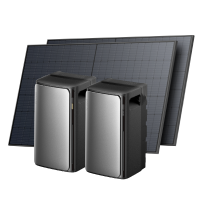
More homes are adopting what’s known as the “Solar Soaker” strategy: saving up daytime solar in a battery so it’s ready for peak evening use. It helps you use more of your own energy, skip low feed-in payouts, and reduce dependence on costly grid power. Solutions such as the EcoFlow PowerOcean (Single-Phase) handle it automatically, capturing surplus solar and using it at the right time.
3. Plan Battery Usage Strategically During High-Cost Periods
Batteries make a big difference, but many families still face a timing clash between energy generation and consumption. Without proper management, you could end up using grid electricity when your own stored power should be doing the job.
This is where the EcoFlow PowerInsight 2 home energy monitor comes in. It provides a real-time "dashboard" for your home, tracking exactly how much solar you’re making and where it’s going. By seeing your battery's live status and your home's load, you can scientifically adjust your habits, like knowing exactly when to kick off the dryer, to ensure your storage lasts through the night.
4. Use Energy Monitoring Tools to Optimise Usage
Knowledge is power. Most modern inverters come with an app, but dedicated home energy monitors give you the "why" behind your bill. Use these tools to identify "vampire loads" (appliances that suck power while on standby) and adjust your habits accordingly.
What kind of product or solution are you interested in?


Conclusion
The winning solar game plan in Queensland has changed for 2026: it’s now about avoiding costs rather than earning export credits. While the solar feed-in tariff QLD rates still offer a small return for sending power to the grid, the biggest advantage now goes to homes that invest in solar batteries and store their energy for later use when prices spike. Add smart storage and monitoring to a quality system, and you’ll be set for both savings and comfort all summer long.
FAQs
1. Do you get paid for putting power back into the grid?
Pretty much. You get a credit on your bill called a feed-in tariff for every kilowatt-hour your system 'exports' back to the main wires. This credit gets knocked off your total balance. While it usually just lowers your bill, if you end up with a big enough credit, you can actually ask your retailer to refund the difference straight into your bank account via EFT.
2. Is solar worth it in Queensland?
Too right it is. Even with the credits for sending power back to the grid dropping, solar is still one of the smartest moves a Queensland homeowner can make. Because our power bills are hitting record highs, the real win is 'self-consumption'—using your own free juice instead of buying it from the retailers at 40 cents a pop. Even with lower FiTs, self-using your energy typically pays off a system within about 4–6 years.
3. What is the Australian government rebate on solar panels?
You can still get a solid upfront discount on your solar thanks to the federal Small-scale Renewable Energy Scheme (SRES), and trim about $1,500–$2,000 off a 6.6kW system in 2026. It decreases annually until 2030, so getting in earlier means a larger subsidy.
4. How much solar can I feed back into the grid in QLD?
Most residential properties on a single-phase connection are limited to an export of 5kW to the grid. However, if you have a "dynamic connection" and a compatible smart inverter, you may be allowed to export up to 10kW when the grid has spare capacity.

