
Why Do Lithium Batteries Catch Fire? Understanding Safety and Prevention
Lithium technology has revolutionized the way we store energy, but headlines about battery safety often leave homeowners with questions. Whether it's a smartphone or a large-scale home storage system, understanding why do lithium batteries catch fire is essential for any modern consumer. In 2026, safety is no longer an afterthought—it's a requirement. While traditional lithium-ion chemistries have known vulnerabilities, professional solutions like the EcoFlow OCEAN Pro prioritize thermal stability, utilizing chemistries and containment modules designed to virtually eliminate risk.
What causes lithium batteries to catch fire
To understand safety, we must first understand the danger. Battery fires—technically known as thermal events—are rarely random occurrences. They are the result of specific physical laws and chemical reactions. Unlike a wood fire, which requires external oxygen, a lithium battery fire can be self-sustaining if the battery chemistry is not stable.
Thermal runaway explained
The scientific term for a battery fire is thermal runaway. This is a critical failure mode where a battery cell enters a self-destructive feedback loop. According to OSHA safety guidelines, recognizing these warning signs is crucial. Here is the step-by-step physics of the process:
The trigger: An internal short circuit or external heat source raises the temperature of a single cell.
The breakdown: As the temperature rises (typically past 130°C / 266°F for standard NMC batteries), the separator—a thin porous membrane keeping the anode and cathode apart—begins to melt or degrade.
The reaction: Once the separator fails, the anode and cathode touch, creating a massive internal electrical short. This releases the cell's stored energy instantly as heat.
The chain reaction: This heat triggers chemical decomposition of the electrolyte, which releases flammable gases. If the heat is sufficient, these gases ignite. In a tightly packed battery pack without proper isolation, the heat from one cell can trigger its neighbor, causing a domino effect across the entire system.
Manufacturing defects and damage
While thermal runaway is the mechanism, the cause often traces back to the quality of the battery's construction.
Dendrite growth: This is one of the most insidious causes of failure. During charging—especially fast charging in cold temperatures—lithium ions can clump together on the anode surface instead of absorbing into it. Over time, these clumps form microscopic, needle-like structures called "dendrites." These needles can grow until they pierce the separator, causing a "silent" internal short circuit that can lead to ignition days or weeks after the damage occurred.
Physical trauma: Batteries are sensitive to geometry. A severe impact, puncture, or crushing force can deform the internal layers of the cell. If the aluminum and copper current collectors are forced into contact, the resulting spark inside the chemical slurry is often enough to initiate immediate runaway.
Overcharging and voltage stress
Batteries are designed to operate within a strict voltage window (e.g., 2.5V to 3.65V per cell for LFP).
The role of the BMS: A sophisticated Battery Management System (BMS) is the brain of the battery. It ensures no single cell goes above or below these limits.
The danger of cheap electronics: In low-quality devices (like hoverboards or generic e-bike batteries), the BMS is often rudimentary. If a charger pushes current into a fully charged battery, the excess energy turns into heat. Continued overcharging can cause the cathode material to decompose, releasing oxygen inside the cell—essentially providing the fire with its own fuel source.
Stability in design: Comparing LFP vs. traditional tithium
When asking "Why do lithium batteries catch fire," the answer often depends on the specific type of lithium battery. In the world of home storage, there are two main contenders: Nickel Manganese Cobalt (NMC) and Lithium Iron Phosphate (LFP).
The risks of NMC (Nickel Manganese Cobalt)
NMC batteries are common in smartphones and some electric vehicles because they are lightweight and energy-dense. However, they are chemically volatile
Oxygen release: The bond between the metal and oxygen in an NMC cathode is relatively weak. If the battery overheats, it breaks down and releases oxygen. This makes NMC fires incredibly difficult to extinguish because the battery is supplying its own oxidizer.
Lower thermal ceiling: NMC cells can become unstable at temperatures as low as 150°C (302°F).
The safety of LFP (Lithium Iron Phosphate)
The EcoFlow OCEAN Pro utilizes LFP chemistry, which is widely regarded as the gold standard for stationary energy storage.
The iron bond: In LFP batteries, the phosphorus-oxygen bond is one of the strongest covalent bonds known in chemistry. It is extremely difficult to break. Even if the battery is forced into a short circuit or exposed to high heat, the LFP cathode does not release oxygen. Without oxygen, a fire cannot sustain itself easily.
High thermal runaway threshold: LFP batteries must reach significantly higher temperatures—often exceeding 270°C (518°F)—before they begin to decompose. This creates a massive safety buffer that virtually eliminates the risk of spontaneous combustion during normal operation.
Longevity: Beyond safety, LFP chemistry is robust. While standard NMC batteries often begin to show significant degradation after a few hundred cycles, LFP batteries—like those in the Ocean Pro—are engineered for extreme endurance. This longevity means the internal structure remains stable for over 15 years of daily use.
Environmental resistance
Batteries do not exist in a vacuum; they live in garages, basements, and on exterior walls. Environmental factors play a huge role in safety.
Heat tolerance: High ambient temperatures accelerate chemical degradation. LFP's robust structure makes it far more resistant to the sweltering heat of an Australian or American summer compared to other chemistries.
Structure rigidity: LFP cells are typically housed in rigid prismatic aluminum cans, offering superior protection against crushing and impact compared to the soft "pouch cells" used in many consumer electronics.
Safety standards for modern travel and transport
The fear of battery fires is often fueled by restrictions we encounter when traveling.
Aviation risks
Why do airlines ask if you have lithium batteries in your checked luggage? It comes down to physics and access.
Why do lithium batteries catch fire on planes? The cargo hold of an aircraft experiences changes in pressure. For soft-pouch lithium cells found in gadgets, low pressure can cause the gas inside to expand and rupture. The FAA regulates this strictly because flight crews cannot access the cargo hold to fight a fire.
The Suppression challenge: If a fire starts in the cargo hold, the crew cannot access it to fight it. This is why strict regulations (FAA, IATA) limit the size and type of batteries allowed on flights.
The stationary advantage
It is crucial to differentiate between a laptop battery on a plane and a home battery on your wall. A stationary system like the Ocean Pro operates in a stable pressure environment. Furthermore, it is engineered with heavy-duty steel and aluminum casing that far exceeds the protection offered by consumer electronics. The risks associated with travel simply do not apply to a professionally installed, stationary LFP system.
Professional fire prevention: The Ocean Pro's suppression module

EcoFlow OCEAN Pro
Active protection: Beyond monitoring
Most home batteries rely on passive cooling. The Ocean Pro takes an active stance.
Integrated detection: Each battery module is equipped with sensors that detect thermal anomalies instantly.
Automatic deployment: In the extremely unlikely event that a cell exceeds critical thermal limits (due to external fire or catastrophic internal failure), the built-in suppression module activates automatically.
Built-in resilience: The IP67 defense
Water and electronics are enemies, but water and lithium are a particularly dangerous combination. Water ingress can cause corrosion that bridges circuits, leading to fires months after a storm.
IP67 rating: The Ocean Pro is engineered with an IP67 rating, meaning it is completely dust-tight and can withstand immersion in water up to 1 meter deep for 30 minutes.
Humidity protection: Even without flooding, high humidity can cause condensation inside lower-quality battery casings. The Ocean Pro's sealed architecture ensures that the BMS and cells remain dry, preventing the "slow death" of corrosion-induced short circuits
Certified security: UL 9540A
You should never install a battery that hasn't passed UL 9540A. This is the rigorous test method for evaluating thermal runaway fire propagation in battery energy storage systems.
The test: In this test, engineers intentionally force a battery cell into thermal runaway (using heaters or overcharging) to see what happens.
The result: To pass, the fire must not spread from the sacrificial unit to the surrounding units. The Ocean Pro's compliance with this standard is third-party proof that even in a worst-case scenario, the system is designed to contain the threat.
EcoFlow OCEAN Pro: Engineered for absolute safety
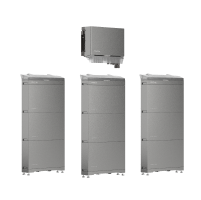
Active suppression: Features the Ocean Pro's Fire Suppression Module to protect your home 24/7.
Thermal stability: Utilizes professional-grade LFP chemistry for maximum peace of mind.
Certified security: Meets the most rigorous US safety standards (UL 9540A).
Smart monitoring for long-term home security
Safety is also about visibility. You cannot manage what you cannot see.
The PowerInsight 2 Monitor
The EcoFlow PowerInsight 2 Monitor is more than just a control panel; it is a dedicated safety dashboard for your home.
Real-time cell health: While typical apps just show "Percentage Charged," the PowerInsight 2 allows for granular monitoring. It communicates directly with the BMS to track voltage deviation and temperature curves.
Proactive alerts: The system utilizes AI-driven algorithms to learn your battery's behavior. If it detects an anomaly—such as a slight temperature spike during discharge that doesn't match historical data—it can alert the user and even cut off power to the battery to prevent damage before it occurs.
Energy management: By optimizing when you charge and discharge based on temperature and grid needs, the PowerInsight 2 ensures the battery is never pushed beyond its comfort zone, extending its safe lifespan.
Professional installation: The human element
Technology is only as safe as its installation.
Site selection: Certified installers know exactly where to place the Ocean Pro to minimize risk—avoiding direct sunlight, ensuring adequate ventilation, and meeting local fire codes regarding bollards (impact protection) and spacing.
Cable management: Poor wiring is a common cause of electrical fires outside the battery. Professional installation ensures that all DC cabling is properly gauged, insulated, and torqued to specification, removing resistance points that could generate heat.
Final thoughts
The question "Why do lithium batteries catch fire" has a complex answer rooted in chemistry and physics, but the solution is simple: better engineering. While the risks of thermal runaway are real for generic, NMC-based consumer gadgets, they are effectively mitigated in the world of high-end home storage.
The shift to Lithium Iron Phosphate (LFP) chemistry has fundamentally changed the safety equation, replacing volatile chemical bonds with stable, iron-clad reliability. When you combine this inherent stability with the EcoFlow OCEAN Pro's active fire suppression module and IP67-rated enclosure, the result is a system that is safer than the appliances already running in your kitchen.
Your home is your sanctuary. When choosing energy independence, never compromise on security. The EcoFlow OCEAN Pro offers a holistic safety ecosystem—from the molecular level of its LFP cells to the active intelligence of the PowerInsight 2 Monitor. For modern homeowners, it is the most secure investment for a resilient, future-proof energy system
Ready to secure your energy future with absolute confidence? Request a consultation today to discuss how the Ocean Pro's fire suppression technology can protect your home.
What kind of product or solution are you interested in?

FAQ
1. Can lithium batteries catch fire when not in use?
Yes, although it is extremely rare for high-quality stationary batteries. If a battery has a latent manufacturing defect, such as a microscopic metal particle inside the cell, or if it has suffered previous internal damage (dendrite growth), it can theoretically short-circuit even while sitting idle. This is why the Ocean Pro's active monitoring and fire suppression systems are designed to be vigilant 24/7, even when the battery is in standby.
2. Specifically, how do lithium batteries catch fire after a physical impact?
Batteries are made of tightly wound layers of anode, cathode, and separator. A strong physical impact (like a car bumping into a garage-mounted unit) can crush these layers together. If the anode and cathode touch, it creates a "hard short," dumping the battery's energy into that single point instantly. This is why the Ocean Pro uses a reinforced metal enclosure to deflect impacts that would destroy plastic-cased batteries.
3. Why do lithium ion batteries catch fire more easily than older lead-acid types?
It is a trade-off for performance. Lithium-ion batteries are vastly more energy-dense than lead-acid. They pack a huge amount of potential energy into a small space using a flammable organic electrolyte. Lead-acid batteries use a water-based acid electrolyte which is generally non-flammable and have much lower energy density. However, modern LFP lithium batteries bridge this gap, offering high energy density with a safety profile much closer to lead-acid than traditional lithium-ion.
4. How often do lithium batteries catch fire in modern home storage systems?
Statistically, fires in professionally installed, UL-listed home storage systems are incredibly rare events—far less common than kitchen fires or dryer fires. The media attention is often skewed by fires involving unregulated e-scooters and grey-market electronic devices. With LFP chemistry and UL 9540A certification, the risk in a system like the Ocean Pro is negligible.
5. Is it true that Ocean Pro's Fire Suppression Module is autonomous?
Yes. The suppression module is a localized safety device integrated into the battery architecture. It relies on thermal sensors that trigger a chemical release mechanism. It does not require an internet connection, a signal from the cloud, or even user intervention to activate. It is a fail-safe designed to protect your home in the worst-case scenario automatically.
