
Solar Decoded: What Does PV Stand For and How Does It Work?
Many homeowners are often left wondering what does PV stand for when deciphering complex solar quotes. While you want to lower your rising energy bills, the technical jargon and the fear of a blackout despite having panels can be incredibly frustrating. The EcoFlow Ocean Pro addresses these exact pain points by providing massive storage capacity and a seamless switchover. It transforms your basic photovoltaic setup into a robust energy sanctuary, ensuring your home stays powered even when the grid fails.
What does PV stand for in solar systems?
The term "PV" is a shorthand abbreviation for Photovoltaic, a word that perfectly describes the marriage of light and electricity. The prefix "Photo" is derived from the Greek phos, meaning light, while "Voltaic" pays homage to Alessandro Volta, the Italian physics pioneer whose name also gave us the "volt".
The scientific foundation was laid in 1839 when Edmond Becquerel first observed the photovoltaic effect. However, a major leap occurred in 1954 when Bell Labs engineered the first practical silicon solar cell. This breakthrough transitioned solar from experimental curiosity into a revolutionary power source.
How do PV cells work?
Understanding the journey from sunlight to usable power requires looking inside the cell. This elegant process involves atomic-level interactions that turn the sun’s rays into a steady stream of energy.
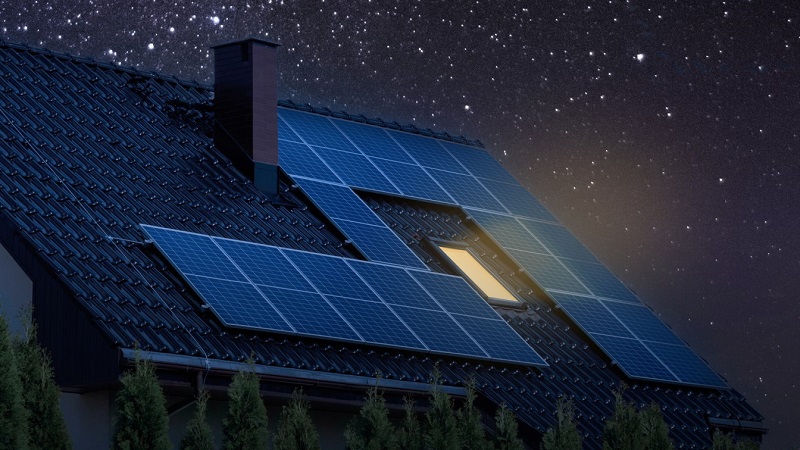
The building blocks: Silicon serves as the fundamental semiconductor for most solar cells. Its unique atomic structure allows it to conduct electricity under specific conditions, making it the ideal base material for energy conversion.The P-N junction: Engineers "dose" silicon with specific elements to create a P-type (positive) and N-type (negative) layer. This critical junction establishes a permanent internal electric field that acts like a biological battery.
The "Magic" moment: When sunlight photons strike the cell, they transfer energy to electrons, knocking them loose. The internal electric field then catches these liberated electrons, forcing them to flow in a single direction.
Current flow: This organized movement of electrons creates a steady stream known as Direct Current (DC) electricity. This raw power is then harnessed and managed by sophisticated systems like the EcoFlow Ocean Pro.
From cell to system: the "balance of system"
While science happens at the cellular level, powering a modern household requires a much larger infrastructure. This hierarchy of components, and the equipment that manages them, is often referred to as the "Balance of System".
Scaling up power
A single solar cell produces only a small amount of electricity. To generate enough power for a home, cells are wired together to form a module (commonly known as a panel). When multiple panels are connected and installed on a roof or ground mount, they form an array, creating a unified power-generating engine.
The crucial component: the inverter
The energy generated by your PV array is Direct Current (DC), but modern appliances and the utility grid run on Alternating Current (AC). The inverter is the essential "translator" of the system; its job is to convert that raw DC power into the usable AC electricity required to run your lights, computers, and refrigerators.
The "intermittency" problem
Despite the efficiency of modern PV panels, they face one inherent limitation: they only generate electricity when the sun is shining. This creates "the gap", a period during the night or during heavy cloud cover when production drops to zero. Standard grid-tied systems often leave homeowners vulnerable during blackouts or high-tariff evening hours. This challenge is precisely where advanced storage solutions like the EcoFlow Ocean Pro step in to bridge the gap and provide true energy independence.
The evolution of PV: intelligent storage & the EcoFlow Ocean Pro
As solar technology matures, the focus has shifted from simple power generation to intelligent energy management. While a standard PV system stops providing value the moment the sun sets, the EcoFlow Ocean Pro ensures that the surplus energy generated during the day is available 24/7.
By capturing and storing every excess kilowatt, the EcoFlow Ocean Pro eliminates the "gap" in production, allowing homeowners to use solar energy for evening cooking, climate control, and overnight lighting. It effectively decouples your energy usage from the sun's schedule.

EcoFlow Ocean Pro
Key features of the EcoFlow Ocean Pro and its ecosystem
To truly understand how the EcoFlow Ocean Pro redefines photovoltaic experience, we must look at the pro-grade features that allow it to handle the most demanding residential energy needs.
Massive solar input
The Ocean Pro boasts a staggering 40kW solar input capability. This high threshold allows for significantly larger and more powerful PV arrays than standard residential systems can typically accommodate, ensuring you maximize every square inch of your roof space.
Whole-home output
With a nominal AC output of up to 24kW, the system is built to sustain heavy-duty loads. It can effortlessly run HVAC systems, well pumps, and EV chargers, appliances that would often crash or overwhelm smaller, conventional battery backups.
Scalability and safety
The system is built for growth, supporting an expandable capacity of up to 80kWh. It utilizes safe, long-lasting Lithium Iron Phosphate (LFP) chemistry, providing peace of mind alongside massive energy reserves.
Seamless resilience
One of its most critical benefits is the 10ms switchover time. This ensures that during a sudden grid failure, sensitive electronics like home servers, routers, and computers stay powered instantly without a single reboot.
Extreme durability
Engineered for the elements, the battery modules feature an IP67 waterproof rating. This level of protection allows for reliable operation in harsh outdoor environments or flood-prone areas where other energy storage systems are grounded.
The ecosystem approach
The Ocean Pro doesn't just store energy; it integrates solar production, grid connectivity, and backup generators into one seamless, automated flow. By centralizing these streams, it effectively turns your home into a private, self-sufficient power plant.
Different types of PV technology & its environmental impact
While the EcoFlow Ocean Pro manages energy, the type of PV panel you choose dictates how efficiently that energy is harvested.

Types of PV panels
Monocrystalline: These are the most common for residential use. Identified by their sleek black appearance and uniform cells, they offer the highest efficiency and space-saving benefits for your roof.
Polycrystalline: Recognizable by their blue, speckled look; these are generally more affordable but slightly less efficient than monocrystalline panels. They are a solid choice for those with ample roof space.
Thin-film: These panels are flexible, lightweight, and can be applied to irregular surfaces or used as portable options. While their efficiency is lower, their versatility makes them useful for unique architectural applications.
The impact of PV adoption
Carbon footprint: Every kilowatt-hour generated by your photovoltaic system directly offsets electricity that would otherwise come from fossil fuels, significantly reducing your home's greenhouse gas emissions.
ROI (Return on Investment): Installing a PV system coupled with the Ocean Pro increases home value and drastically reduces monthly utility bills, often paying for itself through cumulative energy savings.
Energy independence: The ultimate environmental and personal benefit is independence. By relying on the sun rather than an unstable or aging grid, you ensure your home remains a sanctuary regardless of external infrastructure failures.
Signing off
In summary, when asking "what does PV stand for in solar power", it is essential to remember its roots in photovoltaics, the elegant process of converting light directly into electricity. This technology has come a long way since its 19th-century origins, evolving from a scientific marvel into a pillar of modern sustainability.
While the fundamental acronym remains the same, the technology surrounding it has undergone a massive shift. With pro-grade innovations like the EcoFlow Ocean Pro, PV is no longer just a daytime energy source; it is the foundation of a fully independent, renewable lifestyle that powers your home 24/7. So, if you are looking for the ideal way to enjoy energy independence in your home, then be sure to request a consultation with our professional representatives today!
What kind of product or solution are you interested in?

FAQ
1. What is the difference between PV and solar panels?
PV (Photovoltaic) refers specifically to the technology that converts light into electricity. A solar panel is the physical hardware containing those PV cells. The EcoFlow Ocean Pro optimizes this hardware by managing the high-voltage DC power they produce efficiently.
2. Why is my electric bill so high when I have solar panels?
High bills often occur because homeowners use power at night when panels aren't producing solar energy. Without storage, you buy expensive grid power. The EcoFlow Ocean Pro solves this by storing daytime surplus to power your home through the evening.
3. Beyond technicalities, what does PV stand for solar homeowners in terms of daily benefits?
For homeowners, what does PV solar stand for represents long-term energy independence and significant cost savings. It turns your roof into a revenue-generating asset. Coupled with the EcoFlow Ocean Pro, it ensures these benefits continue 24/7, providing peace of mind regardless of grid status.
4. What is the typical lifespan of a solar PV panel?
Most PV panels last 25 to 30 years with minimal maintenance. To match this longevity, the EcoFlow Ocean Pro uses LFP battery chemistry, designed for multiple years of daily use (15 years warranty), ensuring your entire system stays reliable for decades
5. Will a 200W solar panel run a fridge?
Generally, a single 200W panel cannot reliably sustain a standard home fridge 24/7. However, high-capacity systems like the EcoFlow Ocean Pro manage much larger inputs and outputs (up to 24kW), effortlessly running multiple appliances and high-demand cooling systems.
