
What Does Ah Mean on a Battery? A Comprehensive Guide to Amp Hours
Most people don't notice the small "Ah" label on their devices until their power runs out at the most inconvenient time. If you've ever looked at a spec sheet and wondered, "What does ah mean on a battery?" you're not alone. Whether you're evaluating a small cordless drill or a massive whole-home backup system, understanding this measurement is the first step toward true energy independence. While amp hours (Ah) tell you the total capacity of your "fuel tank," the modern choice for home resilience—like the EcoFlow OCEAN Pro—combines high capacity with high voltage to deliver ultimate performance and 2026-level efficiency.
What does Ah on a battery mean
At its core, Ah stands for Ampere-hour. It is a unit of electric charge that measures a battery's energy capacity over time. Technically speaking, it represents the amount of current (Amps) a specific battery can provide for a specific duration (Hours) before it is fully depleted.
For example, if you have a battery rated at 10Ah, it theoretically means the battery can deliver:
1 Amp of current for 10 hours.
2 Amps of current for 5 hours.
10 Amps of current for 1 hour.
However, real-world physics is rarely this linear, especially with older battery chemistries. But as a baseline definition, Ah is the fuel gauge of your battery.
The gas tank analogy
Electricity can be an abstract concept, so the best way to understand what does the Ah mean on a battery is to compare it to a plumbing system or a car:
Voltage (V) is the pressure: Think of this as the water pressure in a hose. Higher voltage pushes energy through the wires with more force.
Amperage (A) is the flow rate: This is the width of the hose or the speed at which the water is flowing. This represents how much power your device is "drinking" at any given second.
Amp-hours (Ah) is the tank size: This is the size of the water tank or the gas tank in your car. It doesn't tell you how fast the car goes (Voltage) or how much gas the engine uses (Amperage); it simply tells you how much fuel is on board.
The larger the Ah rating, the larger the "fuel tank," and the longer you can run your devices before needing to plug in.
Calculating runtime
If you are trying to figure out how long a battery will last, you can use a simple mathematical formula. This is vital for planning backup power for camping trips or power outages.
The formula for capacity is:
Ah = Current (A) X Time (h)
If you want to find out the runtime (Time), you rearrange the formula:
Time (h) = Ah/Current (A)
Example:
Imagine you have a 12V, 100Ah battery and you want to power a portable fridge that draws 5 Amps.
Time =100Ah/5A = 20Hours
Note: This calculation assumes 100% efficiency and full discharge, which varies depending on the battery chemistry—a crucial distinction we will cover later in this guide.
Understanding small battery ratings and performance
When you are looking at handheld devices, the Ah rating directly correlates to how much work you can get done. However, the application changes significantly depending on the device.
Small-scale applications
You might often see labels on household rechargeables asking what does 1.5 Ah mean on a battery. A 1.5 Ah (or 1500 mAh) rating is standard for AA rechargeable batteries, light-duty cordless screwdrivers, or small hand vacuums.
In this context, 1.5 Ah is a relatively low capacity. It is designed for short bursts of energy. A 1.5 Ah battery in a cordless screwdriver might drive 100 screws before dying, whereas a 4.0 Ah battery in the same tool might drive 300.
Power tool performance: The DeWalt example
A very common search query for DIY enthusiasts is what does Ah mean on a DeWalt battery or similar tool brands. In the professional power tool ecosystem, Ah ratings dictate not just runtime, but often the power output capability.
2.0 Ah compact packs: These are lightweight. They are perfect for overhead work or tight spaces but will drain quickly if used in a high-draw tool like a circular saw.
5.0 Ah to 6.0 Ah XR packs: These are the industry standard for professionals. They offer a balance of weight and runtime, allowing a carpenter to work for half a day on a single charge
9.0 Ah to 12.0 Ah FlexVolt packs: These are massive batteries. High-draw tools (like table saws or grinders) need these because they can sustain high amperage without voltage sag (a drop in power).
However, there is a trade-off: Weight. A 12.0 Ah battery is significantly heavier than a 2.0 Ah battery. When asking whatAh means on a battery for tools, you are effectively asking to balance the weight of the tool against the duration of the job.
The scale of energy: From tools to homes
While a 1.5 Ah tool battery is insufficient for the heavy-duty demands of a modern home, it serves as a good unit of measurement to understand scale.
A drill battery might hold roughly 0.1 kWh of energy.
A microwave running for 20 minutes uses nearly 0.5 kWh.
A central air conditioner running for an hour can use 3.0 to 5.0 kWh.
To power a home, we need to move beyond a handheld scale. A household's continuous base load requires a professional-grade capacity that is measured in thousands of amp-hours or, more accurately, kilowatt-hours (kWh). This is where systems like the EcoFlow OCEAN Pro come into play.
Why Ah ratings vary across different battery types
Not all Amp-hours are created equal. The chemistry inside the battery casing dictates how much of that stated "Ah" capacity you can actually use.
Lithium vs. Lead-acid
This is the most critical distinction in modern energy storage. When addressing what does Ah mean on a lithium battery versus a lead-acid (AGM or Gel) battery, the answer lies in "Depth of Discharge (DoD)".
Lead-acid batteries: A 100Ah lead-acid battery does not actually provide 100Ah of power. You are effectively restricted to just 50% usage, as depleting these standard units beyond the halfway mark drastically reduces their service life. This means a battery rated for 100Ah effectively gives you only 50Ah of usable energy.
Lithium (LFP) batteries: In contrast, modern Lithium Iron Phosphate (LFP) technology—standard in EcoFlow devices—supports a depth of discharge between 95% and 100%. This efficiency ensures that if you buy a 100Ah LFP battery, you have access to virtually the entire 100Ah of rated capacity.
This means you would need to buy two lead-acid batteries to match the real-world performance of a single lithium battery of the same rating.
Automotive needs
Another common area of confusion is what does the Ah mean on a car battery. Car batteries are designed completely differently from deep-cycle storage batteries.
Starting batteries (Cars): These prioritize CCA (Cold Cranking Amps). They are designed to dump a massive amount of current for 3 seconds to start an engine. The Ah rating is often secondary and usually quite low (40-60Ah).
Storage batteries (Home/solar): These prioritize steady, long-term delivery. Using a car battery for home backup is generally a bad idea because they are not built to be drained (cycled) repeatedly.
The High-voltage shift
In the past, most off-grid systems operated at 12V or 24V. Today, modern home systems are moving beyond simple Ah ratings toward Watt-hours (Wh) to account for higher voltage efficiency.
The formula connecting them is:
Watt-Hours (Wh) = Voltage (V) x Amp-Hours (Ah)
Why does this matter?
A 100Ah battery at 12V provides 1,200 Wh of energy.
A 100Ah battery at 48V provides 4,800 Wh of energy.
The Ah number is the same, but the energy delivered is four times greater. This is why comparing Ah ratings without looking at Voltage is misleading.
Achieving total energy independence with modern storage solution
Moving beyond basic capacity, understanding on a battery what does Ah mean is just the beginning. To achieve true home resilience, you must look at the efficiency of the entire ecosystem. The EcoFlow OCEAN Pro represents this next generation of storage by moving beyond simple "fuel tank" measurements and focusing on high-voltage efficiency and intelligent management.
The power of high-voltage efficiency
Traditional home battery systems often rely on 48V architectures. While functional, lower voltage requires higher amperage to move the same amount of power. High amperage creates heat (resistance), which results in energy loss.
The EcoFlow OCEAN Pro utilizes a cutting-edge high-voltage 400V architecture.
Reduced heat waste: By increasing voltage to 400V, the current required to power your home drops significantly. Less current means less resistance and less heat.
Higher efficiency: This ensures that every amp-hour of stored energy is utilized to its full potential. You get more usable energy out of the battery because less is lost in the conversion process.
Faster charging: High-voltage systems can typically accept solar or grid charge rates faster, ensuring your battery fills up quickly before the next outage.
Scalable longevity for the modern home
A standard home might need 10kWh today, but what about when you buy an electric vehicle (EV) or add a heat pump next year?
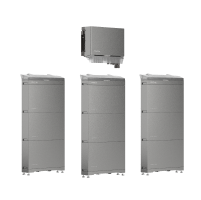
The EcoFlow OCEAN Pro features scalable architecture. You can start with a base capacity and stack battery modules to reach a massive 80kWh.
Furthermore, it utilizes LFP (Lithium Iron Phosphate) chemistry. Unlike older lithium-ion batteries found in laptops, LFP is:
Safer: Extremely resistant to thermal runaway.
Longer lasting: The OCEAN Pro is engineered for decades of reliable performance. Backed by a comprehensive 15-year warranty, this system is designed to be a permanent fixture in your home's energy infrastructure rather than a short-term solution.
EcoFlow OCEAN Pro: Professional-grade power for a resilient future
Stop wondering what does Ah mean on a battery and start powering your home with confidence.

EcoFlow OCEAN Pro Home Battery Backup
Performance beyond standards
While standard batteries struggle with heavy loads (like pool pumps or AC units), the OCEAN Pro thrives.
High output: Its 400V system can easily start heavy inductive loads that would trip smaller systems.
Round-trip efficiency: With an industry-leading efficiency rating, you lose minimal energy between solar generation, storage, and usage.
Intelligent energy optimization
Capacity (Ah) is useless if it isn't managed well. The OCEAN Pro features an Intelligent Mode powered by AI.
Arbitrage: It learns your local electricity rate structures, charging from the grid when power is cheap and switching to battery power when rates spike.
Weather awareness: It can integrate with weather forecasts to prioritize charging if a storm is approaching.
Reliable architecture
Designed for the real world, the OCEAN Pro is built tough.
NEMA 3R / IP67 rated: This means the battery pack is weather-resistant and dust-tight. It can be installed outdoors or in garages without fear of environmental damage.
15-year warranty: Backed by one of the longest warranties in the industry, ensuring your investment is protected for the long haul.
Installation and long-term capacity management

Upgrading from a portable power station to a whole-home system is a significant step. It requires professional planning to ensure your "Ah" capacity matches your lifestyle.
Professional setup
Because the EcoFlow OCEAN Pro operates at professional-grade high voltages (400V), it requires installation by certified professionals. This is a benefit, not a drawback. A certified installer ensures:
Code compliance: Adherence to all NEC (National Electrical Code) and local safety standards.
Solar optimization: Correct sizing of your solar array to ensure your battery bank (Ah) can actually be filled during the day.
Safety: Proper grounding and isolation switches.
Monitoring via the EcoFlow PowerInsight 2 Monitor
Once installed, how do you know how many "Ah" you have left? The EcoFlow PowerInsight 2 Monitor acts as the brain of your energy system.
10.95-Inchtouchscreen dashboard: Gone are the days of guessing battery levels with simple LED dots. The PowerInsight 2 offers a crystal-clear display showing real-time energy flow.
Granular data: See exactly how many Watts your solar panels are generating and how many Amp-hours remain in your battery bank.Home automation hub: It integrates with Matter and other smart home protocols, allowing you to automatically turn off high-drain devices (like thermostats) if the battery level drops below a certain percentage.
Temperature & weather: It keeps track of indoor and outdoor conditions to optimize battery health.
Final thoughts
In summary, what does the Ah on a battery mean? It is simply a measure of fuel capacity—a promise of how long you can keep the lights on.
For a flashlight or a drill, a few amp-hours are sufficient. But for a home, relying on small, low-voltage batteries is a thing of the past. The modern standard requires high voltage, massive scalability, and intelligent management.
The EcoFlow OCEAN Pro moves beyond the limitations of traditional Ah ratings. By leveraging 400V LFP technology and AI-driven optimization, it ensures that every unit of energy stored is available when you need it most. It isn't just a bigger tank; it's a smarter engine.
Ready to secure your energy future? Request a consultation today to calculate exactly how much capacity your home needs and take the first step toward total energy independence.
What kind of product or solution are you interested in?

FAQ
1. What does the Ah mean on a battery in terms of "usable" power?
The rated Ah is the total energy inside the battery, but "usable" power depends on chemistry. In lead-acid batteries, you can typically only use 50% of the rated Ah before damage occurs. In contrast, LFP batteries like the EcoFlow OCEAN Pro allow you to use nearly 100% of the rated capacity safely.
2. What does Ah mean on a lithium battery vs lead-acid?
Beyond usable capacity, the voltage curve differs. A lead-acid battery's voltage drops steadily as it drains, making devices run more slowly. A lithium battery maintains a steady high voltage for almost the entire discharge cycle, providing consistent power until the very end.
3. What does the Ah on a battery mean if I am using an inverter?
The inverter converts DC battery power to AC home power. This process is not 100% efficient. If your inverter is 90% efficient, you will lose roughly 10% of your Ah capacity during the conversion. High-voltage systems like the OCEAN Pro are generally more efficient, minimizing this loss.
4. Is a higher Ah battery always better?
A higher Ah rating means more runtime, but it often comes with increased weight, size, and cost. For a handheld tool, a high Ah battery might make it too heavy for overhead work. However, for home backup systems like the EcoFlow OCEAN Pro, a higher capacity is almost always better as it provides a longer safety net during extended power outages.
5. What is the difference between Ah and mAh?
These are simply different scales of the same measurement. "mAh" stands for milliamp-hours. Since "milli" means one-thousandth, 1,000 mAh is equal to 1 Ah. Small electronics like smartphones or AA batteries are usually rated in mAh, while larger systems like car batteries or EcoFlow home backups are rated in Ah.
