
Solar Panel Components List: What Actually Generates Your Power?
Understanding your solar panel components shouldn't feel like rocket science, yet many homeowners struggle with complex systems that fail to deliver expected savings or backup power during outages. It is frustrating to invest in technology that feels fragmented or difficult to manage when you just want reliable energy. The EcoFlow Ocean Pro, paired with high-efficiency solar panels, simplifies this by integrating advanced storage and smart management into one seamless system, providing the perfect all-in-one solution for true energy independence.
The move towards a sustainable power source
The global shift toward renewable energy has made residential solar more accessible than ever, yet navigating solar panel components shouldn't feel like rocket science. Many homeowners invest blindly in complex, fragmented systems, leading to poor efficiency and unexpected costs.
This guide functions as a "how-to" manual, demystifying how various parts work together to generate power. By understanding these essentials, you can avoid common pitfalls and choose streamlined solutions that act as the perfect all-in-one system for achieving true energy independence and reliable home backup.
What are the components of a solar panel?
To understand how your system produces energy, it is essential to look at the individual parts that make up a standard module. Here is a brief guide to the core solar panel components:
Solar cells (the engine): These silicon wafers are the primary functional unit, utilizing the photovoltaic effect to convert captured sunlight into a flow of electricity, effectively serving as the power plant of the panel.
Tempered glass (the shield): This high-strength front layer is engineered to withstand extreme weather like hail and high winds, ensuring fragile cells remain protected while allowing maximum light transmission for optimal energy production.
Encapsulant (the glue): Typically made of Ethyl Vinyl Acetate, these clear layers bond the cells securely between the glass and backsheet, sealing out moisture and providing vital cushioning against mechanical vibrations or shocks.
Backsheet (the skin): This durable polymer layer provides critical electrical insulation for the entire module. It acts as a moisture barrier and thermal regulator, protecting internal components from degradation caused by environmental exposure.
Aluminum frame (the skeleton): The rigid outer border provides structural integrity to the laminate. It allows for secure mounting to racks and helps dissipate heat, ensuring the panel remains stable during intense wind or snow.
Junction box (the outlet): This weatherproof enclosure serves as the central hub where internal wiring transitions to external cables. It houses bypass diodes that prevent power loss from shading, ensuring consistent energy delivery.
How do solar panel components work?
Once you understand the solar panel system components, it is much easier to visualize the energy production process. Here is how these components work in harmony to power your home:
Step 1: Absorption
The process begins when sunlight, comprised of energy particles called photons, strikes the silicon solar cells housed within the protective layers of the solar panel module.
Step 2: Excitation
As these photons hit the silicon atoms, they transfer their energy, knocking electrons loose and setting them into motion to create an electrical imbalance within the cell.
Step 3: Flow (DC Power)
Strategically placed metal conductors on the surface of the cells capture these moving electrons, directing them into a steady flow of Direct Current (DC) electricity.
Step 4: Conversion (AC Power)
Finally, this DC energy is channeled to an inverter, which transforms it into Alternating Current (AC), the standard electricity required to run your modern home appliances and devices.While traditional setups require you to source these parts separately, the EcoFlow Ocean Pro provides a high-performance ecosystem where all these components are optimized to work together effortlessly.
How to future-proof your home with the EcoFlow Ocean Pro?

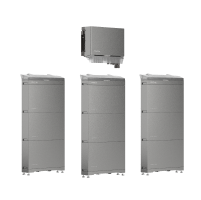
EcoFlow Ocean Pro
Key specifications and capabilities that make the EcoFlow Ocean Pro a future-proof choice include:
Scalable storage: Designed to grow with your family, you can start with a 10kWh base and easily expand up to 80kWh as your energy demands increase.
Maximized solar capture (8 MPPTs): The EcoFlow Ocean Pro features 8 independent MPPTs. This allows for complex roof layouts and shading issues without losing efficiency, accepting up to 40kW of solar input.
Multi-source redundancy: Beyond solar, the Ocean Pro accepts input from the grid, a direct port for gas generators (auto-start compatible), and even EV chargers, ensuring power during prolonged outages.
High output: With robust power delivery of 11.5kW or 24kW, the system effortlessly supports heavy appliances like HVAC units and well pumps, equipment that standard solar components often struggle to start with.
Smart savings: The integrated EcoFlow app uses "Intelligent Mode" to forecast weather and learn usage patterns, automatically optimizing battery storage for Time-of-Use (TOU) rates to maximize savings.
Now, when it comes to the installation procedure with solar panel components, the EcoFlow Ocean Pro requires certified professionals to ensure safety and warranty compliance across two primary scenarios:
Scenario A: new solar panels (clean slate)
Installers map your roof to optimize the system’s 8 independent MPPT trackers, grouping panels by orientation to prevent efficiency loss. Professionals assist in sizing storage, selecting stackable 10kWh modules (up to 80kWh), and handle all high-voltage commissioning and dealer-interface configurations.
Scenario B: existing solar panels (retrofit)
After a system audit, experts recommend either AC Coupling (connecting to the main panel to store excess energy) or DC Coupling (replacing your legacy inverter for superior conversion efficiency). The team then re-routes critical circuits of your specific solar panel components to the Ocean Pro’s backup output, providing instantaneous, automatic power during grid failures. This professional approach guarantees a seamless transition to integrated, smart energy management.

Tips on maintaining solar panel components properly
While solar energy is largely passive, a proactive maintenance schedule is vital to prevent component degradation and ensure your investment delivers high yields for decades. Follow these four essential maintenance steps for ideal results.
Routine surface cleaning: Dust, pollen, and bird droppings can create significant shading, drastically reducing energy production. Gently cleaning the tempered glass with water and a soft cloth twice a year ensures maximum light absorption and prevents permanent staining or hotspots.
Visual component inspection: Periodically check the aluminum frames for stability and the backsheet for any signs of peeling or bubbling. Identifying physical damage early prevents moisture from reaching the solar cells, which could otherwise lead to corrosion or system-wide failure.
Junction box and wiring check: Ensure the junction box remains tightly sealed and clear of debris or insect nests. Loose connections or frayed wires can cause electrical resistance and heat buildup, impacting the safety and efficiency of your power delivery.
Performance monitoring software: Use smart monitoring apps to track daily output and identify sudden drops in performance. Digital diagnostics can often pinpoint a faulty string or component before a physical failure occurs, allowing for timely professional servicing.
Signing off
From understanding individual solar panel components to mastering full-system architecture, the path to energy independence relies on smart hardware choices. While high-quality parts are the foundation, seamless integration is what ultimately determines your home’s energy performance and reliability.
So, don't settle for fragmented setups that cause technical friction. Audit your energy needs today and consider streamlined, professional solutions like the EcoFlow Ocean Pro, by requesting a consultation, to simplify your transition to sustainable solar power and secure your home's future.
What kind of product or solution are you interested in?
FAQ
1. What are the critical components for solar panels I should inspect for long-term durability?
Prioritize inspecting the backsheet and junction box to prevent moisture ingress and electrical corrosion. Systems like the EcoFlow Ocean Pro house sensitive electronics in IP67-rated enclosures, providing superior protection against thermal cycling and environmental degradation for decades of operation.
2. Why is my electric bill so high if I have solar panels?
High bills often result from mismatched generation and consumption times. Without storage, solar power is exported cheaply during the day while you buy expensive evening energy. Implementing a battery allows you to utilize self-generated power during peak rate periods.
3. Do I need to upgrade components of a solar panel system when switching to a hybrid inverter?
Most standard solar panel components are compatible with hybrid units. Upgrading to a hybrid inverter, such as the EcoFlow Ocean Pro, typically requires replacing only the central inverter. This allows your existing array to support battery storage and backup power without the need for expensive panel replacements.
4. What is the 20% rule in solar panels?
The 20% rule suggests designing systems to produce 120% of your average consumption. This buffer accounts for real-world inefficiencies like dust, shading, and winter sun, ensuring your home remains powered even during periods of suboptimal light exposure.
5. How does extreme heat affect the internal components of solar panels?
High heat increases electrical resistance, causing voltage drops and reduced efficiency. While solar panel parts and components naturally lose power in summer, the EcoFlow Ocean Pro uses advanced MPPT trackers and thermal management to optimize energy conversion and maintain system health during extreme heatwaves.
