
Lower Your Bill: A Strategic Guide to SMUD Rates Time of Day

Managing high smud rates can be a constant struggle for Sacramento residents facing expensive summer bills. Many homeowners find the 5–8 p.m. peak window creates a daily financial burden that feels impossible to avoid without sacrificing comfort. The EcoFlow Ocean Pro offers the perfect solution by automating energy storage during off-peak hours and powering your home when rates are highest. This smart system allows you to effortlessly bypass peak pricing, ensuring significant long-term savings and true energy independence.
Decoding the structure: understanding SMUD electric rates
The Sacramento Municipal Utility District (SMUD) is a community-owned, not-for-profit electric utility. Established by a vote of the people in 1923, it is governed by an elected Board of Directors, ensuring that the utility remains accountable to the residents it serves rather than outside shareholders.
Historically, SMUD utilized "tiered" pricing, where rates increased simply based on the total volume of electricity consumed. However, to better reflect the true cost of power and encourage grid stability, SMUD shifted to "Time-of-Day" pricing. This model applies charges based on when energy is used, aligning prices with the actual demand cycles of the Sacramento region.
Standard vs. Fixed:
Standard Time-of-Day (5-8 p.m.) Rate: This is the default for most customers. It features lower prices for most of the day, with a significant "Peak" premium during the high-demand window of 5 p.m. to 8 p.m. on weekdays.
Fixed Rate: This optional alternative offers a flat price for electricity regardless of the time it is used. While it provides predictability, it is generally 4% more expensive on average than the standard plan, as SMUD adds a premium to cover the risks of unmanaged peak demand.
The "Time of Day" critical zone
To effectively manage your energy costs, it is vital to understand the specific windows that dictate your monthly bill. SMUD categorizes hours into three distinct blocks during the summer:
Peak Hours (5 PM – 8 PM, Weekdays): This is the most expensive time to use power. These three hours represent the highest strain on the grid and carry the heaviest financial penalty.
Mid-Peak (Noon – 5 PM & 8 PM – Midnight, Weekdays): These hours act as a buffer zone. While cheaper than peak, they are still more expensive than morning or late-night rates.
Off-Peak (Midnight – Noon, Weekdays; All Day Weekends/Holidays): This is the safe zone for high-energy tasks. Rates are at their lowest, making it the ideal time for charging EVs or running heavy appliances.
The "why" behind the rates:
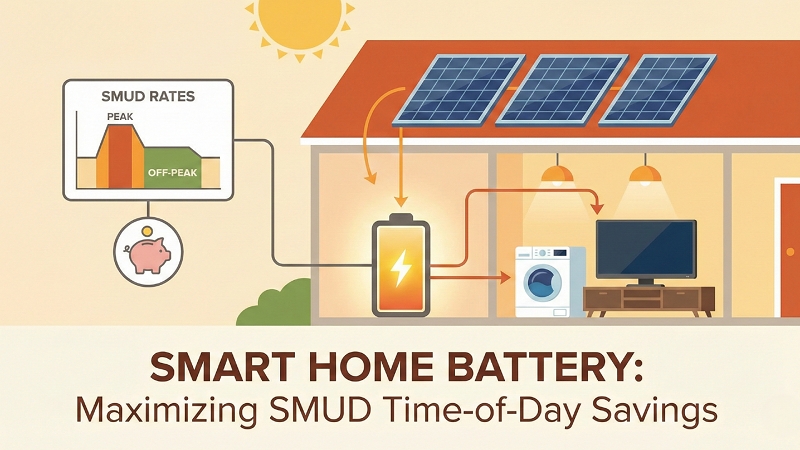
SMUD time of day rates structures to manage grid strain. Between 5 p.m. and 8 p.m., thousands of residents return home, turn on air conditioners, cook dinner, and wash clothes simultaneously.
This surge in demand often forces the utility to purchase expensive, less-efficient peaker plant energy from external sources. Higher rates during this window serve as a financial incentive for customers to lower their demand, helping to keep the entire system reliable and environmentally friendly.
The cost difference
The price gap between these periods is staggering. During the summer, the peak rate can be nearly triple the off-peak rate. For example, while you might pay roughly $0.15 per kWh after midnight, that same energy costs nearly $0.38 per kWh during the 5–8 p.m. window.
This dramatic delta is precisely why load shifting, which is moving energy usage to cheaper times, is the single most effective way to lower your bill.
Behavioral impact:
These rates force a shift in daily habits. To avoid bill shock, many Sacramento residents have adapted by delaying chores, waiting until after 8 p.m. to run the dishwasher or shift doing laundry to the weekends. While these manual adjustments help, they can be inconvenient and difficult to maintain, which is why automated solutions like the EcoFlow Ocean Pro are becoming the preferred strategy for modern homeowners.
The seasonal shock: SMUD summer rates vs. winter
Understanding the calendar is just as important as understanding the clock when it comes to your SMUD bill. The utility splits the year into two distinct pricing seasons:
Summer Season: June 1 through September 30.
Non-summer (Winter) Season: October 1 through May 31.
The summer spike:
The four months of summer represent the most dangerous time for a household budget in Sacramento. As temperatures climb, so do the rates. During this period, the 5–8 p.m. peak price skyrockets primarily due to the massive regional demand for air conditioning.
In the peak of summer, residential rates can jump to approximately $0.30–$0.40+ per kWh. When compared to winter peak rates, which are significantly lower, the severity of the summer shock becomes clear. It isn't just that you are using more electricity to stay cool; you are paying a much higher premium for every kilowatt used during those evening hours.
Winter rates:
During the non-summer months, SMUD rates are generally more manageable. While the 5–8 p.m., weekday windows still carry a peak designation and a higher price than off-peak hours, the overall premium paid is far less punishing than in the summer.
However, because heating systems (especially electric heat pumps) still draw significant power, the 5–8 p.m. window remains a critical time to monitor usage. Even in winter, shifting your heaviest loads to off-peak times provides measurable savings, though the seasonal relief of lower base rates makes the financial impact of mistakes slightly less severe than in the summer months.
How to navigate SMUD rate hours efficiently?
Successfully managing your electricity bill requires a strategic approach to those high-cost windows. Most homeowners start with manual adjustments, but quickly discover the practical hurdles of staying consistent
To avoid the punishing 5 to 8 p.m. SMUD rates, you can implement several manual strategies:
Pre-cooling the home: Run your air conditioning at a lower temperature (e.g., 72°F) before 5 p.m. while rates are lower. When the peak window hits, raise the thermostat to 78°F or higher. Your home will stay cool longer without the AC unit cycling during expensive hours.
Smart cooking habits: Avoid using electric ovens or stoves during peak times. Instead, use slow cookers (which draw very little power), microwave meals prepared earlier, or take the cooking outside to the grill.
The technological solution: the EcoFlow Ocean Pro

EcoFlow Ocean Pro
I. How it works:
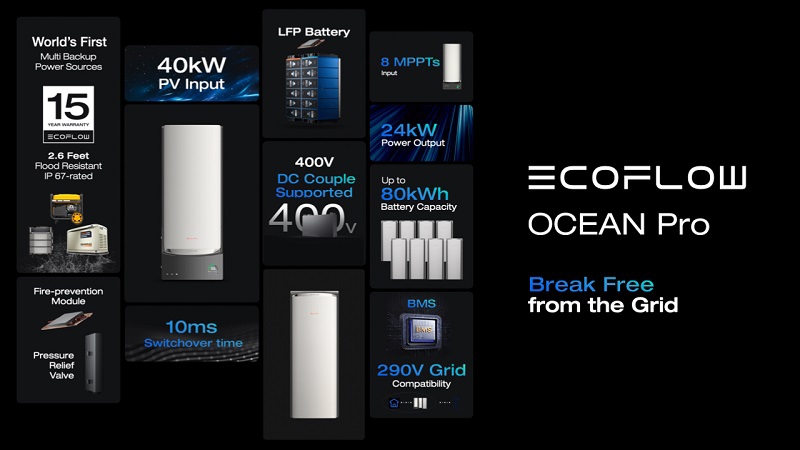
Capacity & scalability: The system is built on modularity. You can start with a base 10kWh battery unit and scale up to 80kWh connected to a single inverter. This flexibility allows you to tailor the storage capacity to your home’s specific needs, whether you are looking to cover just the peak hours or aiming for several days of off-grid living.
Smart panel integration: The system integrates directly with your home’s electrical system via the EcoFlow Ocean Smart Electrical Panel. This connection allows the Ocean Pro to intelligently monitor and control individual circuits, providing seamless transitions between grid, solar, and battery power.
II. Automated load shifting:
The true financial power of the EcoFlow Ocean Pro lies in its ability to automate rate arbitrage.
Arbitrage: This is the practice of buying low and using high. The system intelligently manages your energy use to ensure you never pay peak prices.
The mechanism: During SMUD’s off-peak hours (midnight to noon), when rates are at their lowest, the Ocean Pro charges its batteries using cheap grid power. If you have solar panels, it also captures free energy from the sun throughout the day.
The deployment: When the clock hits 5 p.m., the start of the critical SMUD rate hours, the Ocean Pro automatically takes your home off the grid. Your lights, AC, and appliances run entirely on the cheap energy stored earlier, effectively shaving off your peak demand.
III. Result:
With the Ocean Pro, you are essentially paying the midnight rate for the electricity you use during dinner time. By bypassing the most expensive SMUD summer rates entirely, the system turns a variable monthly liability into a fixed, manageable asset.
IV. Energy independence:
Beyond the daily savings, the Ocean Pro provides a critical safety net. In the event of a summer storm or grid failure, the system transitions to backup mode almost instantly. With its massive 24kW continuous output and high 205A LRA surge capability, it can even start heavy loads like 5-ton HVAC units, ensuring your family stays cool and comfortable during prolonged outages.
Signing off
Successfully managing SMUD rates is no longer just about conservation; it is about strategy. The 5–8 p.m. peak window represents a significant financial danger zone, particularly during the grueling summer months when rates can nearly triple. While manual adjustments like pre-cooling offer some relief, they are often difficult to sustain.
The future outlook suggests that electric rates will continue to climb, with SMUD proposing consistent increases to cover infrastructure and clean energy goals. In this landscape, energy efficiency and smart storage are critical. By investing in an automated solution like the EcoFlow Ocean Pro, you can finally bypass the volatility of time-of-day pricing and secure long-term savings. Don't let your utility bill dictate your comfort; instead, take the first step toward energy independence today by requesting a consultation from our professional experts.
What kind of product or solution are you interested in?
FAQ
1. How do SMUD rates time of day impact my electric bill on weekends?
On weekends, SMUD classifies all hours as off-peak, meaning prices stay consistently low. To maximize savings, the EcoFlow Ocean Pro can fully recharge during these cheaper windows to provide extra capacity for high-demand weekdays.
2. What are the cheapest hours for SMUD?
The lowest rates occur during off-peak hours, typically midnight to noon on weekdays. The EcoFlow Ocean Pro leverages these windows to store inexpensive grid power, ensuring your home runs on cheap energy even during expensive peaks.
3. What are the specific SMUD rate hours I need to avoid saving money?
You should avoid heavy usage during weekday peak hours from 5 p.m. to 8 p.m. The EcoFlow Ocean Pro automates this by disconnecting your home from the grid and using battery power during this critical time.
4. What's the best time to do laundry in Sacramento?
The best time for laundry is midnight to noon or on weekends when rates are lowest. With an EcoFlow Ocean Pro, you can wash clothes anytime, as the system powers heavy appliances using stored off-peak energy.
5. Why are my SMUD power rates so much higher in the summer compared to winter?
Summer rates spike due to massive air conditioning demand straining the grid. The EcoFlow Ocean Pro mitigates this seasonal shock by storing solar or cheap night-time energy to offset expensive summer evening cooling costs.
