
Hybrid Inverters for Solar Explained: Battery Backup Made Simple
Many homeowners find that hybrid inverters for solar are the only way to avoid the frustration of solar panels that shut down during grid outages. Traditional systems often leave you in the dark despite having panels on your roof, but modern hybrid technology simplifies the transition to reliable battery backup. The EcoFlow Ocean Pro addresses this pain point perfectly, offering a massive 24kW output and seamless integration that ensures your home stays powered and your energy bills stay low, regardless of grid stability.
What is a hybrid inverter?
A hybrid inverter, often called a multi-mode inverter, is the "all-in-one" brain of a modern solar system. Think of it as a traffic cop directing energy between three main roads: your solar panels, your battery bank, and the utility grid. By managing these flows simultaneously, it ensures power goes exactly where it's needed most.
Technology has evolved significantly:
String inverters: Traditional units that only convert DC solar power to AC for home use.
Battery inverters: Separate additions used to retroactively add storage to older systems.
Hybrid inverters: The modern standard that combines both functions into a single unit.
The key distinction lies in versatility. Unlike "grid-tied" systems that lack batteries or "off-grid" systems that cannot access utility, a hybrid inverter is grid-interactive. It offers the best of both worlds: the safety net of the grid with the ultimate resilience of independent battery storage.
How does hybrid inverter for solar panels work?
Understanding the operation of hybrid inverters for solar involves looking at its daily cycle and the clever engineering behind its internal logic.
The power flow:
Morning: As the sun rises, low solar production is supplemented by drawing energy from the grid or your overnight battery reserves.
Mid-day: Peak solar production prioritizes powering your home, then charges the battery, and finally exports any excess energy to the grid.
Evening: As sunlight fades, the intelligent inverter switches seamlessly to battery power to keep your home running without grid reliance.
Night/empty battery: If batteries deplete, the system draws from the grid during off-peak hours to maintain power or recharge for tomorrow.
Technical mechanisms:
DC coupling vs. AC coupling: Hybrid units typically use DC coupling, connecting panels directly to batteries for higher efficiency by reducing unnecessary electrical conversions.
Grid synchronization: The inverter monitors and matches the grid’s exact frequency and phase, allowing for safe, synchronized power export and import.
Islanding mode: This essential safety feature disconnects your home from the grid during blackouts, protecting utility workers while keeping your house powered.
Core benefits of installing a hybrid inverter for solar panel
Investing in hybrid inverters for solar systems transforms your solar setup from a passive generation tool into an active energy management hub. The benefits extend far beyond just having electricity; they impact your lifestyle and your wallet.
Energy independence & resilience
The most immediate advantage is the peace of mind that comes with true backup. When the neighborhood goes dark due to a storm or grid failure, a hybrid inverter ensures your critical loads, like lights, high-speed WiFi, and refrigerators, continue to run uninterrupted.
Cost savings through time-of-use arbitrage
Utility companies often charge significantly higher rates during "peak hours" (usually in the evening). Hybrid inverters allow for "load shifting," where you charge your batteries during the day with free solar power (or at night when grid rates are lowest) and discharge stored energy during the expensive peak windows, effectively hacking your energy bill for maximum savings.
Maximizing solar self-consumption
In many regions, feed-in tariffs have dropped, meaning utilities pay you very little for the excess energy you send back to the grid. A hybrid inverter ensures that every kilowatt-hour your panels produce stays within your home. Instead of selling your power for pennies, you store it to use yourself at night, significantly shortening the payback period of your solar investment.
While these benefits apply to most hybrid systems, the market is shifting toward high-performance ecosystems that remove the traditional limitations of backup power. Leading this charge is the EcoFlow Ocean Pro, a system designed to handle the heaviest household loads while offering unprecedented intelligence in energy management.
Innovation spotlight: the EcoFlow Ocean Pro

EcoFlow Ocean Pro
Performance & technical specifications:
To understand why the EcoFlow Ocean Pro sits at the top of the market, one must look at its industry-leading technical profile:
Power output: Offered in distinct 11.5kW and industry-topping 24.0kW nominal AC output models.
Solar capability: Supports a staggering 40kW maximum solar input across 8 MPPTs, allowing for complex, multi-directional roof layouts.
Efficiency: Exceptional conversion rates of 97.5% (Solar to Home) and 89% for battery-stored energy.
Storage & scalability: Nominal 10kWh per battery unit, scalable up to 80kWh total capacity per inverter.
Durability:NEMA 3R rated for indoor/outdoor use, operating flawlessly from -20°C to 60°C.
Connectivity: Full smart control via Wi-Fi, 4G/LTE, and the EcoFlow Mobile App.
Factors differentiating the EcoFlow Ocean Pro from the competition
The EcoFlow Ocean Pro distinguishes itself by solving the fundamental limitations of standard residential solar hardware through sheer power and architectural intelligence.
Key differentiators:
Massive power output: Most standard hybrid inverters offer between 5kW and 7kW of continuous power, which often forces homeowners to pick and choose which appliances to back up. With an 11kW or 24kW continuous output, the Ocean Pro eliminates this compromise.
Unparalleled scalability: While many systems cap out at 15–20kWh, the Ocean Pro allows you to stack up to eight battery units for a massive 80kWh of storage. This ensures that even large households can survive multi-day grid failures without lifestyle adjustments.
Industry-leading solar input: The 40kW solar input capacity paired with 8 MPPTs (Maximum Power Point Trackers) is a game-changer. This high number of trackers allows for complex roof layouts where panels face multiple directions (North, South, East, West).
Modern form factor: Moving away from the cluttered "industrial box on the wall" look, the Ocean Pro features a sleek, integrated design that complements modern home aesthetics, whether installed in a garage or on an exterior wall.
Smart integration & intelligent mode: The true intelligence of the system lies in the EcoFlow App's "Intelligent Mode." This feature utilizes real-time weather forecasting to automatically prepare your home for potential outages.
Conclusively speaking, the EcoFlow Ocean Pro serves as the new benchmark for high-performance hybrid inverters for solar systems. By combining industrial-grade power with consumer-friendly intelligence, it represents the standard of what energy-independent homes should look like in 2026 and beyond.
Critical features when buying hybrid inverter for solar panels
When evaluating the right inverter system for your home, look beyond the price tag and focus on these five critical performance markers to ensure long-term satisfaction and reliability.
Power rating: continuous vs. surge
It is vital to distinguish between continuous power and surge (or peak) power. Continuous power is what the inverter can provide indefinitely, while surge power is the short-term burst needed to start heavy motor loads. For example, a central AC unit might require a massive initial surge to start; if your inverter lacks high "Locked Rotor Amps" (LRA) capability, the AC won't turn on during a blackout.
Efficiency rating
Every time power is converted from DC to AC, energy is lost as heat. You should aim for an efficiency rating of >90%. Higher efficiency means you get more of the power your panels produce, which directly correlates to faster payback periods and better performance during limited-sunlight days.
Warranty and support
A solar system is a 25-year investment, but the inverter is its hardest-working component. A 10-year warranty is the industry standard; however, you should also look for brands with established local support networks and the option for warranty extensions. Reliability is just as important as the length of the contract.
Monitoring app and user interface
In the modern energy landscape, data is power. A high-quality monitoring app allows you to track your savings in real-time, toggle between energy-saving modes, and receive health alerts for your system. A clunky interface can make managing your energy a chore, whereas a polished UI, like the EcoFlow app, makes optimizing your home's energy usage intuitive and even enjoyable.
Installation and cost implications
Moving from a standard solar setup to a hybrid system involves a higher upfront commitment in both labor and hardware. Understanding these implications is key to setting a realistic budget and timeline.
Installation complexity
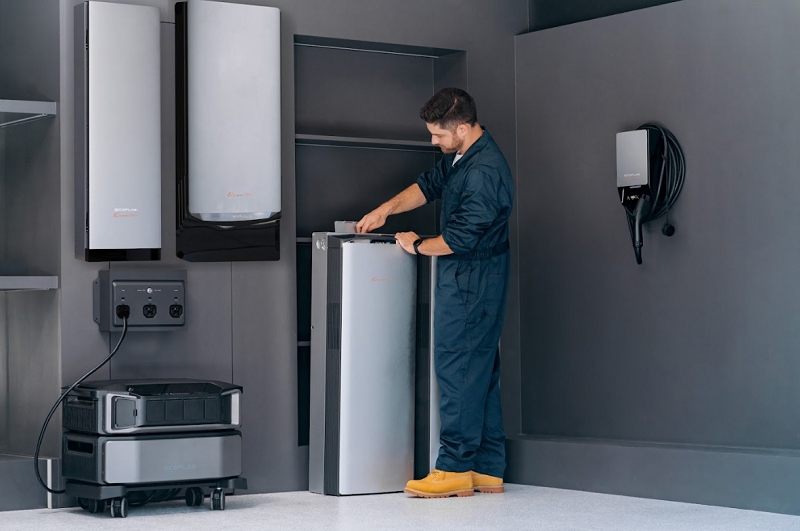
Hybrid inverters are significantly more complex to install than standard string inverters because they interact with three different power sources. The wiring requires careful planning: you must decide between a "critical load panel", which powers only your essentials during a blackout, and a "whole home backup" solution. Whole home backup often requires more heavy-duty equipment and professional labor, especially for high-capacity systems like the EcoFlow Ocean Pro.
Cost comparison and ROI
On average, hybrid inverters are 20-30% more expensive than standard string inverters. While the hardware cost is higher, the Return on Investment (ROI) is calculated differently. Instead of just looking at solar generation, the ROI of a hybrid system includes the significant savings gained from battery load shifting (avoiding high peak utility rates) and the insurance-like value of blackout protection. For many, the ability to avoid food spoilage and maintain home security during a power failure provides a value that far exceeds the initial price difference.
Signing off
Ultimately, hybrid inverters for solar are the essential "heart" of a resilient modern home, seamlessly bridging the gap between renewable generation and reliable storage. They transform solar from a daytime utility into a 24/7 energy management system that protects your household and optimizes your finances.
For anyone living in an area plagued by unstable power grids or high peak electricity rates, a hybrid inverter is no longer a luxury, it is a non-negotiable investment. By choosing a high-performance system like the EcoFlow Ocean Pro, you are not just buying hardware; you are securing long-term energy independence. Request a consultation today and enjoy peace of mind for the future.
What kind of product or solution are you interested in?


FAQ
1. Are all hybrid inverters for solar compatible with any battery brand?
Compatibility depends on whether the system is open or closed-loop. Many require proprietary communication for peak safety. The EcoFlow Ocean Pro utilizes a streamlined closed-loop system, ensuring its high-capacity batteries integrate perfectly for maximum efficiency and simplified setup.
2. Are hybrid inverters worth the cost?
While more expensive initially, they provide essential backup and energy management standard systems lack. The EcoFlow Ocean Pro justifies this premium by offering industrial-grade power and significant long-term savings through its sophisticated automated load-shifting and time-of-use optimization.
3. Can I install a hybrid inverter for solar panels now and add batteries later?
Yes, most modern hybrid systems are "battery-ready," allowing you to spread out costs. The EcoFlow Ocean Pro’s modular architecture makes future expansion effortless, supporting up to 80kWh of storage when you’re ready to fully eliminate grid reliance.
4. What are the best hybrid inverters?
The best units feature high efficiency, large surge capacities, and smart monitoring software. The EcoFlow Ocean Pro is currently the market benchmark, providing a massive 24kW output and 8 MPPTs to handle complex solar arrays better than any competitor.
5. Is a hybrid inverter for solar worth the investment if I rarely experience blackouts?
Even without outages, financial gains come from managing high peak electricity rates. The EcoFlow Ocean Pro automates this process through its Intelligent Mode, using weather data and utility rates to ensure you always consume the cheapest power available.
