
How Are Batteries Made? A Deep Dive into Modern Energy Storage
If you've ever wondered how are batteries made and why some last years while others fail too soon, you're not alone. From smartphones to home backup systems, reliability is everything. Poor battery quality can mean downtime, high replacement costs, and safety concerns. The EcoFlow PowerOcean Pro solves these frustrations by combining aerospace-grade durability with advanced lithium iron phosphate (LFP) technology, offering a reliable, 15-year power solution that ensures your home stays energized when it matters most.
The anatomy of a battery: Key components
To understand how are batteries made, you first need to know the essential components that work together to store and deliver energy safely and efficiently. Each part plays a vital role in maintaining the chemical balance required for safe and efficient energy storage.
Cathode & anode
These are the positive (cathode) and negative (anode) electrodes responsible for storing and releasing energy. The cathode, often made from lithium compounds such as lithium iron phosphate (LFP) in durable systems, serves as the source of lithium ions during discharge. The anode, typically graphite-based, hosts lithium ions when the battery is charged. Together, they enable reversible chemical reactions that generate power.
Electrolyte
This medium—usually a liquid or gel containing lithium salts dissolved in organic solvents—allows lithium ions to flow freely between the cathode and anode during charging and discharging, completing the internal circuit while electrons travel externally to power devices.
Separator
A thin, porous safety layer (commonly made of polyethylene or polypropylene) that physically prevents direct contact between the cathode and anode to avoid short circuits and potential fires. It permits lithium ions to pass through while blocking electrons, ensuring controlled and safe operation.
Casing
The entire chemical assembly is housed in a rigid shell, usually made of high-grade aluminum or stainless steel. This casing protects the internal chemistry from moisture, oxidation, and physical impacts that could compromise the battery's stability.
How Lithium-Ion batteries are made: Step-by-step
The manufacturing process for modern energy storage is a masterpiece of high-precision engineering. Here is a detailed breakdown of how lithium batteries are made within the controlled environments of global Gigafactories.
Mixing the slurry: The process begins by creating a chemical "soup." Active materials—typically lithium for the cathode and graphite for the anode—are combined with conductive binders and solvents in massive industrial mixers to ensure a perfectly homogenous consistency.
Coating & drying: This slurry is applied with extreme precision onto long rolls of metal foil. The anode slurry is coated onto copper foil, while the cathode slurry is applied to aluminum foil. These coated foils then pass through long drying ovens (up to 80–100 meters) with zoned temperature control (typically 50–160°C) to evaporate solvents gradually, preventing defects like cracking while achieving strong adhesion and low residual moisture.
Calendering: The dried foils move through a series of heavy-duty rollers. This high-pressure rolling process, known as calendering, compresses the materials to a uniform thickness and density, which is vital for maximizing the energy storage capacity of the finished cell.
Slitting & notching: Once the foils are at the correct density, they are slit into narrower strips. These strips are then notched or cut into the precise dimensions required for the specific battery format, whether it be a pouch, cylindrical, or prismatic cell.
Cell assembly: In the final stage, the anode, cathode, and separator layers are either "stacked" or "wound" together (often called a jelly-roll). This assembly is inserted into its casing, injected with the liquid electrolyte, and hermetically sealed to prevent any leaks or contamination.
Scaling up: How are electric car batteries made?
Manufacturing batteries for electric vehicles (EVs) takes lithium-ion production to an entirely new level. While the core chemistry is similar to smaller batteries, EV systems are engineered for higher capacity, extreme durability, and long-term performance under demanding conditions.
From cells to modules
A single lithium-ion cell typically produces only 3-4 volts. To achieve the 400V to 800V required to move a vehicle, thousands of individual cells (cylindrical, prismatic, or pouch) are first grouped into modules, which provide essential structural support and create manageable electrical sub-units. Finally, these modules are combined into the battery pack, a complete system integrated with a Battery Management System (BMS) and advanced cooling.
Thermal management
Unlike consumer electronics that often use simple passive or air cooling, EV batteries generate significant heat during rapid acceleration, fast charging, or high loads. Most modern EVs employ active liquid cooling systems—circulating coolant through cold plates, channels, or tubes around cells—for superior heat dissipation and uniform temperature control. This keeps cells in an optimal 15–35°C range, prevents hotspots, supports faster charging, reduces degradation, and extends overall battery lifespan compared to basic air-cooling methods.
Durability standards
EV batteries must endure constant road vibrations, shocks from impacts, and extreme temperature swings from -30°C to +60°C or beyond. They undergo stringent testing per standards such as SAE J2380, UN 38.3, and UL 2580, including multi-axis vibration endurance, shock pulses, thermal cycling, crush resistance, and abuse conditions. Reinforced casings, vibration-damping materials, structural reinforcements, and sophisticated battery management systems (BMS) ensure long-term reliability, crash safety, and warranties typically covering 8–10+ years or 100,000–150,000+ miles with minimal capacity loss.
The long-term solution: EcoFlow Ocean Pro for reliable power

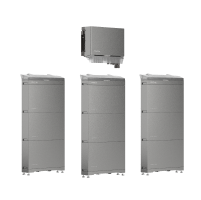
EcoFlow Ocean Pro battery
Scalability: Energy needs change over time. Ocean Pro is expandable from 10kWh to 80kWh, allowing homeowners to start small and scale up as their household demand grows—ideal for larger homes or families, adding EV chargers and new appliances.
Performance: While standard batteries struggle with high-demand appliances, the PowerOcean Pro delivers 24kW of continuous output. With a 205A LRA surge capacity, it effortlessly handles heavy loads like dual HVAC systems, pool pumps, and EV chargers simultaneously.
Unmatched solar input: Supports up to 40kW of solar power through 8 independent MPPT channels (each up to 5kW), maximizing rooftop capture even with varied panel orientations or partial shading for faster charging, higher self-consumption, reduced utility bills, and enhanced energy independence.
Aerospace-grade durability: The PowerOcean Pro utilizes aerospace-grade durability and stable LFP chemistry to ensure an industry-leading 15-year lifespan. With 360° aerogel insulation and an advanced Battery Management System (BMS) monitoring every cell, it is built to perform for over 6,000 cycles, treating your home energy as permanent infrastructure rather than a consumable.
Smart monitoring: Managing your energy is effortless with the EcoFlow App. The integrated power usage monitor helps you identify and eliminate "phantom loads," while the app's Intelligent Mode uses smart algorithms to optimize battery health and maximize your solar savings automatically.
The future of battery manufacturing
As of 2026, the industry is moving beyond traditional "wet" manufacturing toward a circular, high-efficiency era. The question of how are batteries made is being rewritten by four major technological shifts that prioritize both power and the planet.
Solid-state batteries: The biggest leap in 2026 is the transition to solid-state chemistry. By replacing flammable liquid electrolytes with solid ceramic or polymer layers, manufacturers are creating cells that are nearly impossible to ignite and hold up to 80% more energy. While mass-market EVs are targeted for 2027, small-scale production for premium electronics and motorcycles is already active this year.
Improved recycling methods: We are moving away from energy-intensive smelting (pyrometallurgy). New hydrometallurgical processes use chemical baths at lower temperatures to recover up to 90% of lithium and 95% of cobalt. This "urban mining" allows manufacturers to reuse high-purity minerals, significantly reducing the carbon footprint of new units.
Sustainable mining: Innovations like Direct Lithium Extraction (DLE) are revolutionizing how raw materials are sourced. DLE pulls lithium from underground brine in days rather than the months required by traditional evaporation ponds, saving billions of gallons of water and reducing the environmental impact on local communities in regions like the Lithium Triangle.
Higher energy density innovations: Beyond lithium, 2026 has seen the rise of Sodium-Ion and Quasi-Solid-State batteries. These use abundant materials like salt and organic frameworks to achieve higher energy densities (up to 500 Wh/kg in lab settings) while remaining stable in extreme temperatures ranging from -40°F to 140°F.
Conclusion
The journey of how are batteries made reveals a precise, innovative process—from slurry mixing and electrode coating to cell assembly and large-scale module integration. Every step impacts performance, safety, and long-term durability. As battery technology advances with better materials and smarter manufacturing, energy storage systems become more reliable and efficient. For homeowners seeking scalable, dependable backup power, the EcoFlow Ocean Pro is a future-proof solution. It offers high storage capacity, strong continuous output, advanced solar integration, and intelligent energy monitoring. Ready to power your home with confidence? Request a consultation today and discover how EcoFlow Ocean Pro can transform your home energy system.
What kind of product or solution are you interested in?
FAQs
1. How long does it take to manufacture a lithium-ion battery?
Manufacturing a lithium-ion battery generally takes 2 to 4 weeks from assembly to a final shipping-ready cell. This includes electrolyte filling, vacuum drying, and a 1–3 week formation and aging process to stabilize the cells.
2. What materials are used to make lithium-ion batteries?
Lithium-ion batteries use lithium compounds, graphite, metal oxides (nickel, cobalt, manganese), electrolytes, and separators. Advanced systems like the EcoFlow OCEAN Pro use safer LFP chemistry.
3. How long do lithium batteries usually last?
Consumer lithium-ion batteries usually last 2–10 years or 300–1,000 cycles, depending on use and care. In contrast, EcoFlow Ocean Pro's LFP cells are rated for 6,000+ cycles, providing a reliable 15-year lifespan for long-term home power.
4. How are electric car batteries different from regular batteries?
EV batteries use thousands of interconnected cells and active liquid cooling to handle high-voltage propulsion. Regular batteries are simpler, relying on passive cooling and less durable casings, as they don't face extreme road vibrations.
5. Can lithium-ion batteries be recycled?
Yes, lithium-ion batteries are recyclable. Advanced processes can recover up to 95% of materials like lithium, cobalt, nickel, and copper, reducing waste and mining needs while supporting a sustainable circular economy for energy systems.
